Namibia is one of the best self-drive destinations on earth. The roads are quiet, the distances are epic, the scenery never lets up, and the freedom to stop at an empty viewpoint or sit at a waterhole for an hour is the whole point. For most visitors, driving yourself isn't the compromise — it's the trip.
It also asks for a little respect. Most of the country is gravel, distances between fuel and help are long, and the one real hazard is the road itself, not crime. Get the vehicle, the gravel technique and the daily rhythm right and Namibia becomes as easy as it is unforgettable. Here's how, from a team who drives these roads for a living.
Why Namibia is made for self-driving
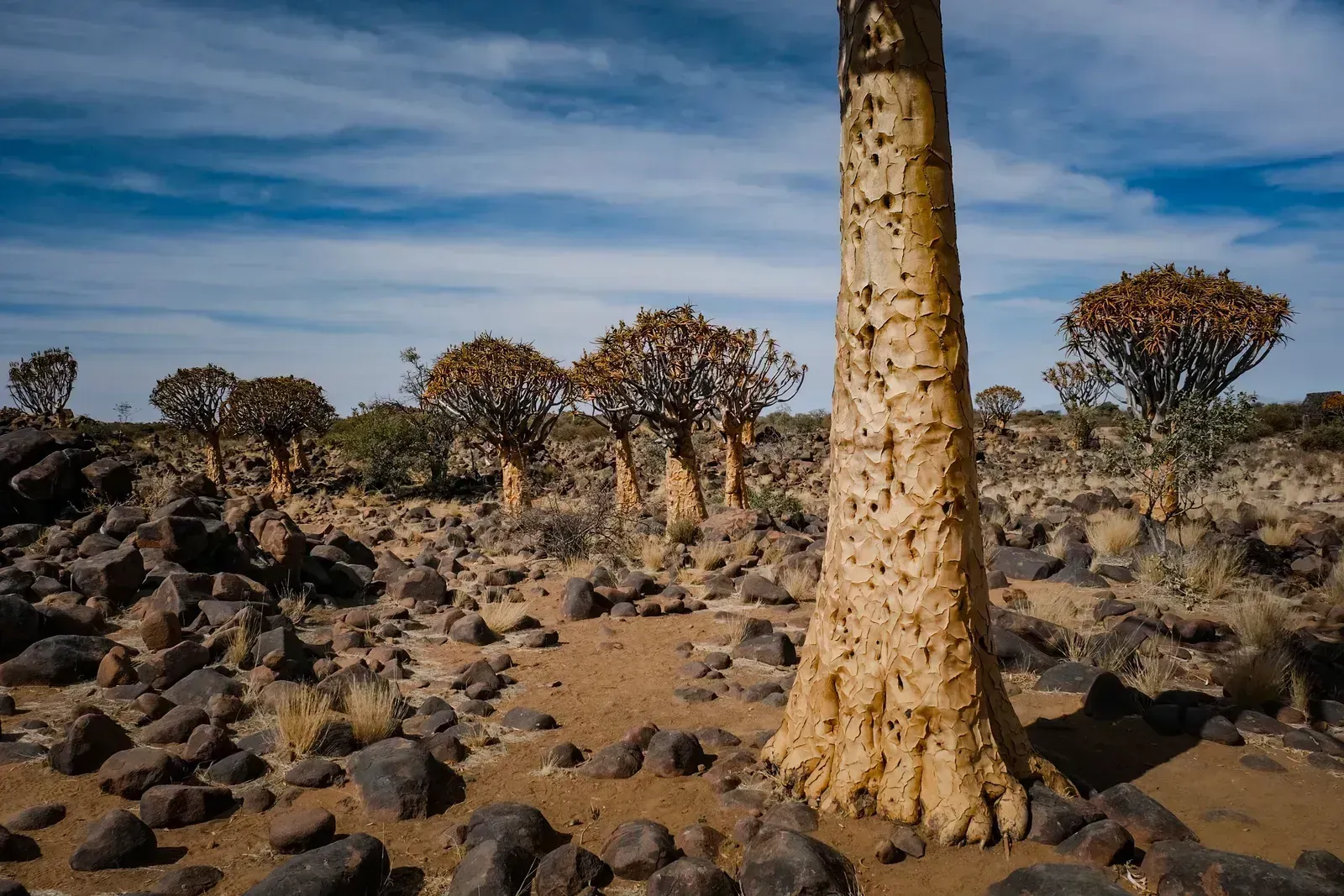
Namibia is vast, sparsely populated and well set up for independent travellers. Traffic is light, the main routes are clearly signposted, and the network of lodges, camps and fuel towns is spaced for road trips. You trade the hand-holding of a guided tour for complete freedom over your pace and your days — which, in a country this photogenic and this empty, is a fair trade for most people.
It suits confident, self-sufficient travellers best. If you'd rather someone else read the map and the tracks, a privately guided or fly-in trip is worth considering — we cover that trade-off in our guide to planning a Namibia safari. But if the driving is part of the appeal, few countries reward it like this one.
Is it hard to drive in Namibia?
On the tar, no — the main highways are excellent and driving is straightforward. The learning curve is the gravel, which makes up most of the country's roads. It isn't difficult, but it behaves differently from tar: less grip, longer stopping distances, and a loose surface that punishes speed. The overwhelming majority of traveller incidents here are single-vehicle rollovers caused by going too fast on gravel and over-correcting — almost all of them avoidable.
In other words, the risk in Namibia is the road, not the country. We cover the wider safety picture — crime, health, solo travel — in our honest guide to whether Namibia is safe. This guide stays on the driving itself.
Do you need a 4x4? Choosing your vehicle
The right vehicle depends on your route, not on wanting to look the part. Broadly, there are three choices:
A 2WD sedan or compact
Fine for the tar-heavy classics — Windhoek, Sossusvlei's approach road, Swakopmund, the main route to Etosha — if you stick to graded roads and drive sensibly. The cheapest option, but it leaves the wildest tracks off the table and carries less ground clearance for rough gravel.
A high-clearance SUV
The comfortable middle ground for most first trips: the clearance and stability to take gravel in its stride, without the cost of a full expedition rig. It covers the great majority of a standard Namibia itinerary happily.
A 4x4 (often with rooftop tents and camping kit)
Necessary for the deep-sand and remote corners — the final stretch into Sossusvlei and Deadvlei beyond the 2WD car park, Kaokoland and the north-west, the Van Zyl's Pass country, and serious camping trips. A properly equipped 4x4 with two spare tyres, a fridge and recovery gear is the tool for going off the beaten track — and the one to book if you want to camp your way around. Tell us your route and we'll point you to the right vehicle for it.
Driving Namibia's gravel roads
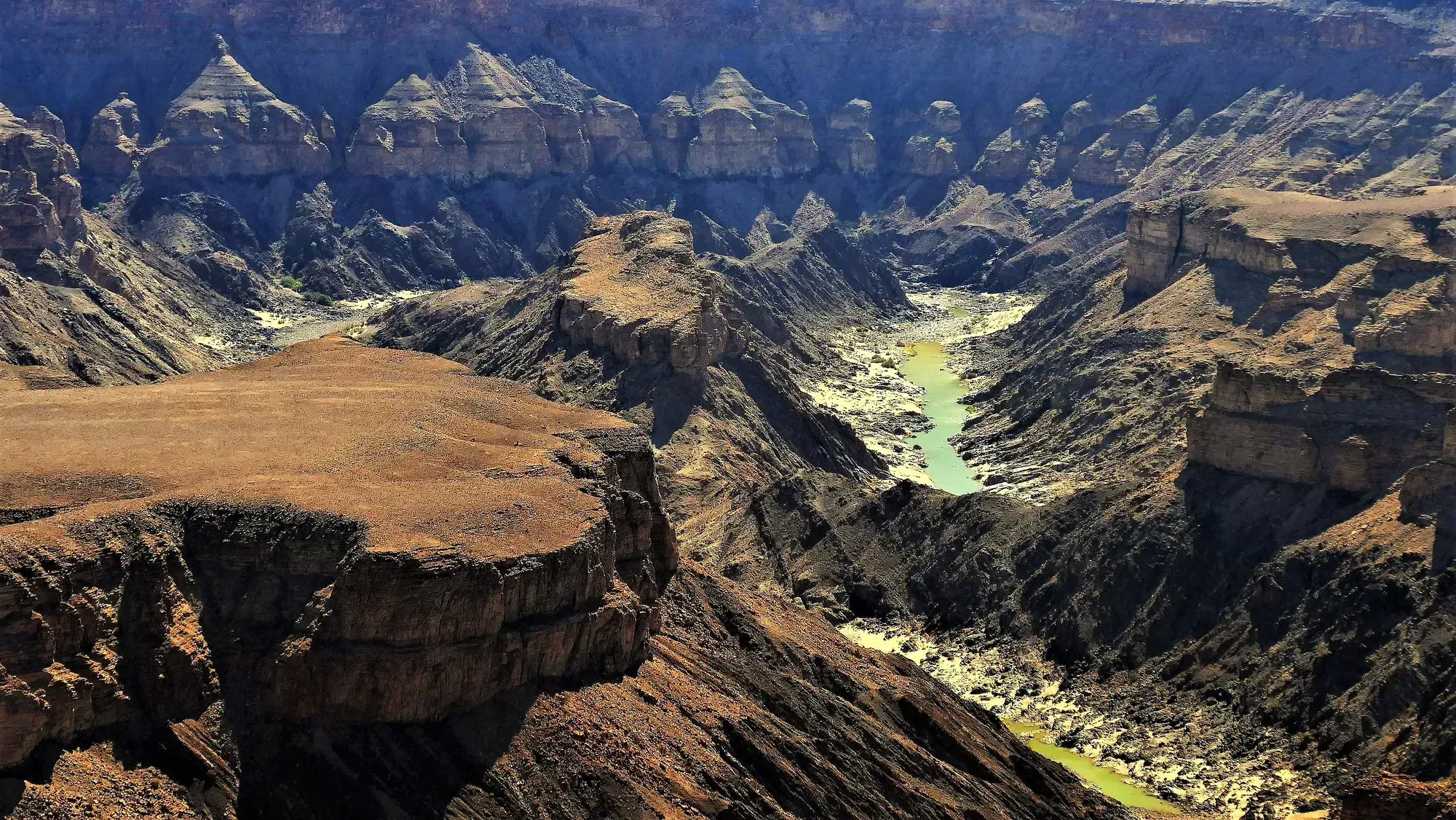
This is the part worth reading twice. Gravel isn't dangerous when you treat it with respect — the whole trick is keeping your speed sensible and your inputs smooth. The rules that keep travellers out of trouble:
- Keep to the gravel-road speed limit of 80 km/h — and go slower on loose, corrugated or unfamiliar sections. Speed is the single factor behind almost every gravel accident.
- Ask your rental company about the right tyre pressures for gravel, and check your tyres (and the two spares) every morning. Punctures are the most common mishap out here.
- When a vehicle approaches, ease off the accelerator and move to the far left. It shields your windscreen from flying stones and keeps the following dust from blinding anyone behind.
- Slow right down before crests and bends — you can't see what's over or around them, and the surface is loosest where you least expect it.
- Never brake hard on gravel. To slow down, lift off the accelerator and let the car settle; sudden braking is what breaks traction.
- Watch for washboard corrugations and sudden soft or sandy patches, especially in riverbeds and dips — they'll tug at the steering.
- Keep both hands on the wheel and leave big gaps. Everything happens more slowly and gently on gravel than on tar.
If the back starts to slide (fishtailing)
On loose gravel the rear of the car can begin to slide out — you'll feel the back stepping sideways rather than following your steering. Don't panic and don't fight it: take your foot off the accelerator, hold the wheel firmly and keep steering where you want to go, and let the car slow itself and settle back into line. The instinctive reactions — stamping the brakes or yanking the wheel the other way — are exactly what turns a wobble into a spin. Smooth and calm wins every time.
Crossing a river or floodway
You'll rarely meet flowing water, but after summer rains it happens. Never drive into a flowing river or floodway on faith. Only cross once you've walked the route on foot and checked that the water is no deeper than half your wheel height at every point, that there are no soft sand patches, and that the level is not rising. If any of that is in doubt, wait — desert floods usually drop within hours, and no photo is worth a drowned engine.
Fuel, distances and the daily rhythm
Namibia's scale is the thing most first-timers underestimate. A day's drive can be four, five or six hours between stops, and towns with fuel and supplies can be far apart. Plan around that and the trip flows; ignore it and you'll spend it rushing.
- Fill up whenever you pass a fuel station, not when you're low. Distances between them can be long, and a closed pump in a small town is not unheard of.
- Fuel is attendant-served — there's no self-service. A small cash tip (a few Namibian dollars) is normal, and it's wise to carry some cash for fuel even though most stations now take cards.
- Carry plenty of drinking water — a good rule is an extra five litres per person in the vehicle — plus snacks, in case of a breakdown or a long wait.
- Plan every day to reach your destination before sunset. The golden rule of driving in Namibia: never drive after dark outside the towns. Wildlife and livestock stray onto unlit roads at night and the danger rises sharply — every reputable operator here asks you not to do it.
- Don't over-pack your days. Two nights in a place beats one wherever you can manage it; it turns long transit days into a real trip and leaves margin if a tyre or the weather slows you down.
- Download offline maps before you set off — mobile coverage disappears for long stretches between towns.
Documents and the rules of the road
The formalities are simple, and worth knowing before you collect the keys.
- Namibia drives on the LEFT, a surprise for some visitors — take extra care at junctions and on your first day.
- Speed limits, unless signed otherwise: 60 km/h in towns, 120 km/h on tar highways, 80 km/h on gravel.
- Headlights on, seatbelts for everyone, doors locked, and no phone in your hand — the same sense you'd use anywhere.
- You can usually drive on a foreign licence if it's in English and carries your photo; otherwise bring an International Driving Permit. Confirm the detail with your rental company when you book.
- Traffic fines are never paid on the spot or at a roadblock. If you're stopped, ask for the nearest police station — fines are only settled there, against a proper receipt. Any request for a roadside payment should be politely declined and reported.
- Planning to dip into Botswana, Zambia or Zimbabwe (for Victoria Falls or Chobe)? You'll need a cross-border permit and a letter of authority for the vehicle — your rental company arranges these, so tell them your plans upfront.
Planning a self-drive route
Most self-drive trips run as a loop out of Windhoek, where you'll land and collect your vehicle. A classic first route threads the red dunes of Sossusvlei, the coast at Swakopmund and the wildlife of Etosha — the marquee things to do most first trips are built around — with more time you can add the far south — Fish River Canyon and Lüderitz — or the lush Zambezi in the north-east. The art is in not trying to do all of it at once: Namibia rewards fewer places, longer stays and unhurried drives.
Rather than start from a blank map, it's easiest to begin from a route that already works and adjust it. Our pre-planned self-drive itineraries — from a one-week desert-and-coast loop to a fifteen-day grand circle — load straight into the interactive trip planner, where you can change the stops, set your nights and see a live cost estimate before you send it to us to fine-tune. One practical tip on timing: if you land in Windhoek in the morning you can usually start driving the same day, but if you arrive after midday it's far better to overnight nearby and set off fresh, because the first leg is a long one.
Common questions
Do you need a 4x4 to drive in Namibia?
Not always. A high-clearance SUV, or even a 2WD on the tar-heavy classic routes, is fine for a standard Namibia trip on graded roads. You need a proper 4x4 for deep sand and remote areas — the final stretch into Sossusvlei and Deadvlei, Kaokoland and the north-west, and camping trips off the main network.
Is it safe to self-drive in Namibia?
Yes — self-driving is the classic way to see Namibia and very popular. The key is respecting the gravel roads: keep speeds moderate, never brake hard or over-correct, and never drive after dark outside the towns, when wildlife on unlit roads makes it dangerous.
Which side of the road do you drive on in Namibia?
Namibia drives on the left, with the steering wheel on the right. Take extra care at junctions and roundabouts on your first day if you're used to driving on the right.
Do I need an international driving permit for Namibia?
You can usually drive on a foreign licence if it is printed in English and shows your photograph. If not, carry an International Driving Permit alongside your home licence. Always confirm the requirement with your car rental company when booking.
How far apart are fuel stations in Namibia?
They can be a long way apart, especially in the south and north-west, so fill up whenever you pass one rather than waiting until you're low. Fuel is attendant-served, a small cash tip is normal, and it's wise to carry some cash even though most stations now accept cards.
Can you drive a Namibian rental car across the border?
Yes, to neighbouring countries like Botswana, Zambia and Zimbabwe, but you must arrange a cross-border permit and a letter of authority for the vehicle in advance. Tell your rental company your plans when you book so they can prepare the paperwork.
Plan your Namibia trip
Every Sandura journey is private and built by hand — self-drive, privately guided or fly-in, shaped to how you like to travel and to your budget. Tell us what you're hoping for and we'll come back to you personally.
Plan your trip