Last updated · Sandura Tours, Windhoek
The Caprivi Strip—now officially known as the Zambezi Region—is Namibia’s vibrant, emerald paradise. Woven with mighty perennial rivers and teeming with dense wildlife populations, this narrow tropical corridor offers a spectacular, water-based African safari experience that dramatically contrasts with the country's iconic desert dunes.
Unlike Namibia's arid landscapes, this thriving wetlands ecosystem is fed by the massive currents of the Zambezi, Kwando, and Chobe rivers. These fertile floodplains and protected parks are home to massive elephant herds, large pods of hippos, crocodiles, and more than 400 species of birds. Travelers can experience this pristine wilderness via exclusive, luxury riverfront lodges, traditional game drives, and thrilling boat safaris along the waterways.
Beyond its rich local wildlife, the region's unique geography makes it the ultimate launchpad for iconic Southern African attractions. Bordered by four countries, the Caprivi provides effortless transit across the Ngoma border into Botswana's world-famous Chobe National Park, and is just a scenic 3.5-hour drive from the majestic Victoria Falls. It is the perfect strategic hub for an expansive, multi-country luxury safari itinerary.
The Caprivi Strip: Namibia's water-world safari
The Caprivi Strip — now officially the Zambezi Region — is Namibia's emerald exception. Where the rest of the country is desert, this narrow tropical corridor is woven with perennial rivers and dense wildlife, offering a water-based African safari that's the dramatic opposite of the dunes. Fed by the Zambezi, Kwando and Chobe rivers, its floodplains and parks teem with big elephant herds, large pods of hippo, crocodile, and more than 400 bird species.
Wildlife and things to do in the Zambezi Region
- Boat safaris and sunset river cruises along the Zambezi, Kwando and Chobe — the classic way to see hippo, crocodile and elephant at the water.
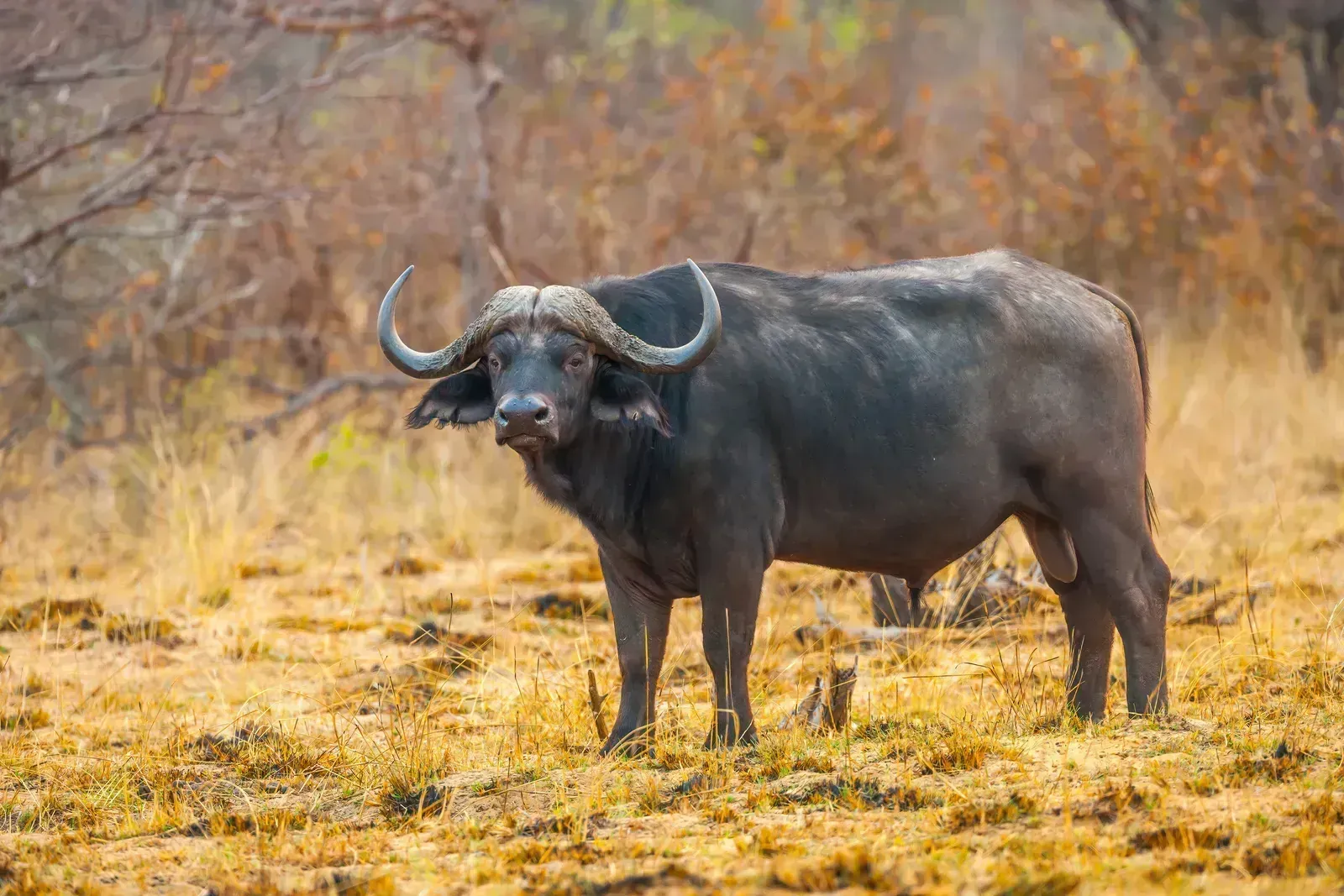
- Game drives in the region's parks (Bwabwata, Mudumu, Nkasa Rupara) for elephant, buffalo, lion and antelope.
- Birding for 400-plus species — one of Namibia's richest birdwatching regions.
- Riverfront luxury lodges where the wildlife comes to you, right from your deck.
A gateway to Chobe and Victoria Falls
The Caprivi's geography makes it the ultimate launchpad for the wider region. Bordered by four countries, it gives effortless access across the Ngoma border into Botswana's world-famous Chobe National Park, and sits just a scenic drive — around three and a half hours — from Victoria Falls. That makes it the natural hub for stitching Namibia together with a bigger, multi-country safari. We arrange the cross-border paperwork so the transitions are seamless.
In pictures



Where we recommend staying
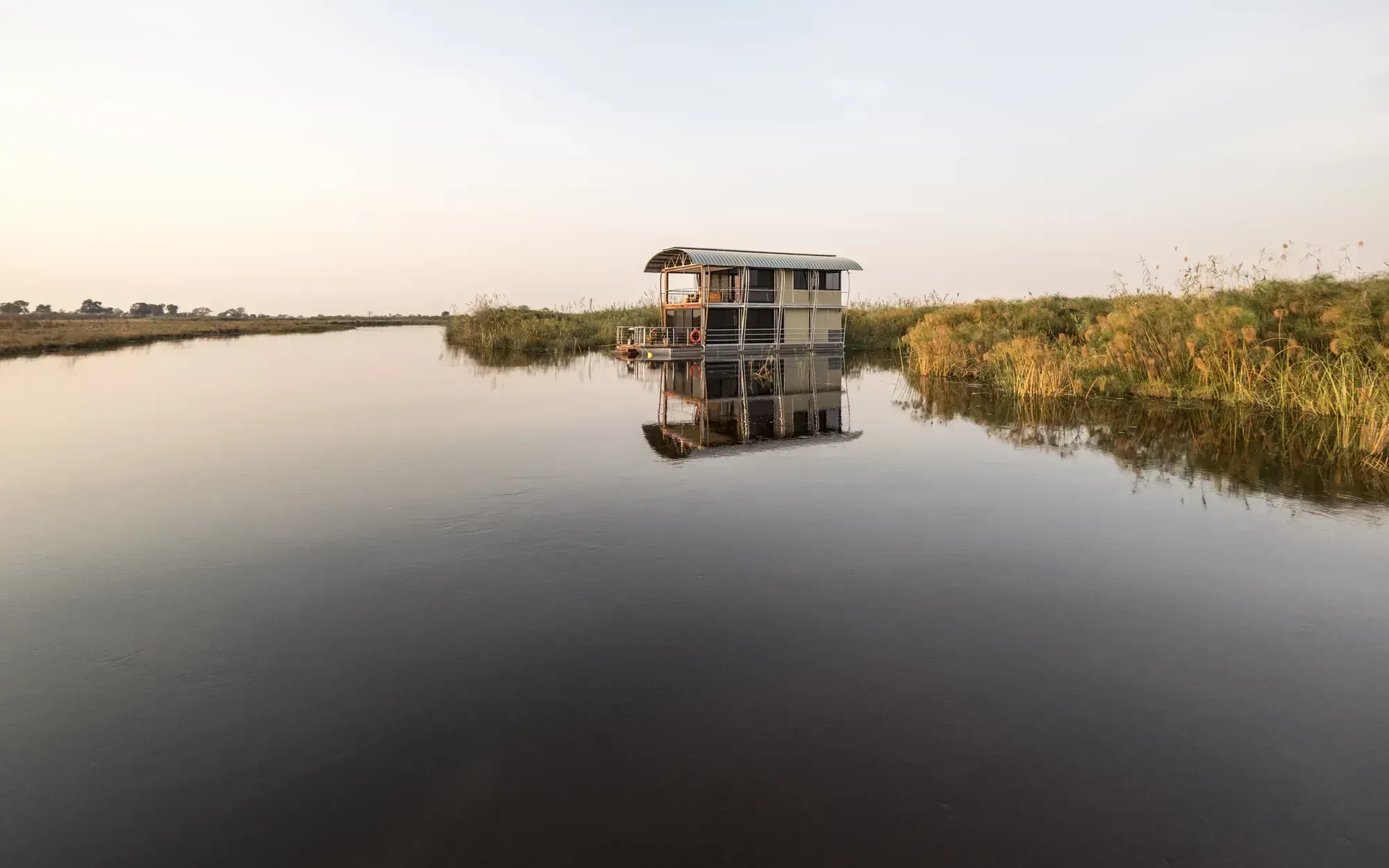
Namushasha River Villa
Anchored in its very own channel of the Kwando River inside Bwabwata National Park, the Namushasha River Villa is a double-storey floating retreat for two — Gondwana's Secret Collection at its most private. All-inclusive and deliberately unstaffed, it pairs a private game drive and meal in the park with Kwando boat cruises and long, undisturbed evenings where the only company is birdsong and the grunt of hippos along the reeds.
About Namushasha River Villa
A double-storey floating villa for two, anchored in its own Kwando channel — Gondwana's most private, all-inclusive Zambezi escape.
The Namushasha River Villa is a two-storey raft transformed into a private floating retreat, anchored in its very own channel of the Kwando River within Bwabwata National Park. Built for two, it belongs to Gondwana's exclusive Secret Collection, and its whole reason for being is seclusion: an intimate couple's hideaway on the water, wrapped in reeds and birdsong, with the wildlife of Bwabwata moving along the banks and hippos grunting through the still hours.
The double-storey villa is comfortably self-contained, its interior echoing the grandeur of the river outside. There's an open-plan, fully equipped and stocked kitchen with a dining and lounge area, an en-suite bedroom that opens to a private balcony over the channel, a private stocked bar, and a terraced outdoor deck with barbecue facilities for long evenings under the stars — all with air-conditioning, WiFi, charging points and mosquito nets.
The stay is entirely all-inclusive, and it begins at Namushasha River Lodge, from where you are ferried to the villa. All meals and drinks are provided — pre-prepared to your preferences — and the package includes a private guided game drive and meal in Bwabwata National Park, morning or afternoon, along with boat cruises on the Kwando. By design there is no chef or service staff aboard during your stay, so your privacy is complete; the lodge stays reachable by radio at all times, and ferries you back at the end.
This is a stay for couples above all — a honeymoon-grade escape for two, kept adults-oriented with no children under thirteen, set within the Kwando's mosaic of community conservancies near the Mashi Conservancy. Travelling as a larger group, or with younger children? Its sister property a short ferry away, Namushasha River Lodge, has the riverbank chalets, family rooms and full facilities to suit — the two make a natural pair. As with all boating here, dry-season low water between September and December can limit river access.
Giving back — exclusivity inside a shared conservation landscape
For all its privacy, the villa floats inside one of Africa's more remarkable conservation ideas: the Bwabwata National Park and the surrounding Kwando conservancies are managed for the coexistence of both wildlife and the communities who live among it. Gondwana's presence on this river is tied to that model, anchored by the Namushasha Heritage Centre, opened in 2014 with members of the Mashi community as a private sector–conservancy collaboration celebrating the culture of the eastern Zambezi — so even the most exclusive stay here helps sustain a landscape that local people share and steward.
The villa is part of Gondwana — Namibian-owned, a major private conservation landholder and employer — whose curio shops and online store channel income to community partner projects, among them 'Little Bugs', which funds children's education, the 'Iyaloo Sewing Project', and the 'Mammadu Trust', providing education and meals to disadvantaged children in Katutura. A booking here carries that collection-wide weight well beyond the river.
- Setting
- A private villa anchored in its own channel of the Kwando River, inside Bwabwata National Park, Zambezi Region
- The villa
- A double-storey floating retreat for two — en-suite bedroom, private balcony, open-plan kitchen and lounge, private bar and outdoor braai deck
- Included
- Fully all-inclusive: all meals and drinks, a private game drive and meal in Bwabwata, and Kwando boat cruises
- Privacy
- No chef or staff aboard for total seclusion; ferried from Namushasha River Lodge, with radio contact throughout
- Good to know
- Two guests only, no children under 13; part of Gondwana's exclusive Secret Collection
Our tip: Book an afternoon arrival transfer so your first evening on the raft is just the two of you — sundown over the channel, a drink from the private bar, and hippos for company.
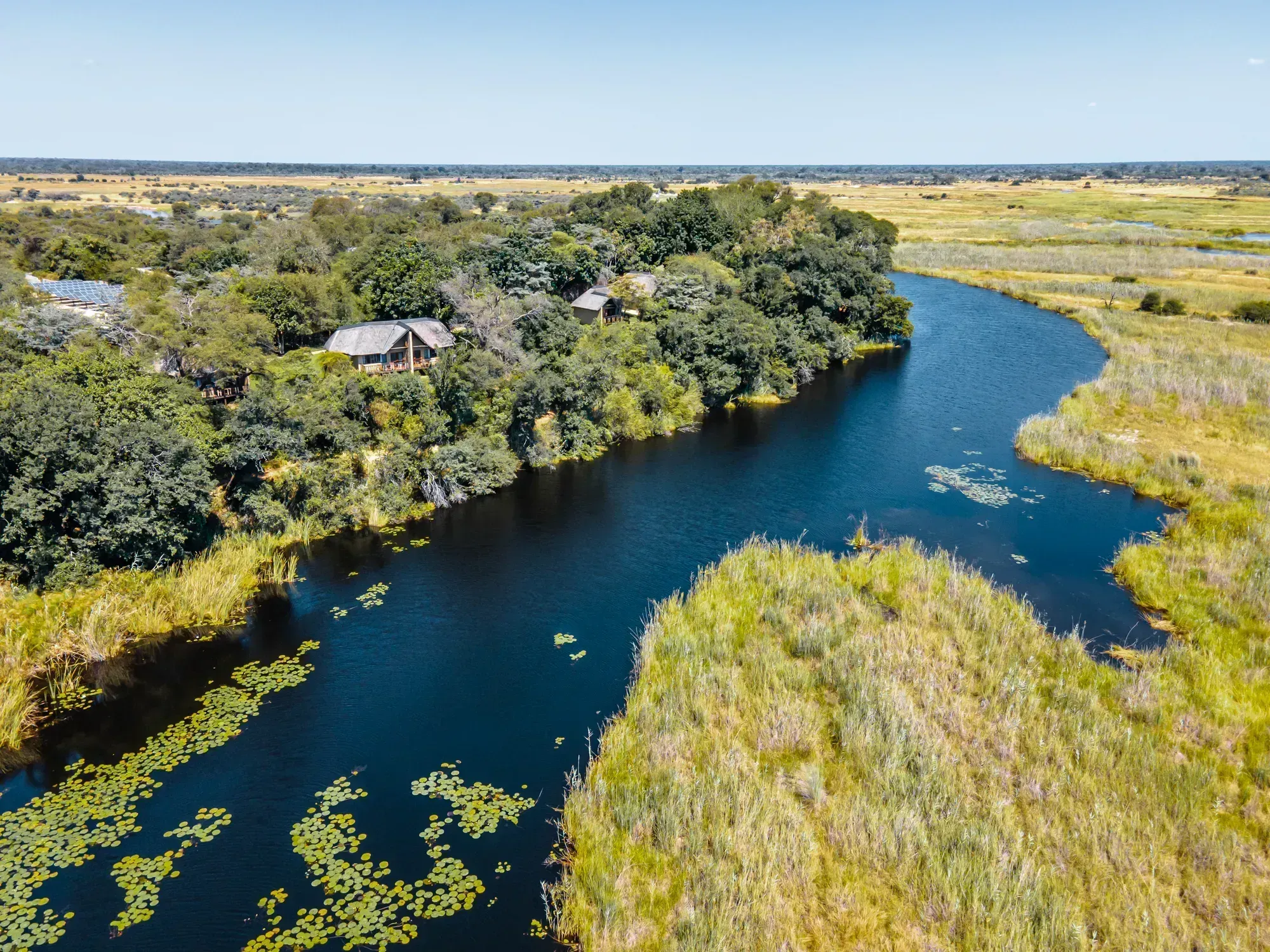
Namushasha River Lodge
On the leafy banks of the Kwando River in the Zambezi Region, Namushasha is a comfortable Gondwana lodge of thatched chalets looking over a hippo pool at the gate of Bwabwata National Park. Boat cruises past 400-plus bird species, boat-and-4x4 game drives after elephant and buffalo, tiger-fishing, and the community-built Namushasha Heritage Centre make it the natural, warm-hearted stop on the road toward Victoria Falls.
About Namushasha River Lodge
Thatched chalets on the leafy Kwando, a sundowner deck above the hippos, and a Bwabwata safari at the door — Gondwana's Zambezi river lodge.
Namushasha River Lodge stands on the leafy banks of the Kwando River in Namibia's far north-eastern Zambezi Region, 24 kilometres south of Kongola and looking straight over a hippo pool. It's a different Namibia entirely — a lush water-world of channels, reedbeds and water lilies rather than dune and gravel — and the lodge leans right into it, with a high thatched, open-sided dining room that draws the river breeze inside and a sundowner deck raised above the water where evenings dissolve into hippo grunts and fish-eagle calls.
The 24 chalets are spread along the riverbank among the trees, most with a view onto the water, each with its own private veranda, en-suite shower, air-conditioning, mosquito nets and tea and coffee — comfortable and unfussy, freshly refreshed in a 2024 room upgrade. A carved central entrance in authentic African style, a restaurant, bar, curio shop and a swimming pool complete an easy, restful base, with twin, triple and family rooms making it a natural fit for groups and families.
The lodge is a gateway to Bwabwata National Park, and the activities are its heart: guided boat cruises glide the Kwando past more than 400 recorded bird species — African fish eagles, skimmers, lesser jacana and wattled crane among them — while game drives cross the river by boat and continue on custom 4x4s in search of elephant, buffalo, hippo, sable and red lechwe, with lion, leopard and cheetah all on the park's roll-call. Guided tiger-fishing trips round out the water, and boat cruises are seasonal, easing off when dry-season levels drop between September and December.
Beyond the wildlife, Namushasha offers something rarer — a genuine cultural welcome at the neighbouring Namushasha Heritage Centre, where Caprivian song, dance and traditional life are shared first-hand. Couples wanting complete seclusion can slip away to its sister property, the Namushasha River Villa — a private, all-inclusive floating retreat for two anchored in its own channel of the Kwando, a short ferry from the lodge. Set on the classic overland route linking the Zambezi, Chobe and Victoria Falls, and part of Gondwana's Namibian-owned collection, it's the warm, comfortable bookend to a journey through the wild north-east.
Giving back — a heritage centre built with the Mashi community
Namushasha's anchor project sits right on the riverbank: in 2014 the Gondwana Collection and members of the Mashi community opened the Namushasha Heritage Centre in a private sector–conservancy collaboration, celebrating the cultural diversity of the eastern Zambezi Region. The lodge is, in its own words, proud to help conserve the cultural heritage of the eastern Caprivi and to educate guests about the area's heritage and culture — and the centre itself, like the lodge's habitat-blending chalets, was built in a deliberately eco-friendly way so as not to interfere with the natural environment.
The lodge's curio shop feeds Gondwana's wider giving-back chain, too: the collection's shops and online store channel income to partner projects that aid artists, women's associations and charities making products from recycled goods — among them 'Little Bugs', a women's project that funds children's education, the 'Iyaloo Sewing Project' that supplies much of the lodge's own interior fabric, and the 'Mammadu Trust', which provides education and meals to disadvantaged children in Katutura. As part of Gondwana — Namibian-owned, and a major private conservation landholder and employer — a stay here carries weight well beyond the river.
- Setting
- On the Kwando River in the Zambezi Region, 24 km south of Kongola — overlooking a hippo pool at the gate of Bwabwata National Park
- Rooms
- 24 thatched riverbank chalets (twin, triple and family), most with river views and a private veranda; refreshed in 2024
- Signature
- A sundowner deck high above the Kwando, and the community-built Namushasha Heritage Centre next door
- Activities
- Kwando boat cruises (400+ bird species), boat-and-4x4 game drives into Bwabwata, guided tiger-fishing
- Getting there
- 24 km south of Kongola on the C49; most guests fly to Katima Mulilo or arrive overland via the Caprivi, en route to Victoria Falls
- Camping
- Six private campsites line the grassy Kwando riverbank beside the lodge — each with its own ablutions and a power point, shaded by big trees, for up to six people; campers are welcome at the pool and restaurant.
Our tip: Take the late-afternoon boat cruise — the birdlife peaks as the light turns gold and you drift back to the sundowner deck just as the hippos start up.
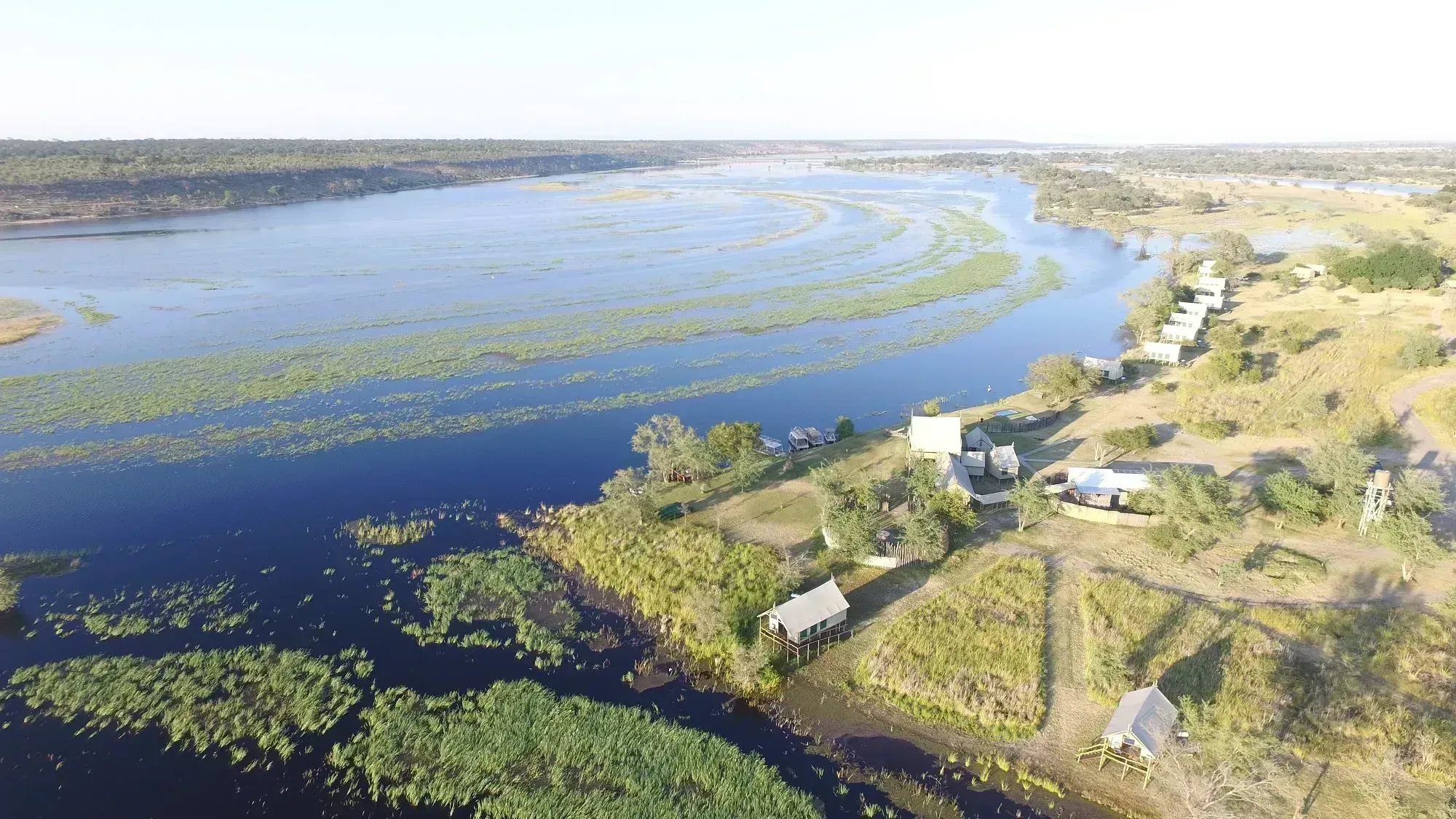
Chobe River Camp
On the banks of the Chobe River in Namibia's Zambezi Region, this relaxed Gondwana Collection camp swaps desert dust for water and birdsong — 20 tented chalets of Mopane timber and canvas, raised over the floodplain and gazing across to Botswana. Sunset boat cruises bring you close to elephant, hippo and prolific birdlife, while day trips cross the nearby Ngoma border into the legendary Chobe National Park — the same front-row wildlife for a fraction of the price across the water.
About Chobe River Camp
Twenty timber-and-canvas chalets over the floodplain, with Chobe's elephants just across the water.
After 1,500 kilometres through Angola, Zambia and Botswana, the Chobe River slides past this quiet Gondwana camp, four kilometres from the Ngoma border post. Twenty tented chalets of local Mopane timber and canvas stand on raised decks along the bank, solar-powered and air-conditioned, each with a private deck gazing across the floodplain to Botswana — and to Chobe National Park, home to Africa's greatest concentration of elephants.
Days run on the river's rhythm. Guided boat cruises leave in the slanting light of early morning and again at sunset, drifting the channels among elephant, hippo and a birder's riot of kingfishers, bee-eaters and jacanas; there are guided Canadian canoe trips, birding drives, walking trails and an open-air village museum of the Masubia people nearby. Family chalets and a pool round out lazy middays.
The camp's position is a strategist's dream: day trips cross the Ngoma border into Chobe National Park itself, and Victoria Falls thunders just 150 kilometres to the east — the same front-row wildlife as the famous Botswana lodges across the water, for a fraction of the price.
It's also travel that gives back: the camp is a joint venture with the Salambala Conservancy, sharing tourism income with the local community and training and employing its people — conservation you can feel good about sleeping in.
Giving back — a Salambala Conservancy joint venture
Chobe River Camp is a Gondwana Collection joint venture with the Salambala Conservancy: tourism income is shared with the local community, and the camp trains and employs its people. It's a working example of Namibia's community-based natural-resource management, where the benefits of wildlife tourism flow back to the people who live alongside it.
As with all Gondwana lodges, community upliftment continues through the Gondwana Care Trust (education, food security and the Back-to-School project), while the camp's solar power and tented, low-impact construction reflect the group's wider commitment to sustainable operations recognised by Namibia's highest eco quality seal.
- Setting
- On the Chobe riverbank, 4 km from the Ngoma border post, Zambezi Region
- Rooms
- 20 solar-powered tented chalets of Mopane timber and canvas, incl. family units
- Signature
- Sunset boat cruises among elephant, hippo and prolific birdlife
- Day trips
- Chobe National Park across the border; Victoria Falls ±150 km
- Community
- A Gondwana joint venture sharing income with the Salambala Conservancy
- Camping
- Four campsites sit beside the camp on the Chobe floodplain — each with private ablutions and a braai (no power points), for up to six people; hot water is fire-heated, and campers share the lodge pool and restaurant.
Our tip: The river runs shallow from September to December — if the boat cruises matter most to you, we'll time your visit for high water.
Build Caprivi Strip into your own route
Open our interactive map to drop Caprivi Strip into a trip, drag your stops into order, pick your travel style and see a live per-person cost estimate — then send the whole plan to us on WhatsApp in one tap.
Open the trip plannerItineraries featuring Caprivi Strip
Common questions
Where is the Caprivi Strip?
The Caprivi Strip — officially the Zambezi Region — is the narrow, north-eastern arm of Namibia, bordered by Angola, Zambia, Zimbabwe and Botswana, and threaded by the Zambezi, Kwando and Chobe rivers.
What makes the Caprivi different from the rest of Namibia?
It's lush and subtropical rather than desert. Fed by perennial rivers, it offers a water-based safari — boat cruises, big elephant herds, hippo and over 400 bird species — a complete contrast to Namibia's dunes and canyons.
Can you visit Chobe and Victoria Falls from the Caprivi?
Yes. The Caprivi is the ideal gateway: Botswana's Chobe National Park is just across the Ngoma border, and Victoria Falls is roughly a three-and-a-half-hour drive away, making a multi-country itinerary easy.
What is the best time to visit the Caprivi?
The dry season (roughly May to October) concentrates wildlife along the rivers and is best for game viewing, while the green season brings lush landscapes and excellent birding. River levels affect some boat activities, so timing is worth planning.
What wildlife can you see in the Zambezi Region?
Large elephant herds, hippo, crocodile, buffalo, lion and a wide range of antelope, plus more than 400 bird species — best experienced on a mix of boat safaris and game drives.