As Africa’s largest canyon, the Fish River Canyon is a staggering masterpiece of geological time. Its colossal ravines offer breathtaking viewpoints and world-renowned wilderness hiking trails.
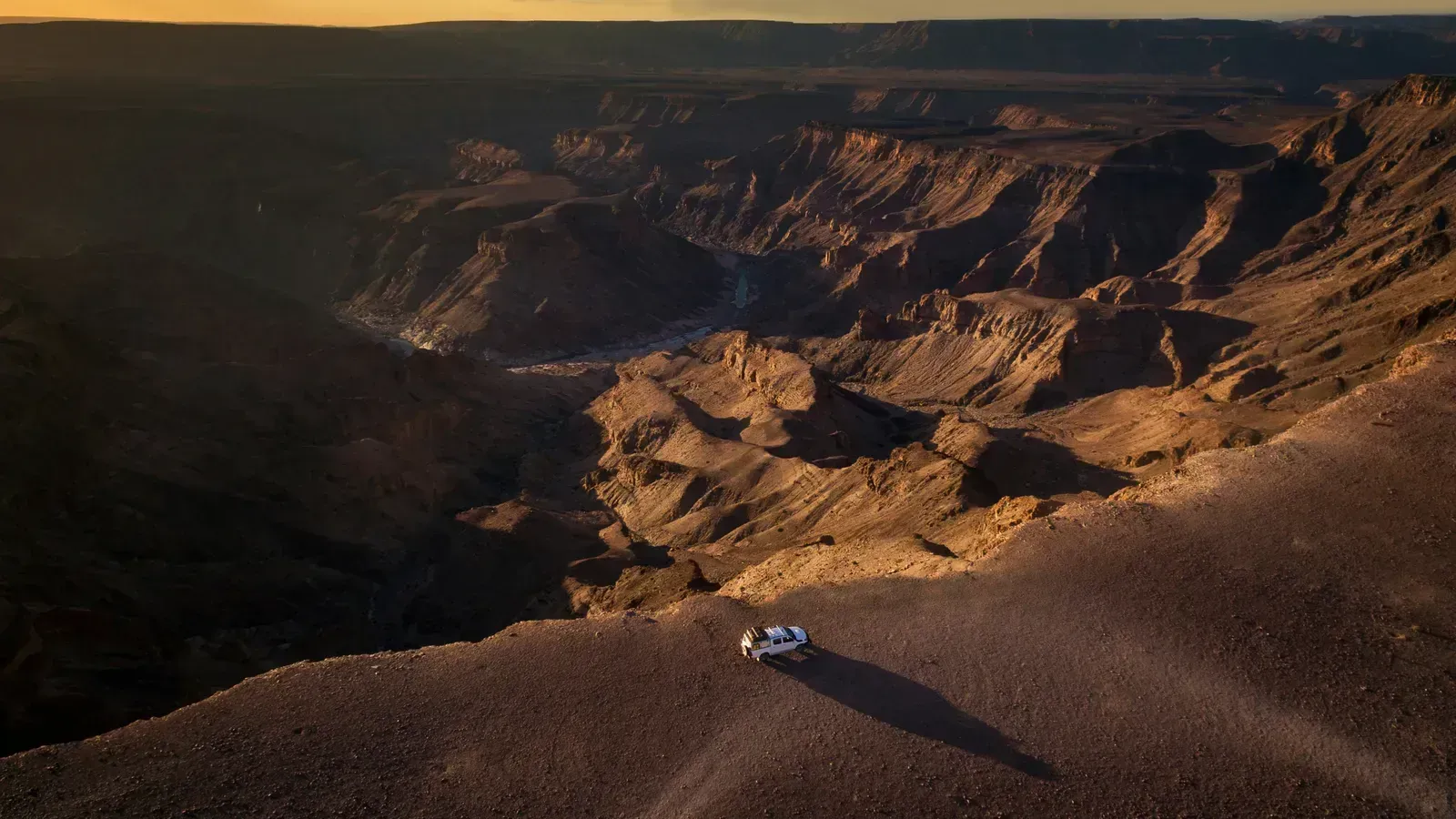
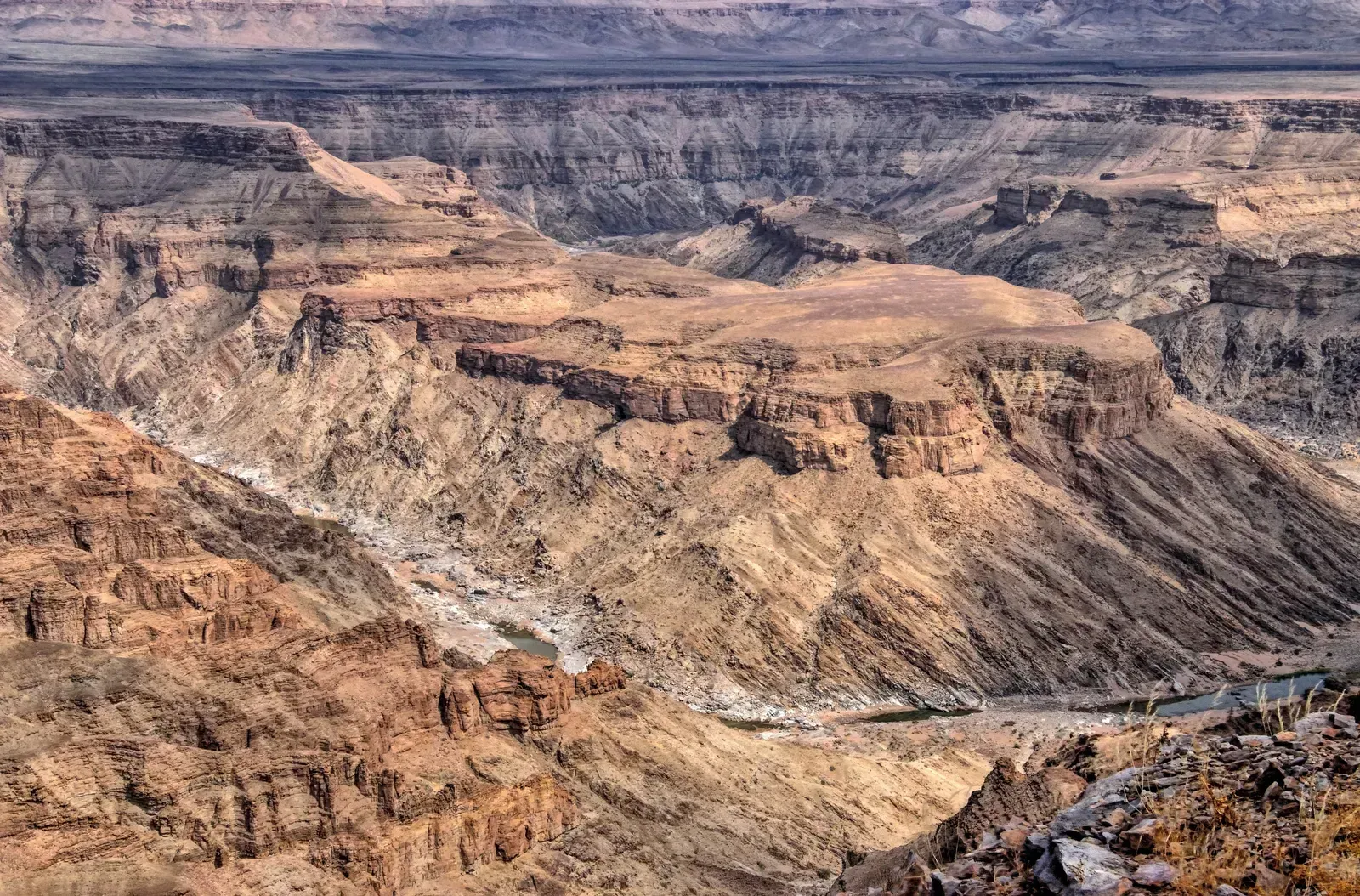
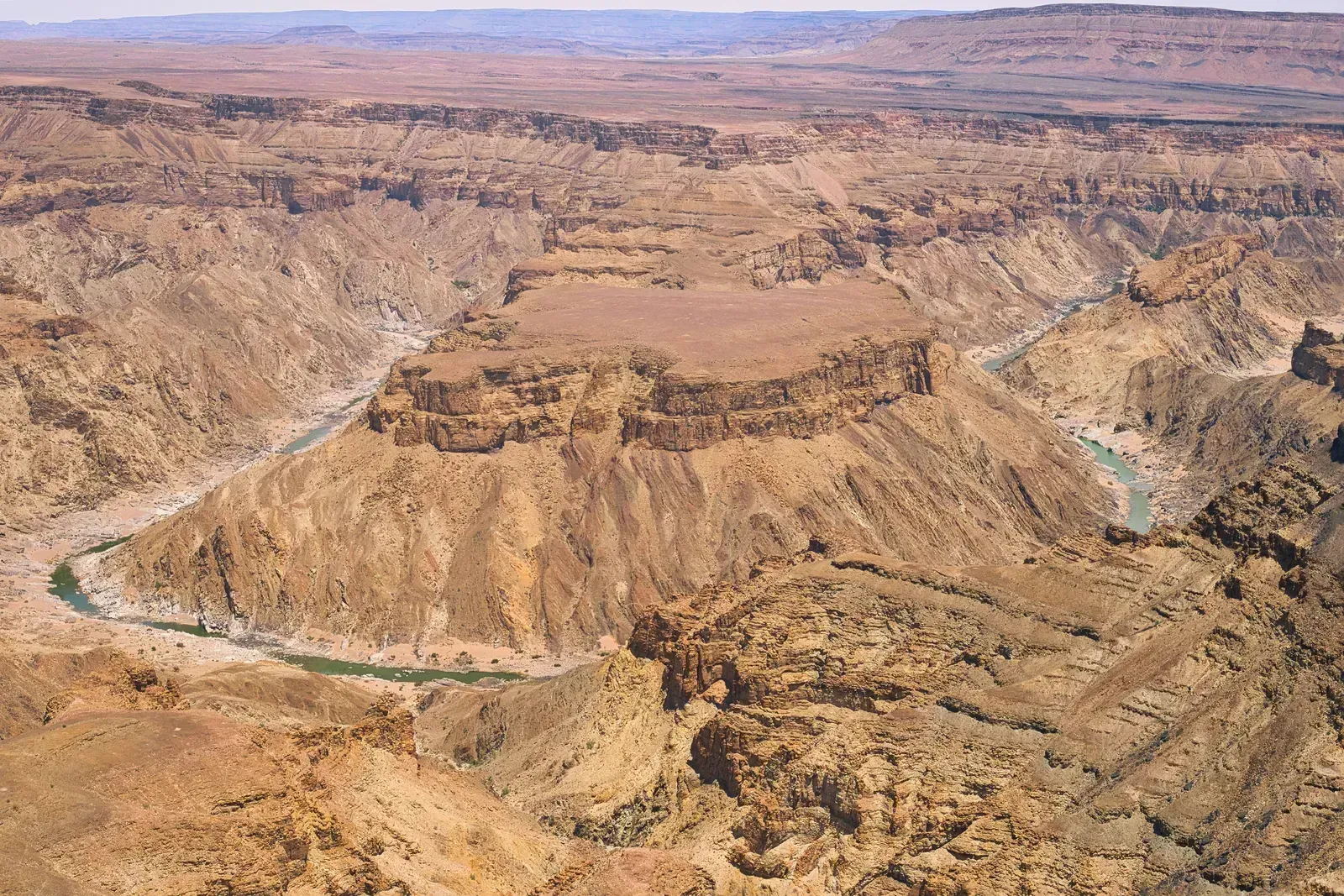
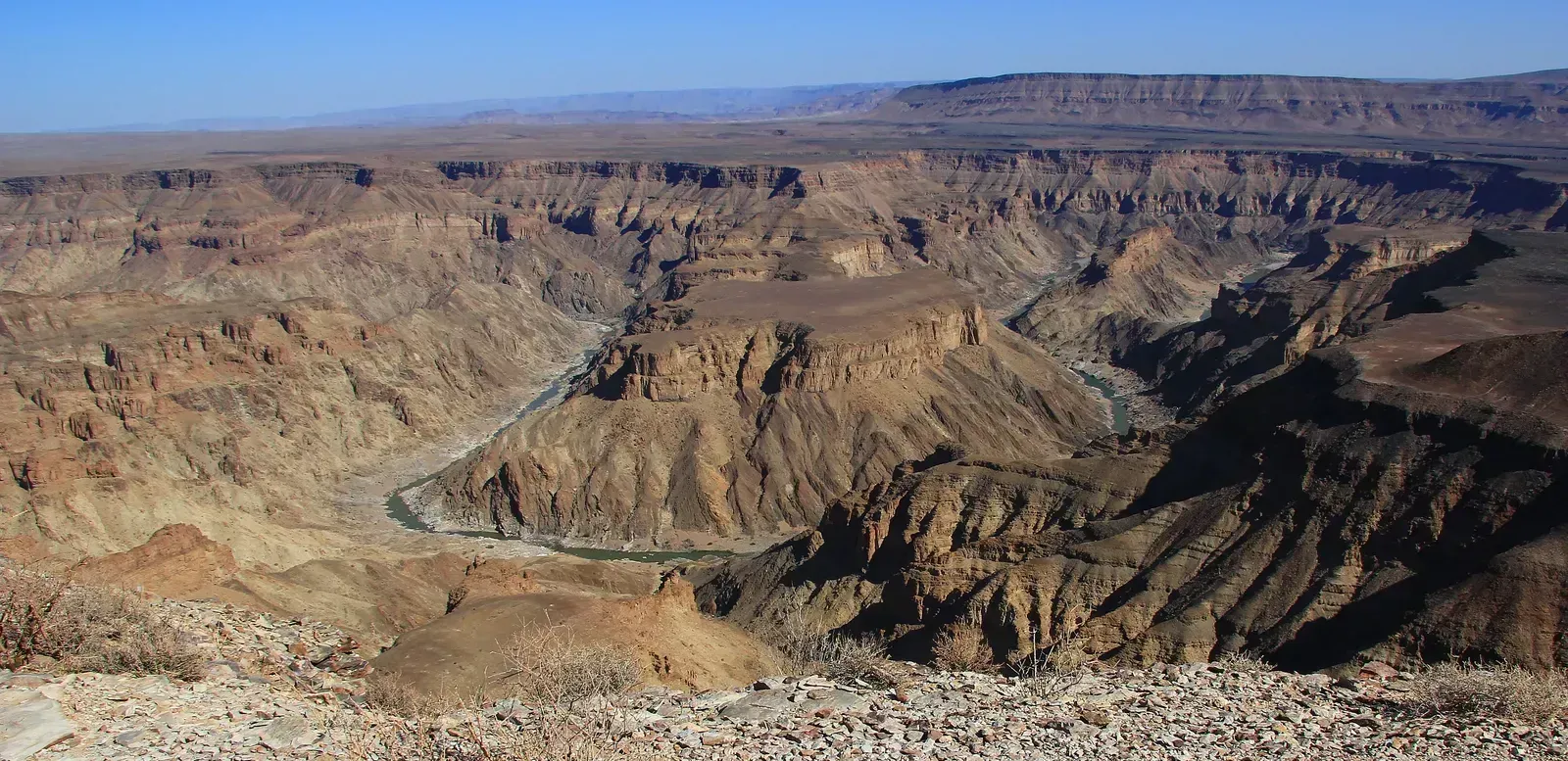
Plunging up to 550 meters deep, this epic chasm stretches for 160 kilometers, making it the second largest canyon in the world. Its immense scale is best realized from the famous Hell’s Bend viewpoint, where the river basin twists sharply through ancient rock layers that glow bright copper at sunrise
For thrill-seekers, this landscape hosts a legendary 5-day wilderness hiking trail. For clients seeking pure relaxation, the southern end features the rejuvenating thermal hot springs of Ai-Ais, while a cluster of characterful Gondwana lodges and campsites in the private Canyon Park make comfortable, good-value bases a short drive from the rim.
Fish River Canyon: Africa's grand canyon
Fish River Canyon is one of the great natural set-pieces of southern Africa — a colossal gorge that drops without warning from a flat desert plateau, glowing copper at sundown. Plunging up to 550 metres deep and stretching some 160 kilometres, it is the largest canyon in Africa and, by many measures, the second largest in the world, carved over hundreds of millions of years by water and the slow collapse of the valley floor along ancient fault lines.
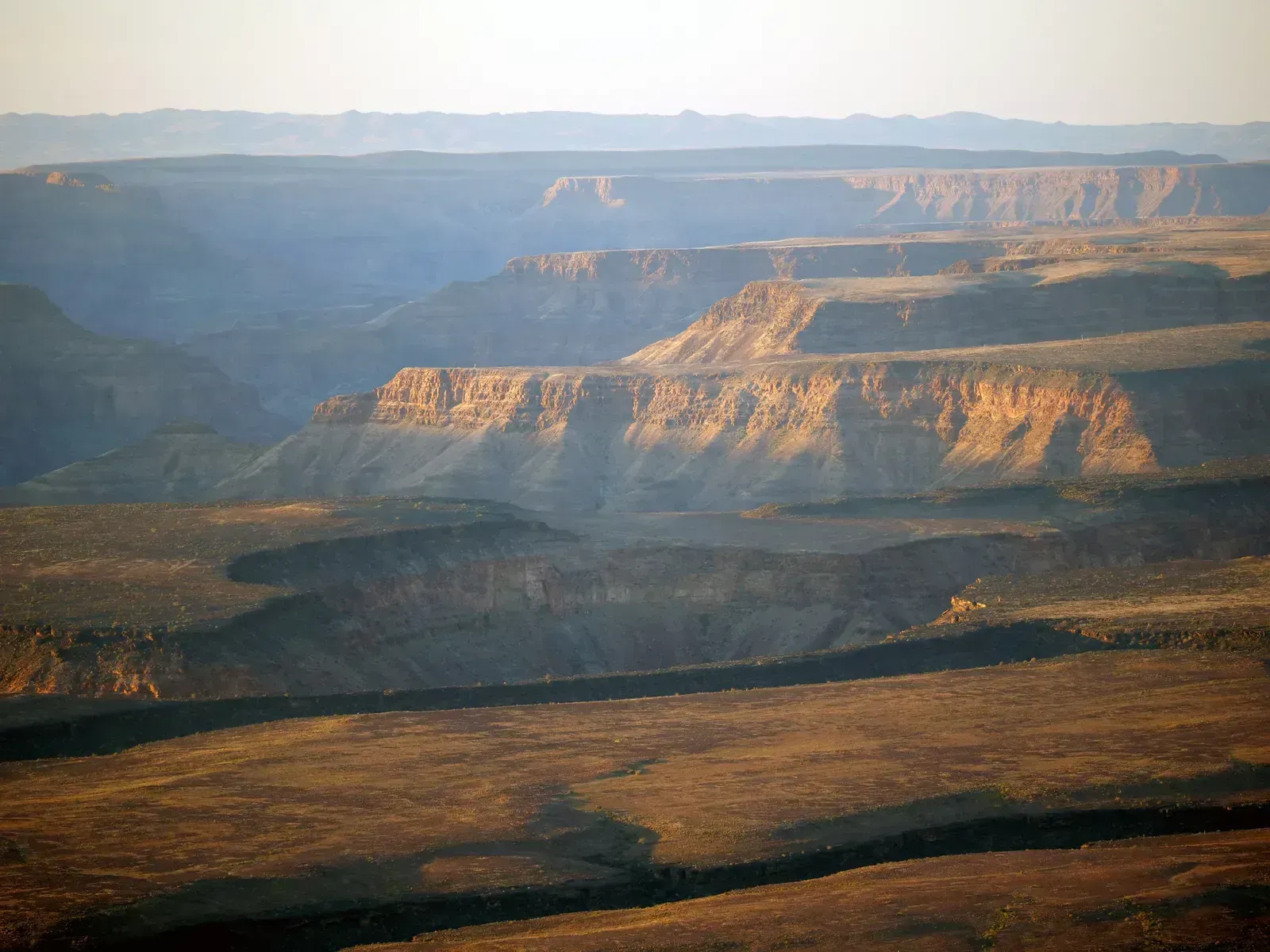
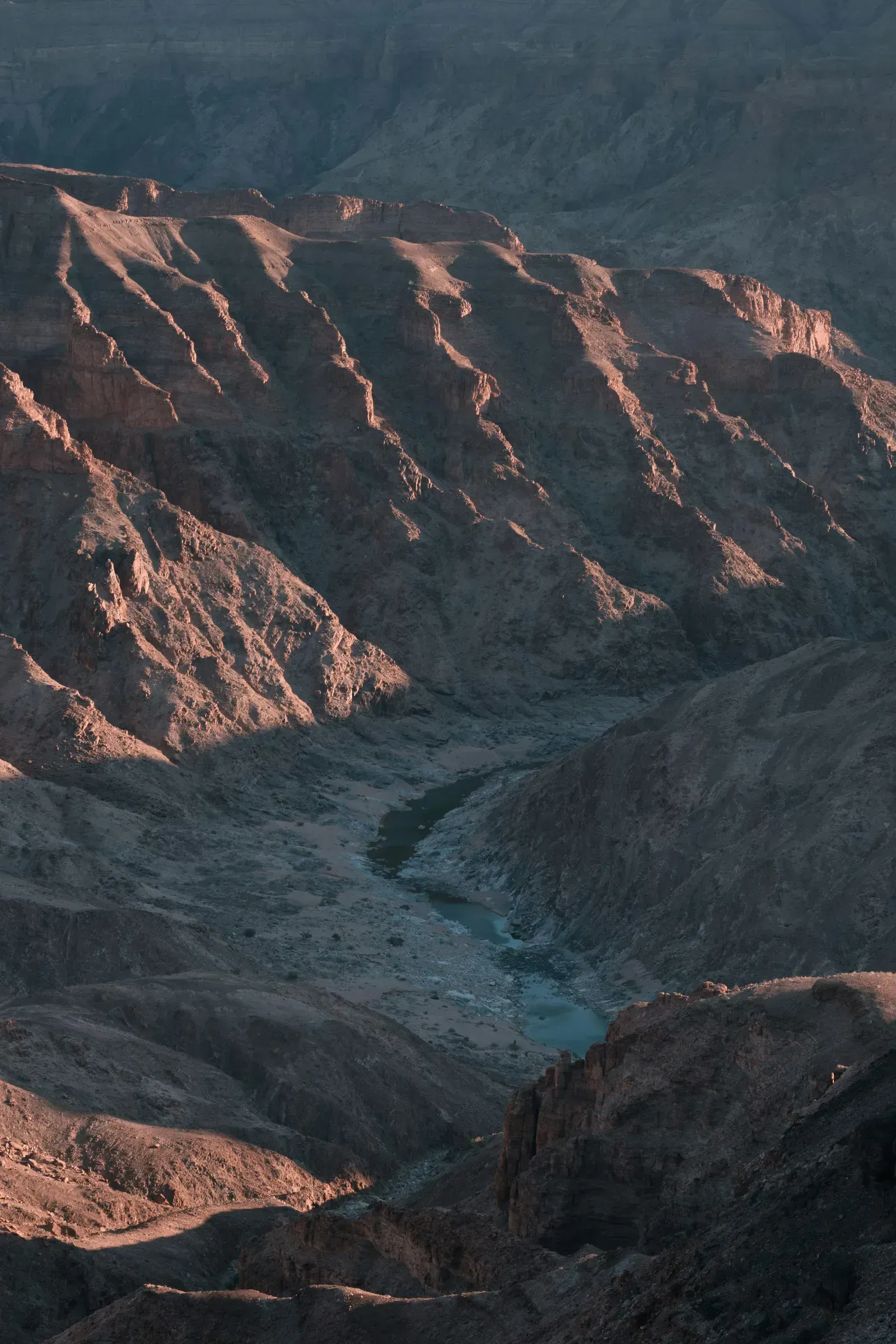
From the rim the scale is hard to take in: sheer walls in bands of copper, grey and ochre, the Fish River threading far below, and a silence broken only by the wind. It's a place that rewards slowing down — a sunrise, a sunset, and a night under some of the darkest skies in the country.
What to do at Fish River Canyon
The rim viewpoints
Most visitors experience the canyon from the string of viewpoints along the eastern rim, an easy morning's drive linking one jaw-dropping angle to the next. The Main Viewpoint near Hobas is the classic first look, where the plateau simply stops and the world drops away; nearby, Hell's Bend shows the river twisting sharply through the ancient rock. Time it for sunrise or sunset, when the whole canyon turns to fire.
The multi-day hike
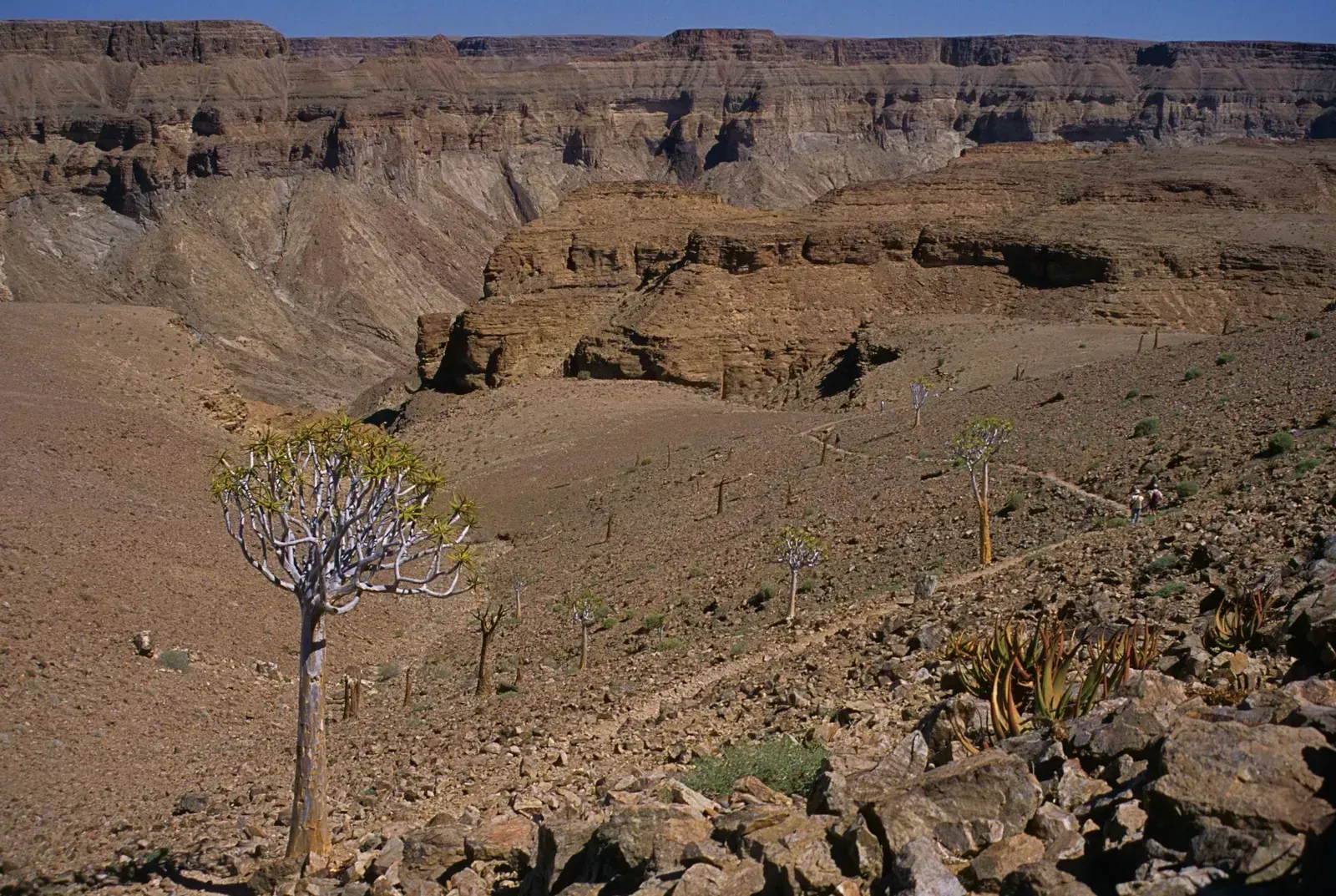
For serious walkers, the canyon holds one of Africa's legendary wilderness trails: a roughly 85-kilometre, four-to-five-day hike along the canyon floor from near Hobas down to the hot springs at Ai-Ais. It's fully self-sufficient with no facilities on the floor, runs only in the cooler months, and usually requires a medical certificate and a minimum group size — so permits book out well ahead. Shorter guided rim walks give a taste of the canyon without the full expedition.
The Ai-Ais hot springs
At the southern end of the canyon, the thermal springs of Ai-Ais are where trail-walkers finish and day-visitors come to soak. Naturally hot, mineral-rich water in a dramatic desert setting — a genuinely rejuvenating end to a day on the rim.
Visiting Fish River Canyon: when to go and how
This is deep-south Namibia, and the season matters. Summer heat here is fierce — regularly above 40°C — which is why the hiking trail closes then. Come in the cool, dry winter for comfortable days and clear skies.
- Best time to visit: May to September, when the days are mild and the trail is open.
- The canyon sits on the classic far-south loop with the Quiver Tree Forest, Kolmanskop and Lüderitz — most travellers fold it into a couple of unhurried days.
- The rim viewpoints are reached on good gravel roads; no hiking is needed to take in the main views.
- Draw cash before you arrive and fuel up in Keetmanshoop — services down here are sparse.
Where to stay at Fish River Canyon
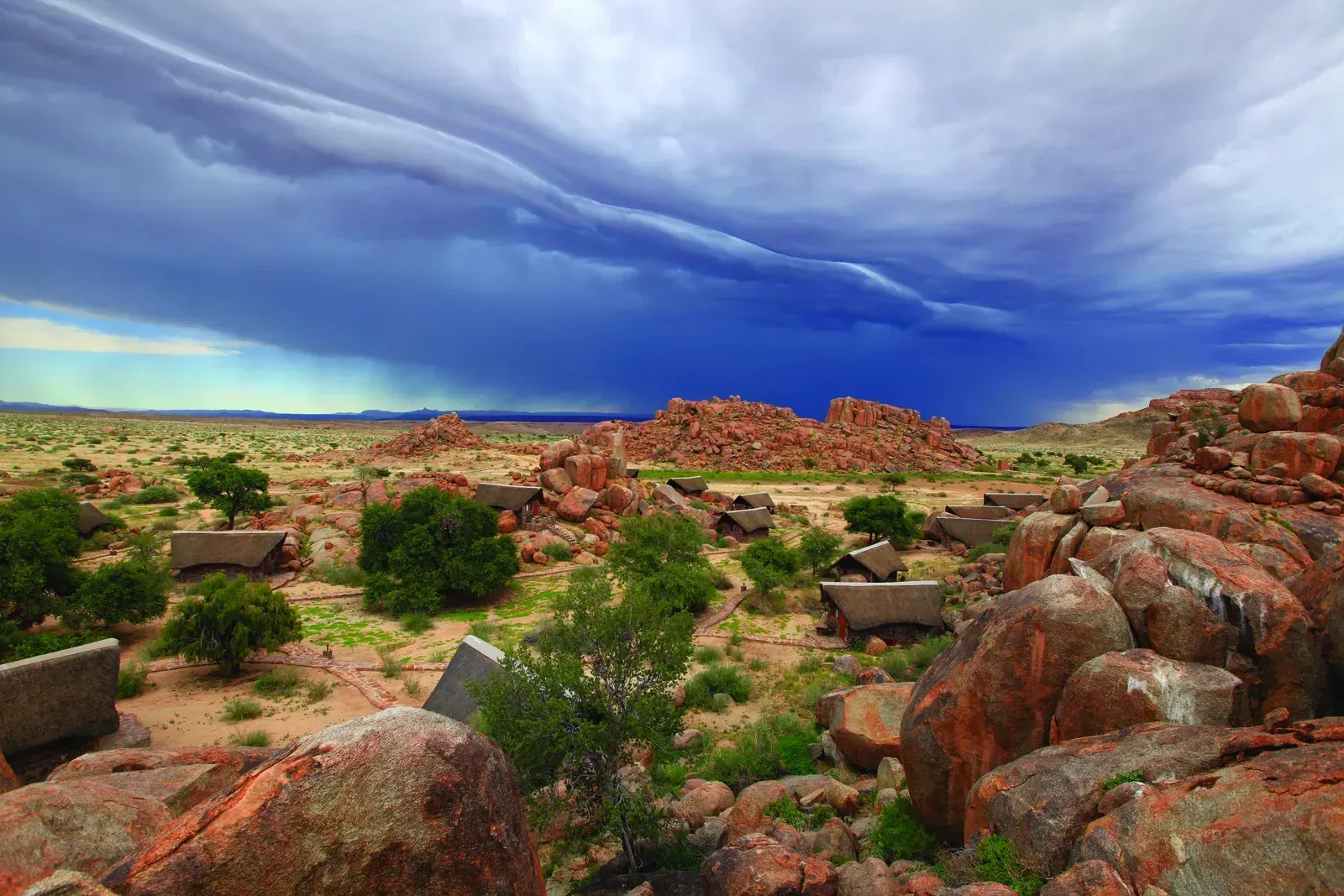
The eastern side has an excellent cluster of bases inside the private Gondwana Canyon Park, a short drive from the main viewpoints. Canyon Lodge is the characterful choice — natural-stone chalets tucked among giant granite boulders around a century-old farmhouse. Canyon Village is roomier and more family-friendly, with Cape-Dutch cottages beneath a sweeping rock face. And Canyon Roadhouse Campsite is the affordable, star-filled option, behind the wonderfully eccentric vintage-car Roadhouse. All three share the same guided viewpoint drives and extraordinary night skies — and staying in the park helps fund its conservation work.
In pictures
Where we recommend staying
Canyon Lodge
Gondwana Collection's warm, unpretentious base on the canyon's eastern side, tucked among rounded granite boulders inside the private Gondwana Canyon Park. Around thirty stone chalets — several built straight into the rock — gather around a century-old farmhouse and two pools, with guided drives to the great canyon viewpoints, a 4x4 wildlife loop across the plains, and night skies as dark as they come. Comfortable, good value, and a real conservation story: this is farmland brought back to life.
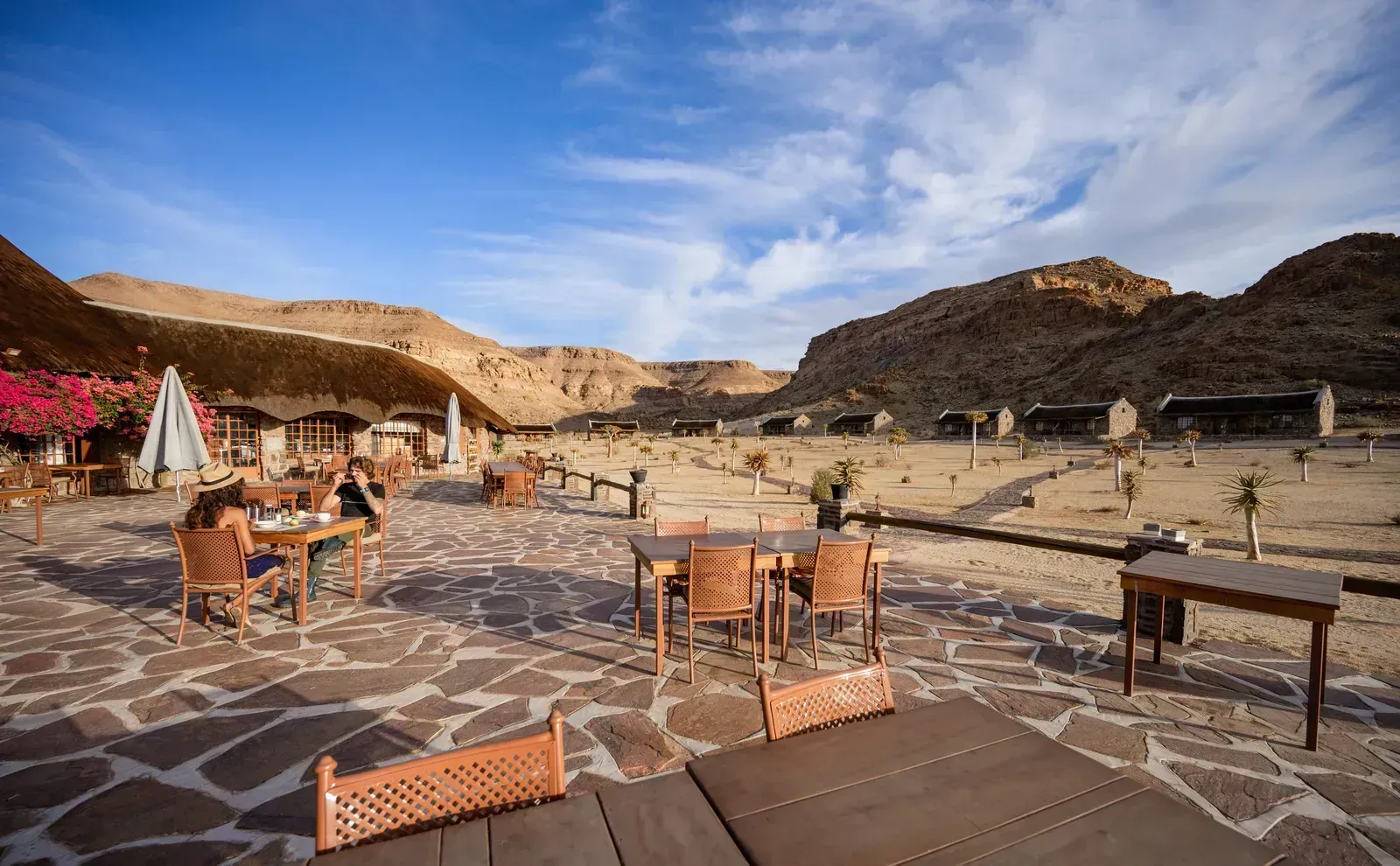
Canyon Village
Gondwana's larger, family-friendly base in the Gondwana Canyon Park — forty-two stone-and-thatch cottages curved in a horseshoe around a stand of young quiver trees, at the foot of a dramatic rock face. The sprawling thatched heart holds the restaurant, bar and lounge, dressed with murals, an old ox-wagon and a donkey cart that still carries luggage to the rooms. A relaxed, good-value stop about 20 km from the canyon, with guided viewpoint drives, plains-game trails and a pool for the heat.
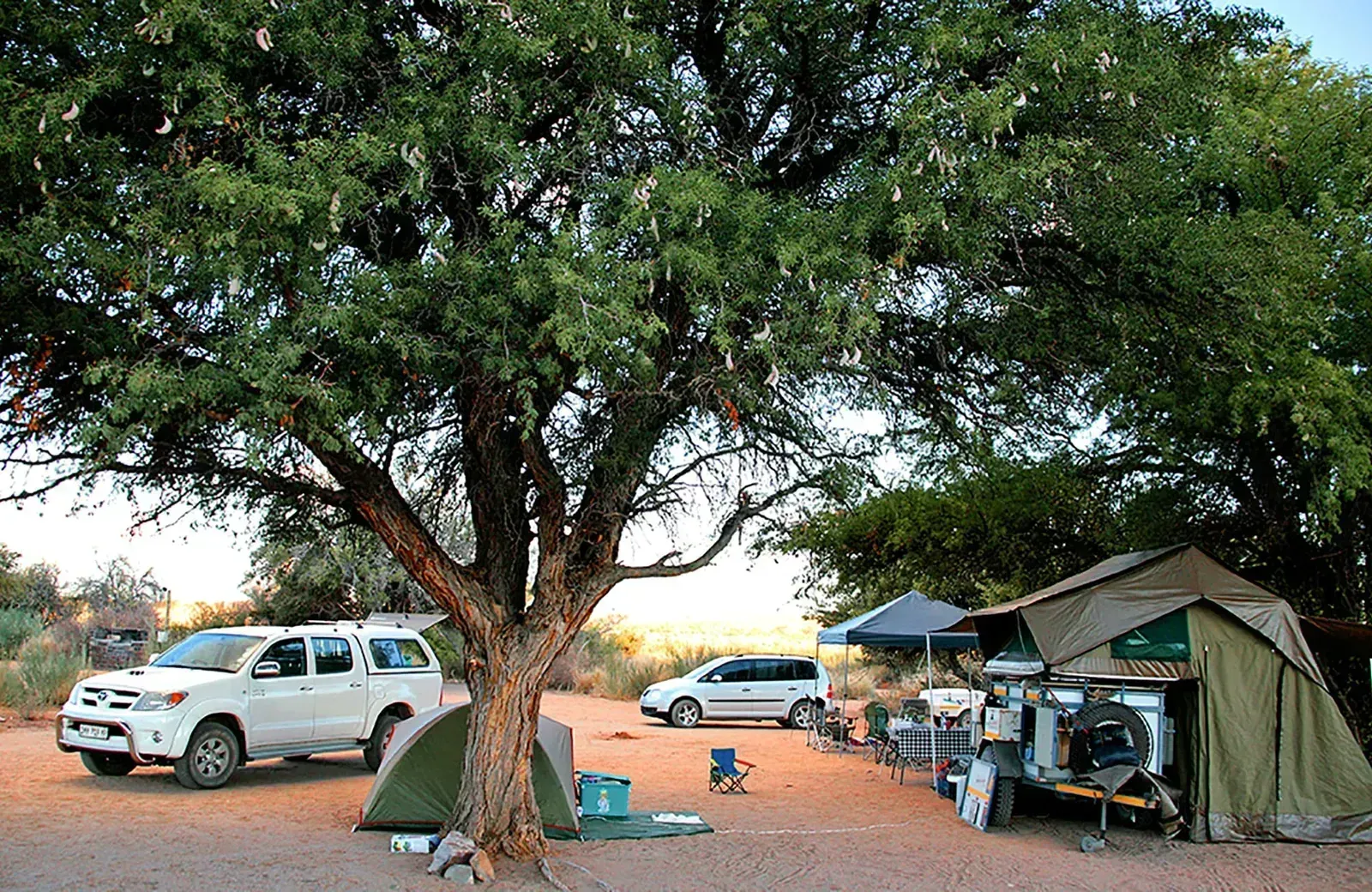
Canyon Roadhouse Campsite
Real Fish River Canyon camping, Gondwana style — twelve shaded, well-spaced sites tucked behind the Canyon Roadhouse on the bank of a dry riverbed, each with its own braai and power point, and neat stone-built ablutions with hot showers a short walk away. Around 17 km from the canyon, with the Roadhouse's legendary vintage-car restaurant, bar, pool and fuel station next door. The affordable, star-filled way to base yourself at the canyon.
Build Fish River Canyon into your own route
Open our interactive map to drop Fish River Canyon into a trip, drag your stops into order, pick your travel style and see a live per-person cost estimate — then send the whole plan to us on WhatsApp in one tap.
Open the trip plannerItineraries featuring Fish River Canyon
Common questions
Where is Fish River Canyon?
Fish River Canyon is in the far south of Namibia, in the ||Karas Region, reached on gravel roads off the routes through Keetmanshoop. From Windhoek it's roughly a full day's drive.
How big is Fish River Canyon?
It runs about 160 kilometres long, up to 27 kilometres wide, and as much as 550 metres deep — the largest canyon in Africa and among the largest in the world.
Can you hike Fish River Canyon?
Yes. The famous multi-day trail is a roughly 85-kilometre, four-to-five-day route along the canyon floor to Ai-Ais, open only in the cooler months (about mid-April to mid-September) and requiring a permit, a medical certificate and a minimum group size. Shorter guided rim walks are also available.
What is the best time to visit Fish River Canyon?
May to September, the cool dry season. Summer temperatures regularly exceed 40°C, which is why the hiking trail is closed then; the winter months are far more comfortable for both viewpoints and hiking.
Do you need to hike to see the canyon?
No. The main viewpoints along the eastern rim, including the Main Viewpoint near Hobas, are reached by car on gravel roads and deliver the iconic views without any hiking.
Where should you stay near Fish River Canyon?
The private Gondwana Canyon Park on the eastern side has three good-value bases a short drive from the rim: Canyon Lodge, Canyon Village and the Canyon Roadhouse Campsite. The Ai-Ais resort with its hot springs sits at the southern end.