Wildlife & the Atlantic is the shortest way to put Namibia's two headline experiences back to back — a proper safari and the wild coast — with nothing rushed in between. It is built for travellers who have less than a week but refuse to spend it behind the wheel: just two real driving legs, both on good tar, bookending a genuinely restful six days.
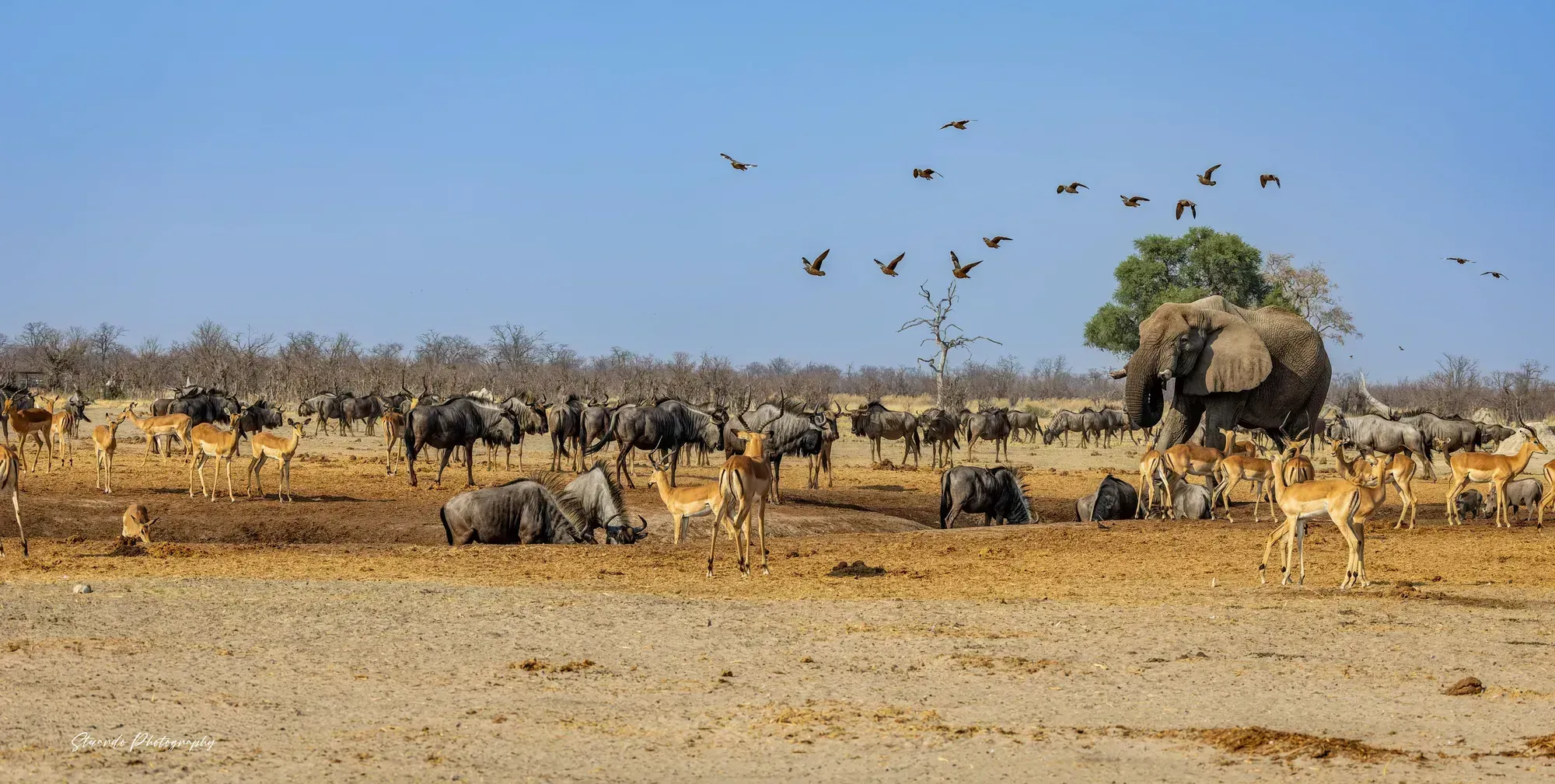
The heart of the route is three full nights at Etosha, long enough to settle into the rhythm of the great salt pan and let the wildlife come to you. In the dry season, elephant, giraffe, oryx and springbok gather at the floodlit waterholes in extraordinary numbers, and three mornings means three real chances at the lion and rhino that make the park famous. From there the road runs down to the coast, where two unhurried days in Swakopmund trade dust for sea air — palm-lined promenades, colonial cafés, dolphin cruises and the cool Atlantic on your doorstep — before the easy drive back to Windhoek.
Six days, five nights, a loop that starts and ends in the capital: an ideal first taste of Namibia, or a self-contained safari-and-coast add-on to a longer southern-African trip.
A note on day one: morning arrivals into Windhoek can start the route the same day, but if you land after midday we recommend a first night in or near the capital — the distances out here are real, and the trip is better begun rested.
Self-Drive or Privately Guided?
Self-drive
Both legs run on good tar, so this is one of the most forgiving routes to self-drive — a standard 2x4 rental is genuinely fine, and the freedom to linger an extra half hour at a productive waterhole is worth having on a route this wildlife-focused.
Privately guided
Three mornings is a short window to get lucky with lion or rhino on your own — a guide who already knows this week's productive waterholes turns three mornings into three mornings you talk about for years.
The route
Windhoek – Etosha – Swakopmund – Windhoek
In pictures
Day by day
- Days 1–3
Etosha
3 nightsA salt pan so vast it's visible from space — and a waterhole theatre where the wildlife comes to you.
Read the full Etosha guide → - Days 4–5
Swakopmund
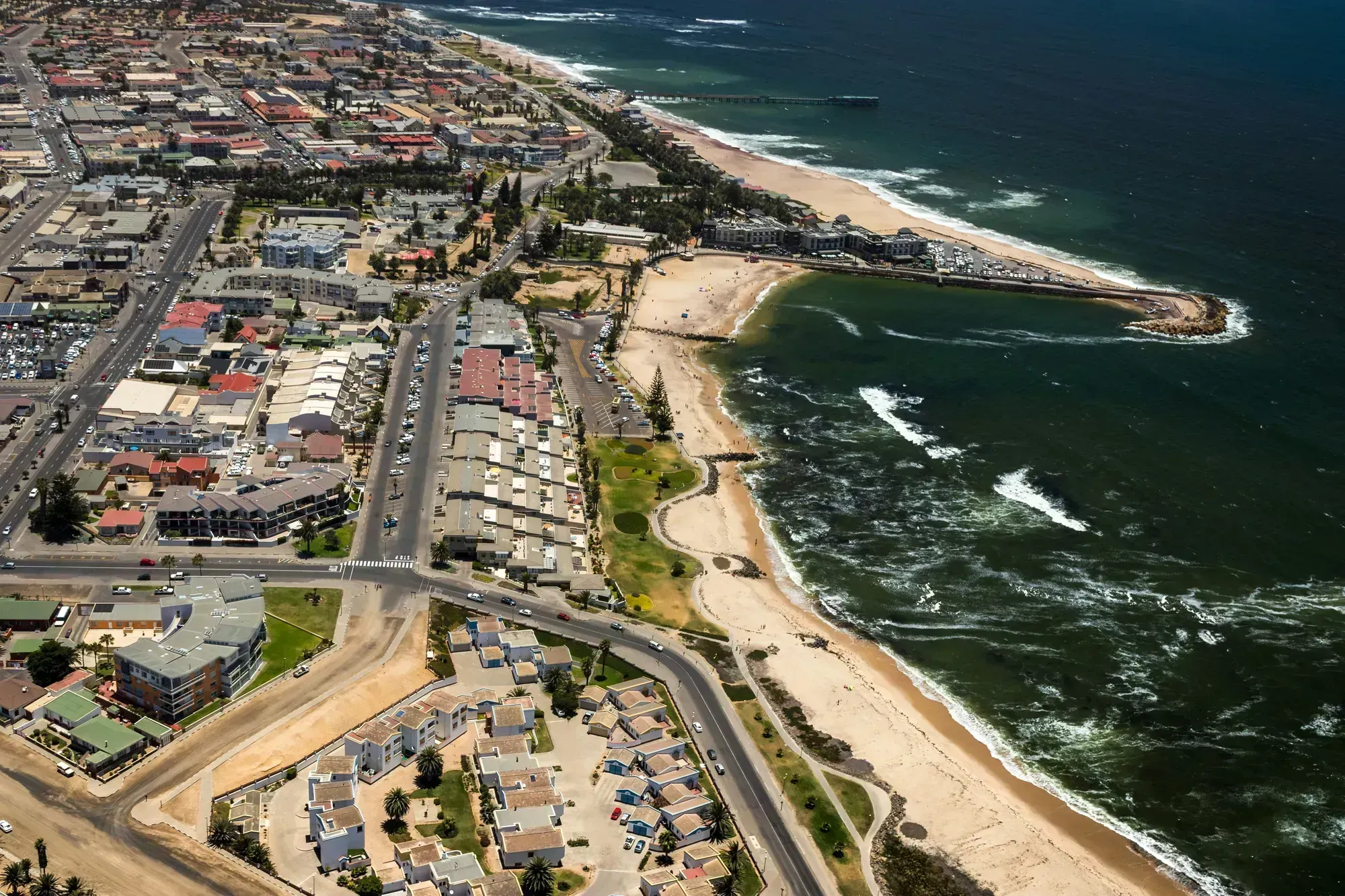
2 nightsA palm-lined coastal town of historic German colonial charm, wedged between the crisp Atlantic surf and towering desert dunes—discover Swakopmund, Namibia's premier adventure capital.
Read the full Swakopmund guide → - Day 6
The road home
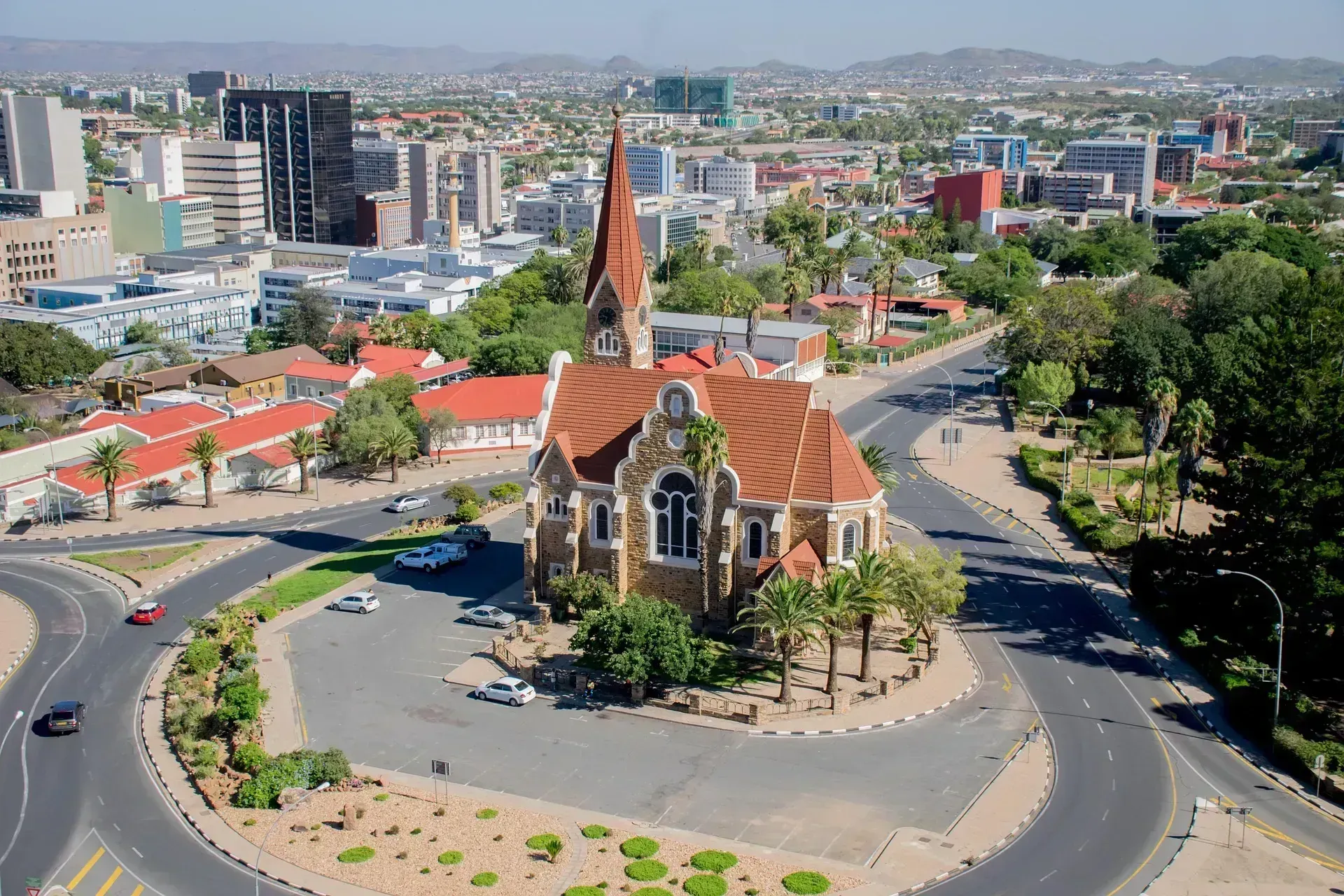
An unhurried drive back to Windhoek closes the loop — timed so you're in the capital with breathing room before your flight or your next adventure.
Read the full Windhoek guide →
When to Go
May to October — Namibia's dry season — is when this route earns its name. At Etosha, the dry months force wildlife to concentrate at the park's waterholes rather than scatter across the bush, so your three nights coincide with the best game viewing of the year; September and October, right before the rains, are typically the most productive of all. Swakopmund stays mild and often misty year-round thanks to the cold Benguela current, so the coast half of this route is far less seasonal than the safari half. For the month-by-month detail, see our Best time to visit Namibia guide.
Good to know before you go
On the road
- Namibia's speed limits are lower than they feel on these open roads: 120 km/h on tar, 80 km/h on gravel, 60 km/h through any town — gravel in particular deserves real respect at that speed.
- Meeting oncoming traffic on gravel, ease off the accelerator and keep left. It protects your windscreen from thrown stones and stops their dust cloud from blinding you.
- If the back of the vehicle starts to slide — fishtailing, common on gravel, after rain, or if a tyre bursts or suddenly deflates — the fix is the same and just as counter-intuitive: come off the accelerator, hold the wheel steady, and let the car settle back into line. Braking hard or fighting the wheel is what turns a slide into a spin, whatever caused it.
- Wildlife crosses these roads, especially at dawn, dusk and after dark. If something steps out ahead of you, staying in your lane matters more than stopping in time — swerving is what causes rollovers, not the animal. Brake hard if you're confident you'll keep full control doing so; if the surface makes that risky, ease off instead and let your lane position, not your brakes, keep you safe.
- Headlights on, day and night, on every road — it's how oncoming traffic finds you through the dust.
Sun, water & health
- This is desert country — dry, intensely sunny, and coastal fog can amplify sunburn even on a grey-looking day. SPF50, a hat and sunglasses earn their place in the car.
- Tap water is generally safe in Namibia's towns and lodges, but as a visitor we'd still recommend sticking to bottled — new food and water always carries some risk of an upset stomach, even when it's technically safe, and bottled is the simplest way to rule it out. Keep a few extra litres in the vehicle regardless — the first thing you'll want if a gravel road ever gets the better of a tyre.
- Etosha sits in a low-to-moderate seasonal malaria area. Worth a quick word with your doctor before you fly — see our Is Namibia safe? guide for the full picture.
Respecting the land
- Namibia was the first country to write conservation into its constitution. Stay on marked roads and trails, and leave rock art, petrified wood and any natural formation exactly as you found it — even water sprayed on rock art to sharpen a photo does lasting damage.
- It's illegal to take home natural souvenirs from anywhere in the country, however small.
- Pack out everything you bring in, and if you spot litter that isn't yours — a bottle cap at a viewpoint, a stray wrapper at a rest stop — picking it up costs you nothing and leaves the place better than you found it.
- Namibia's wildlife is wild, not staged: keep your distance, stay in the vehicle around anything large or unpredictable, and never approach, feed or provoke an animal for a better photo. If a situation feels tense, the right move is always to quietly create space, not to get closer — don't be a hero, a great photo isn't worth the risk.
What's included
- Every stay for the nights shown, matched to your chosen travel style
- Personalised route and trip planning by our own team
- Park and reserve entrance fees for the stops on this route
- 24/7 support from Sandura while you're on the road
- A private guide and vehicle throughout, if travelling guided
- Flights to and from Namibia
- Vehicle Rental (unless selected in planner)
- Meals and activities not specified at each stay
- Travel insurance and personal expenses
- Gratuities for guides and lodge staff
Make Wildlife & the Atlantic your own
One tap loads every stop, night and drive of this route into our interactive planner — swap lodges, stretch the nights, add a 4x4 and watch the live per-person cost estimate follow along, then send the whole plan to us on WhatsApp.
Plan this routeCommon questions
Is 6 days enough for a Namibia trip?
For this specific pairing, yes — three full nights at Etosha and two on the coast is enough to properly settle into both without feeling rushed. It won't reach the dunes or the deep south; for those, look at our 10-day or 15-day routes.
Do I need a 4x4 for this route?
No. Both driving legs run on good tar the whole way, so a standard 2x4 rental is fine — see our self-drive Namibia guide for where that changes on other routes.
What's the best time of year to do this route?
May to October, Namibia's dry season, is best — the waterholes at Etosha draw wildlife in far greater numbers, with September and October the peak.
Can I add Sossusvlei or the dunes to this itinerary?
Not without stretching it — this route is deliberately compact. If the dunes matter to you, our 7-day Desert & Coast or 10-day Dunes, Coast & Wildlife routes both include them alongside the coast.
How much does a trip like this cost?
It depends on the lodges and travel style you choose. Load this route into our trip planner and pick a travel style to see a live, per-person lodging estimate — the final quote always comes from our team.
Should I rent a GPS with the vehicle?
We recommend it. Phone signal and data coverage isn't guaranteed across Namibia's more remote stretches, so a dedicated GPS unit — most rental companies offer one — is worth having as backup to offline maps.
Will I definitely see the Big Five at Etosha?
Etosha has four of the Big Five (no buffalo), and sightings are never guaranteed anywhere in the wild — but three full nights at the waterholes gives you a genuinely strong chance at lion, elephant and rhino, more than most shorter safaris allow.
Is this route good to pair with a longer Southern Africa trip?
Very — its short length and simple two-leg structure make it an easy add-on to a Cape Town, Victoria Falls or Botswana itinerary, flying in and out of Windhoek at either end.