Last updated · Sandura Tours, Windhoek
Cradled in a basin of the Khomas Hochland at over 1,650 metres, Windhoek is where almost every Namibian journey begins and ends. Ringed by the Auas and Eros mountains, the capital is small, walkable and relaxed — a crossroads where colonial-era churches stand a block from a fast-growing African city.
The compact centre rewards a slow wander. The sandstone Christuskirche, consecrated in 1910, still anchors the skyline with its twin spires, while a short walk away the striking Independence Memorial Museum rises above the old Tintenpalast parliament gardens and tells the country's road to freedom. Independence Avenue runs the length of it all, lined with cafés, craft shops and the easy bustle of a capital that never feels rushed.
Windhoek is also where Namibia comes to the table. The Namibia Craft Centre gathers makers from across the country under one roof, and the city's restaurants are the place to try game — oryx, kudu and springbok — alongside the famous platters at Joe's Beerhouse and a locally brewed lager poured to the old German purity law. Beyond the centre, the township of Katutura offers some of the warmest, most honest cultural tours in the country.
Most of all, the capital is a launchpad. With Hosea Kutako International just east of town and every major route fanning out from here, a night or two in Windhoek is the natural way to land softly, stock up and get your bearings before the desert, the coast or the great parks pull you north and south.
Windhoek: Namibia's capital in the highlands
Cradled in a basin of the Khomas Highland at over 1,650 metres and ringed by the Auas and Eros mountains, Windhoek is where almost every Namibian journey begins and ends. The capital is small, walkable and relaxed — a crossroads where colonial-era churches stand a block from a fast-growing African city. Many travellers pass straight through on their way to the desert, but a night or two here is the natural way to land softly, stock up, and get your bearings before the open road pulls you north or south.
Top things to do in Windhoek
Historic sights and architecture
The compact centre rewards a slow wander. The sandstone Christuskirche, consecrated in 1910, still anchors the skyline with its twin spires; a short walk away, the striking Independence Memorial Museum rises above the old Tintenpalast parliament gardens and tells the country's road to freedom. Independence Avenue runs the length of it all, lined with cafés and craft shops.
Craft, cuisine and culture
Windhoek is where Namibia comes to the table. The Namibia Craft Centre gathers makers from across the country under one roof, and the city's restaurants are the place to try game — oryx, kudu and springbok — alongside the famous platters at Joe's Beerhouse and a locally brewed lager poured to the old German purity law. Beyond the centre, the township of Katutura offers some of the warmest, most honest cultural tours in the country.
Arriving and getting around
Most journeys begin at Hosea Kutako International Airport, about 45 km east of the city. Pre-arranged transfers or a booked shuttle are the easiest way in after a long flight. Around town, ride-hailing apps and pre-booked taxis are the reliable options for visitors, and the capital is compact enough to explore the centre on foot.
- If your flight lands in the morning, you can usually start your route the same day; land after midday and it's better to overnight here and set off fresh.
- Windhoek is the place to stock up — supplies, cash and fuel — before the long distances between towns further out.
- Stick to well-lit, busier areas after dark and use booked transport rather than hailing cabs, as in any capital.
In pictures


Where we recommend staying
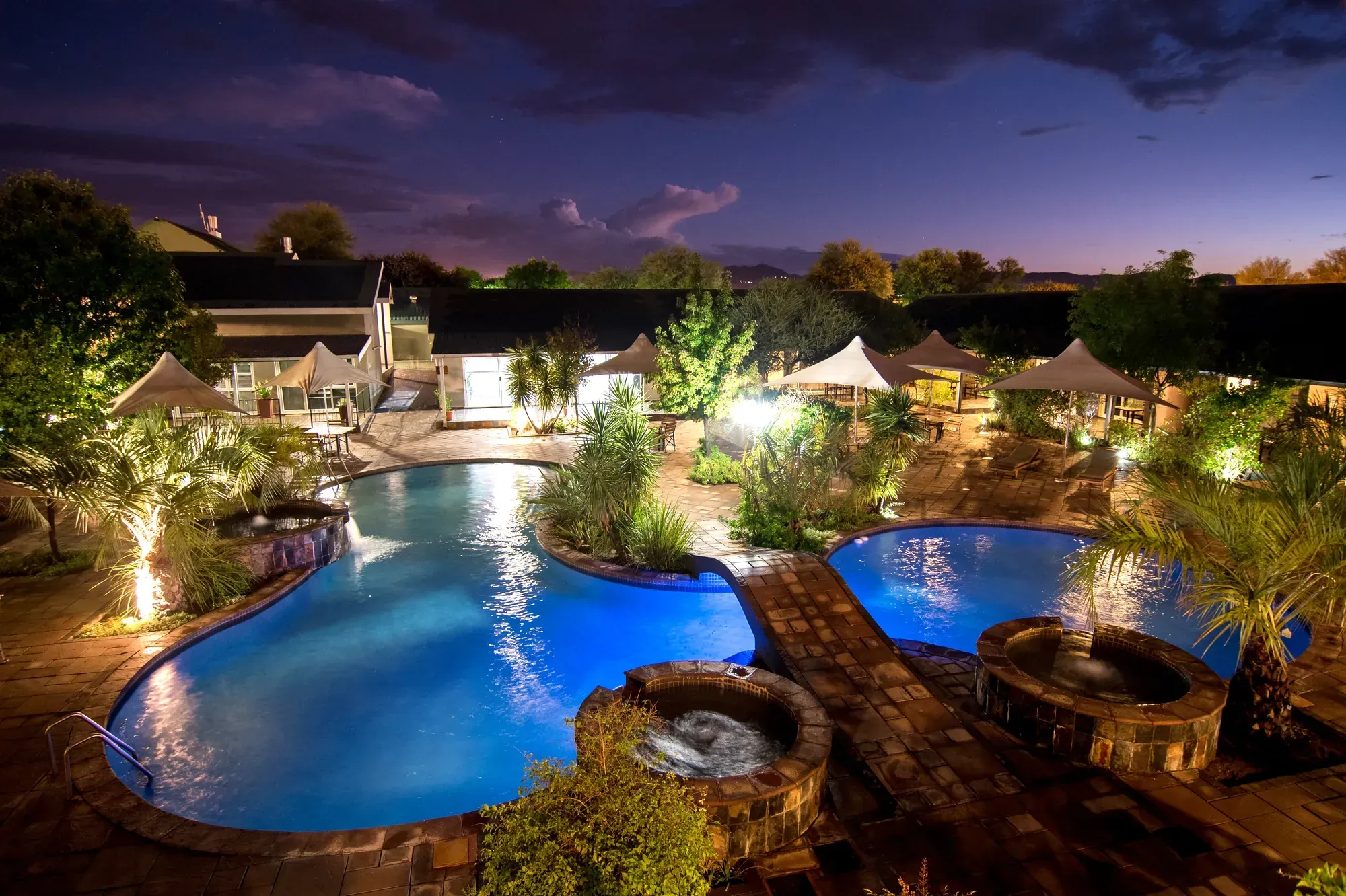
Arebbusch Travel Lodge
On the southern edge of Windhoek, along the dry Arebbusch River, this long-standing rest camp packs the widest range of any city stay — shaded campsites and budget rooms through self-catering chalets to luxury Meru-style safari tents — all inside secure, indigenous gardens alive with birdsong. A restaurant and wood-fired pizzeria, pools, and five minutes to Eros airport make it an easy, good-value first or last night.
About Arebbusch Travel Lodge
A green, good-value rest camp on Windhoek's southern edge — everything from campsites to luxury safari tents, minutes from town.
Arebbusch Travel Lodge sits on the banks of the (usually dry) Arebbusch River on the southern edge of Windhoek — about ten minutes from the city centre yet set apart from its bustle in a quiet, natural green space. The grounds are secure and fenced, planted with indigenous gardens, and the lodge makes a point of the birdlife and small wildlife that share them, so a stay here feels a world away while staying within easy reach of town.
The real draw is range: few places in Windhoek stretch from shaded, powered campsites and simple budget rooms through comfortable standard and luxury bed-and-breakfast rooms to small and large self-catering chalets, a self-catering cottage, and luxury Meru-style safari tents tucked along the property's edge. Whether you're a backpacker, a family in a six-sleeper, or a couple wanting canvas-and-linen comfort, there's a unit sized and priced to fit — most air-conditioned and en-suite, with braai areas and satellite TV.
At the heart of the lodge, the Arebbusch Restaurant & Pizzeria serves buffet breakfasts, à-la-carte lunches and dinners and wood-fired pizzas in a relaxed garden setting overlooking a fountain pond, with a bar alongside and a lavish Sunday buffet on selected weeks. Around it are outdoor pools and a kids' pool, a 24-hour reception, free Wi-Fi, same-day laundry, conference and function venues, a business centre, a children's playground and guided birdwatching walks.
As a base it's genuinely convenient: five minutes from Eros domestic airport and the golf, bowling and sports centre, a short hop to the Grove Mall, an eight-minute walk to the national rugby stadium, and about forty-five minutes from Hosea Kutako International Airport — with an airport shuttle by arrangement. It's the practical, affordable bookend to a Namibian journey, or a comfortable self-catering perch for a few days in the capital.
Giving back — protecting a green space inside the city
Arebbusch frames its own giving-back around the land it occupies: in the lodge's words, by staying here you help protect this piece of green space in Windhoek for future generations. It is run with eco-friendly practices including solar energy, and its indigenous gardens are kept as a living habitat — more than 35 bird species, along with small mammals and reptiles, make their home in the veld between the chalets, a genuine pocket of urban conservation on the city's edge.
The lodge doesn't publish a formal community programme on its own website, so we've kept this section to what Arebbusch itself states — if they share more of their sustainability or community work with us, we'll update this page with their official wording.
- Setting
- On the banks of the dry Arebbusch River, Windhoek's southern edge — about 10 minutes from the city centre
- Rooms
- The full range: B&B rooms, self-catering chalets and cottage, luxury Meru-style safari tents, budget rooms and shaded campsites
- Dining
- The Arebbusch Restaurant & Pizzeria — buffet breakfasts, à-la-carte meals, wood-fired pizzas and a Sunday buffet
- Facilities
- Outdoor pools and kids' pool, 24-hour reception, free Wi-Fi, laundry, conference venues, playground, birdwatching walks
- Getting there
- 5 minutes from Eros domestic airport; about 45 minutes from Hosea Kutako International Airport
- Camping
- Camping and caravanning is a core part of Arebbusch — level, shaded sites in the bushveld grounds. Standard sites have power and use communal ablutions and a kitchen; luxury sites add a private bathroom, a fixed braai and a covered work area, with the pool, restaurant and 24-hour reception a short walk away.
Our tip: Ask for one of the Meru-style safari tents along the property's edge — you get the canvas-and-birdsong safari feel while still being ten minutes from town.
Build Windhoek into your own route
Open our interactive map to drop Windhoek into a trip, drag your stops into order, pick your travel style and see a live per-person cost estimate — then send the whole plan to us on WhatsApp in one tap.
Open the trip plannerItineraries featuring Windhoek
Common questions
Is Windhoek worth visiting?
Yes — while many travellers treat it as a stopover, a night or two lets you enjoy its historic architecture, excellent game restaurants, craft markets and Katutura cultural tours, and it's the natural place to land and prepare before heading out.
What is the capital of Namibia?
Windhoek is the capital of Namibia, set in the central highlands at over 1,650 metres and home to the country's main international gateway, Hosea Kutako International Airport.
What are the best things to do in Windhoek?
Visit the Christuskirche and Independence Memorial Museum, wander Independence Avenue, shop at the Namibia Craft Centre, try game at Joe's Beerhouse, and take a cultural tour of Katutura township.
How far is the airport from Windhoek?
Hosea Kutako International Airport is about 45 km east of the city centre, roughly a 45-minute drive. Pre-arranged transfers or booked shuttles are the easiest way in.
How many days should you spend in Windhoek?
One to two nights is plenty for most trips — enough to see the centre, enjoy a good dinner, and stock up — while using it as the launchpad for the rest of your Namibian route.
When is the best time to visit Windhoek?
The cool, dry winter months from May to October are the most comfortable for exploring the city, with sunny, mild days and little rain.