Etosha rings one of Africa's largest salt pans, a bleached, blinding expanse fringed by pale grass and thornbush. The whole park is built around its waterholes, and in the dry season the wildlife arrives at them in extraordinary numbers.
From April to October, the bush thins and the seasonal water vanishes, funnelling elephant, giraffe, zebra, lion and black rhino toward a handful of permanent springs. You simply park, switch off the engine and watch the parade — often a dozen species sharing a single pool.
The rest camps sit right on the pan's edge, several with floodlit waterholes that glow through the night. It's not unusual to sit out long after dinner and watch rhino materialise from the dark, just metres away in complete silence.
It remains a legendary ecosystem offering unparalleled, high-contrast safari photography.
Etosha National Park: the Great White Place
Etosha National Park is one of Africa's great wildlife destinations — over 22,000 square kilometres of grassland and thornveld wrapped around a salt pan so vast, roughly 4,800 square kilometres, that it can be seen from space. "Etosha" means the great white place, and on a still day the pan shimmers like a dry white sea to the horizon.
What sets Etosha apart is how you see its wildlife. Instead of tracking animals through dense bush, you wait at the waterholes and let them come to you — often a dozen species sharing a single spring. That, plus excellent gravel roads and rest camps right inside the park, makes Etosha one of the most rewarding and accessible safaris in Southern Africa, for first-timers and seasoned safari-goers alike.
Wildlife: what you'll see on an Etosha safari
Etosha holds four of the Big Five — elephant, lion, leopard and both black and white rhino (there's no buffalo) — alongside cheetah and the largest, most easily seen concentrations of plains game in Namibia. It's also one of the best places on earth to see the endangered black rhino in the wild.
- Big cats: lion, leopard and cheetah, often seen near the waterholes at first light.
- Elephant and both black and white rhino — Etosha is a stronghold for black rhino in particular.
- Giraffe, plains and mountain zebra, blue wildebeest, red hartebeest, eland and kudu.
- Huge herds of springbok, oryx (gemsbok) and the localised black-faced impala.
- Over 340 bird species, from ostrich and kori bustard to the flamingos and pelicans that flock to the pan when it floods.
The waterhole theatre
In the dry months the wildlife organises itself around water. You park at a waterhole, switch off the engine, and watch the parade — elephant herds jostling in, giraffe splaying awkwardly to drink, a lion pride waiting in the shade for its moment. Patience beats mileage here: a good hour at the right waterhole often out-delivers a whole morning of driving.
Floodlit waterholes at night
Several rest camps sit right on the pan's edge with their own floodlit waterholes, and this is Etosha's signature experience. Okaukuejo's waterhole is famous for after-dark visits from black rhino, and it's not unusual to sit out long after dinner and watch elephant and rhino materialise from the dark, metres away and in near silence.
Best time to visit Etosha National Park
Etosha is a year-round park, but the two seasons offer very different safaris. The short version: for classic big-game viewing, come in the dry season; for birds, newborn animals and green landscapes, come in the green season.
Dry season (May–October) — best for game viewing
As the seasonal water dries up, animals are funnelled to the permanent waterholes in extraordinary numbers, and the thinning bush makes them easy to spot. Sightings are at their most reliable, and the cooler days make driving comfortable. September and October are the peak — hot, but unbeatable for wildlife. This is also the busiest season, so the in-park camps book out months ahead.
Green season (November–April) — birds, babies and lower rates
The first rains bring the plains to life: migratory birds arrive, flamingos and pelicans gather if the pan floods, and the herds drop their young. Wildlife disperses as water becomes widespread, so big-cat and rhino sightings take more patience — but the landscapes are lush, the light is dramatic, and rates and crowds both drop.
Where to stay in and around Etosha
Where you sleep shapes your Etosha safari. You can stay inside the park at a national rest camp — often with its own floodlit waterhole and dawn-to-dusk access to the game — or just outside a gate at a private lodge, which usually means more comfort and guiding but a short drive in each morning. We match the base to how you like to travel.
Inside the park — the rest camps
Staying inside means you're at the waterholes for the golden first and last hours, when day-visitors can't yet reach them.
- Okaukuejo — the historic southern hub, with the park's most famous floodlit waterhole (superb for black rhino at night).
- Halali — central and quieter, with its own productive floodlit waterhole.
- Namutoni — built around a white-walled former German fort in the east, full of character.
- Onkoshi, Dolomite and Olifantsrus — smaller, more remote camps for those wanting exclusivity or the wilder western side.
On the edge — private lodges
Ringing the park's four gates — Andersson (south), Von Lindequist (east), King Nehale (north) and Galton (west) — is a spread of private lodges from comfortable to genuinely luxurious. For the quieter northern side we often base guests at a lodge like Etosha King Nehale, where guests have exclusive use of a private in-park waterhole hide — big-game mornings paired with far fewer vehicles.
Getting to Etosha and getting around
Most visitors reach Etosha from Windhoek — roughly a four-to-five-hour drive of about 400–450 km to the southern Andersson Gate, on good tar most of the way. The eastern Von Lindequist Gate (near Namutoni) is the natural entry if you're coming from or heading to the north-east and the Zambezi. Inside, the park is a network of well-graded gravel roads that an ordinary car can manage in the dry season, though a higher-clearance vehicle is more comfortable.
Self-drive or guided?
Etosha is one of the most self-drive-friendly parks in Africa: the roads are good, the waterholes are signposted, and no off-road driving is needed or allowed. Many travellers happily explore it themselves. Others prefer a guide who knows which waterholes are producing and can read the signs of a kill or a cat nearby. We arrange either — self-drive with a briefed route, a private guide, or a mix.
- Gates and waterholes are open sunrise to sunset — you must be inside a camp or out of the gate by closing time.
- Stay in your vehicle except at the designated fenced viewpoints and camps.
- Keep your speed down, carry drinking water, and fuel up at the rest camps when you can.
- Book in-park camps well ahead in the dry season; they sell out months in advance.
In pictures
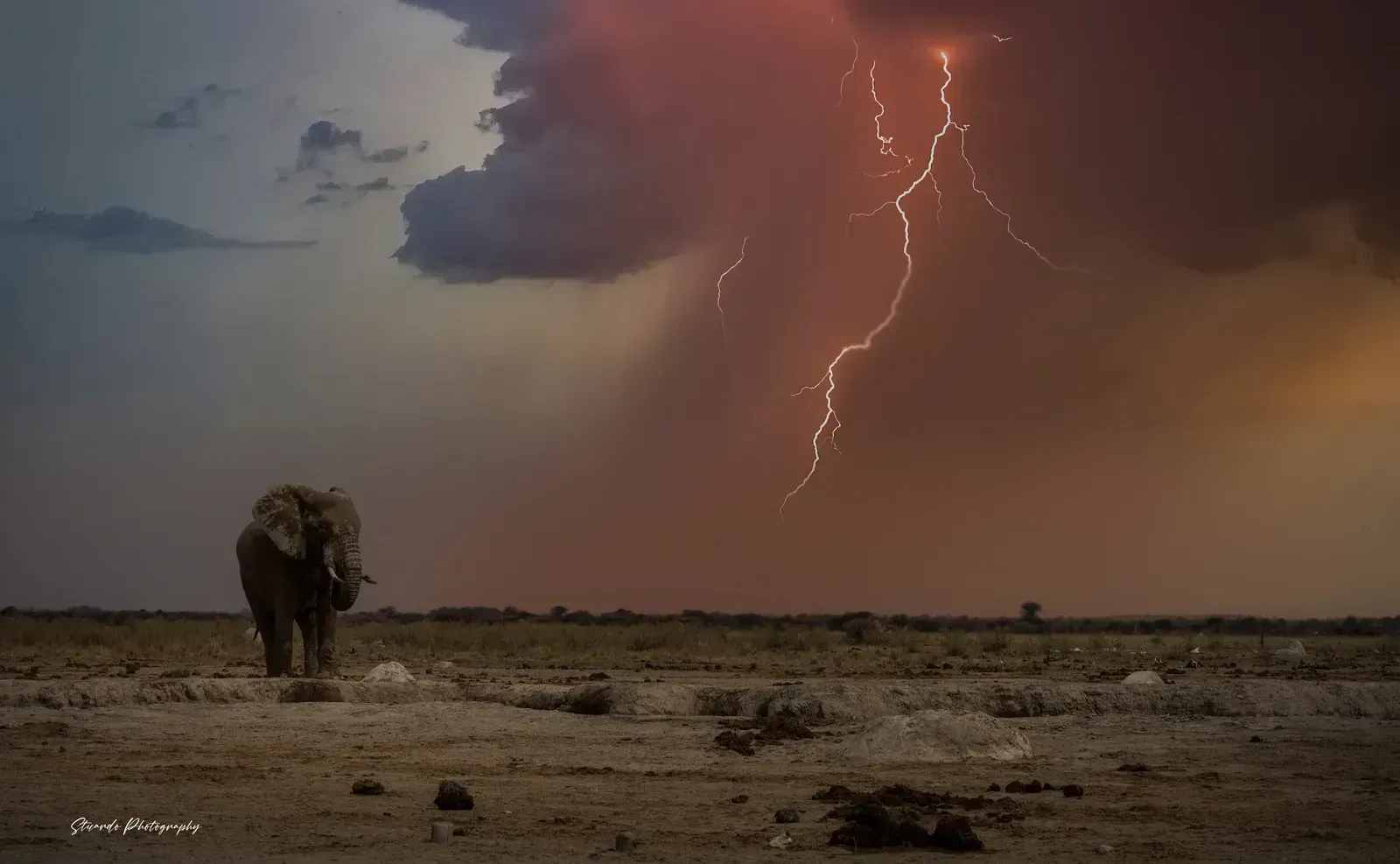
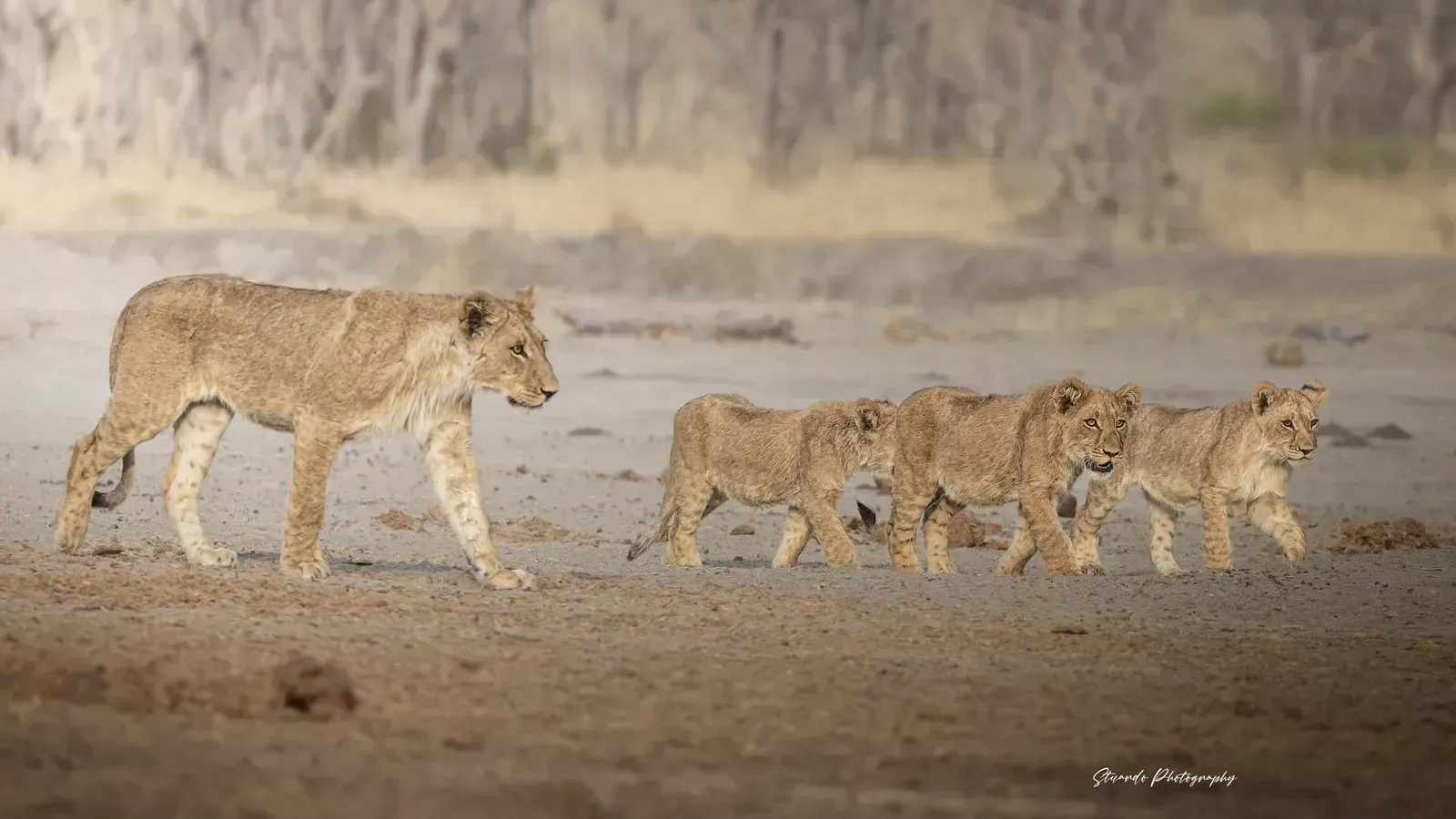
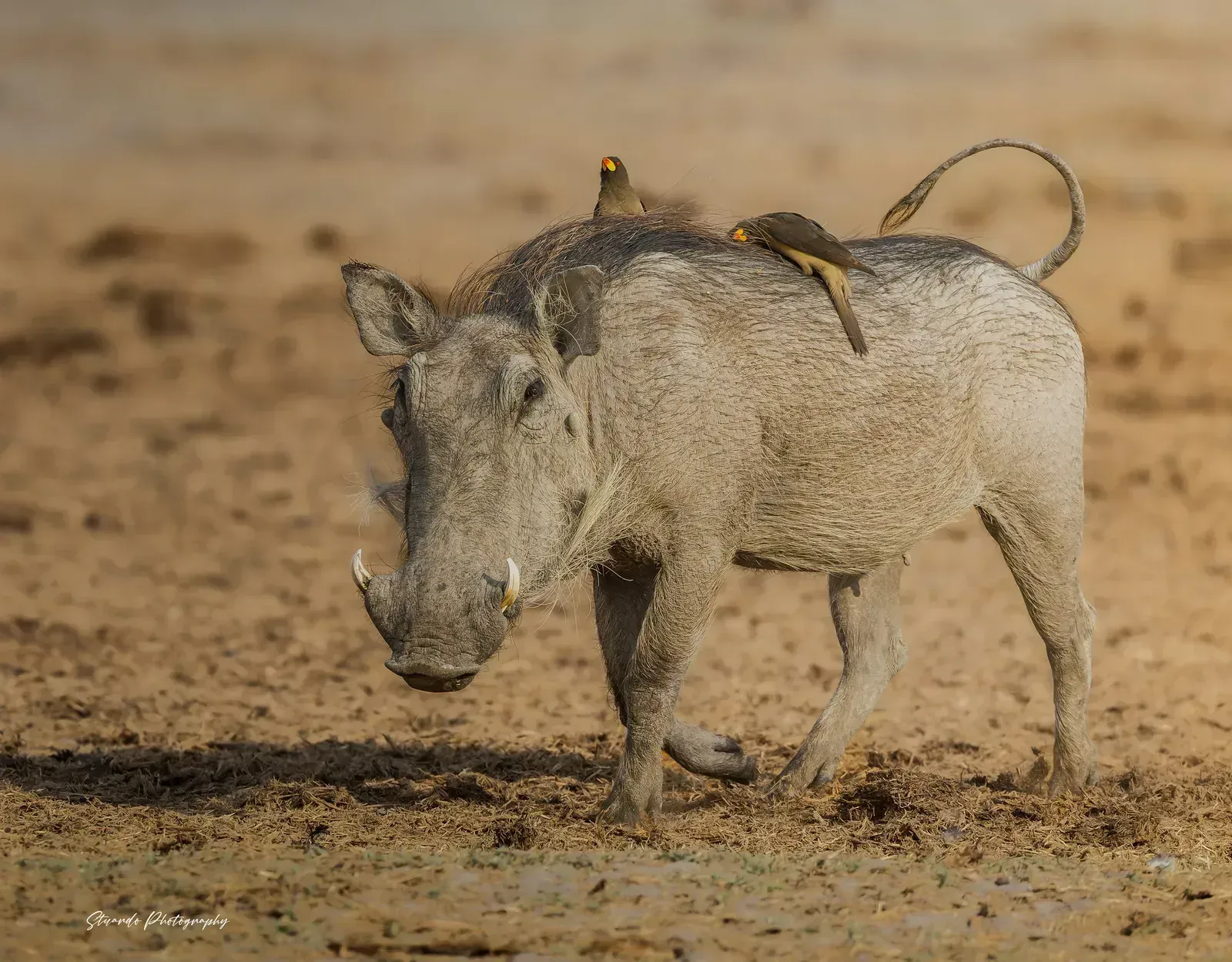
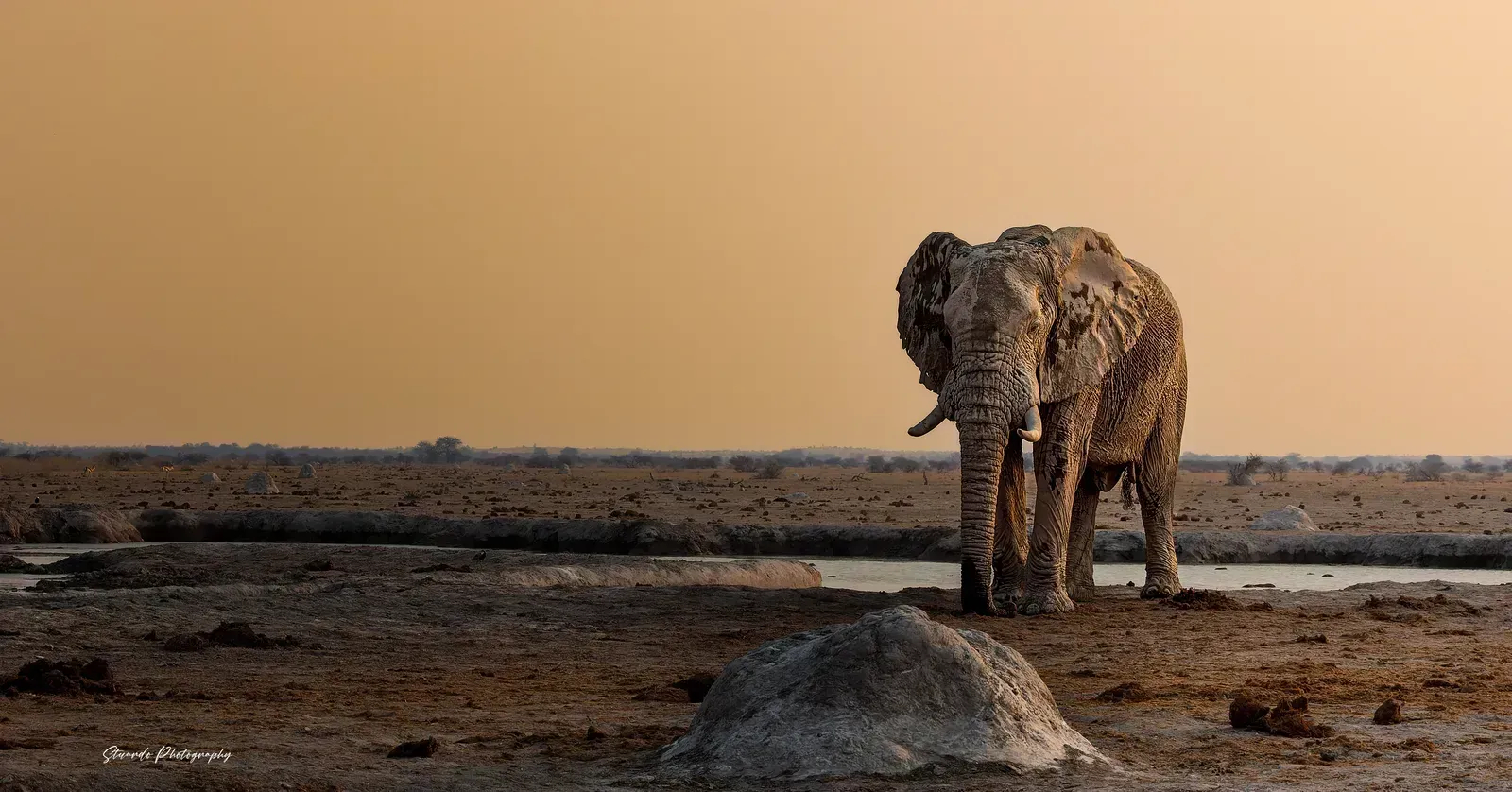
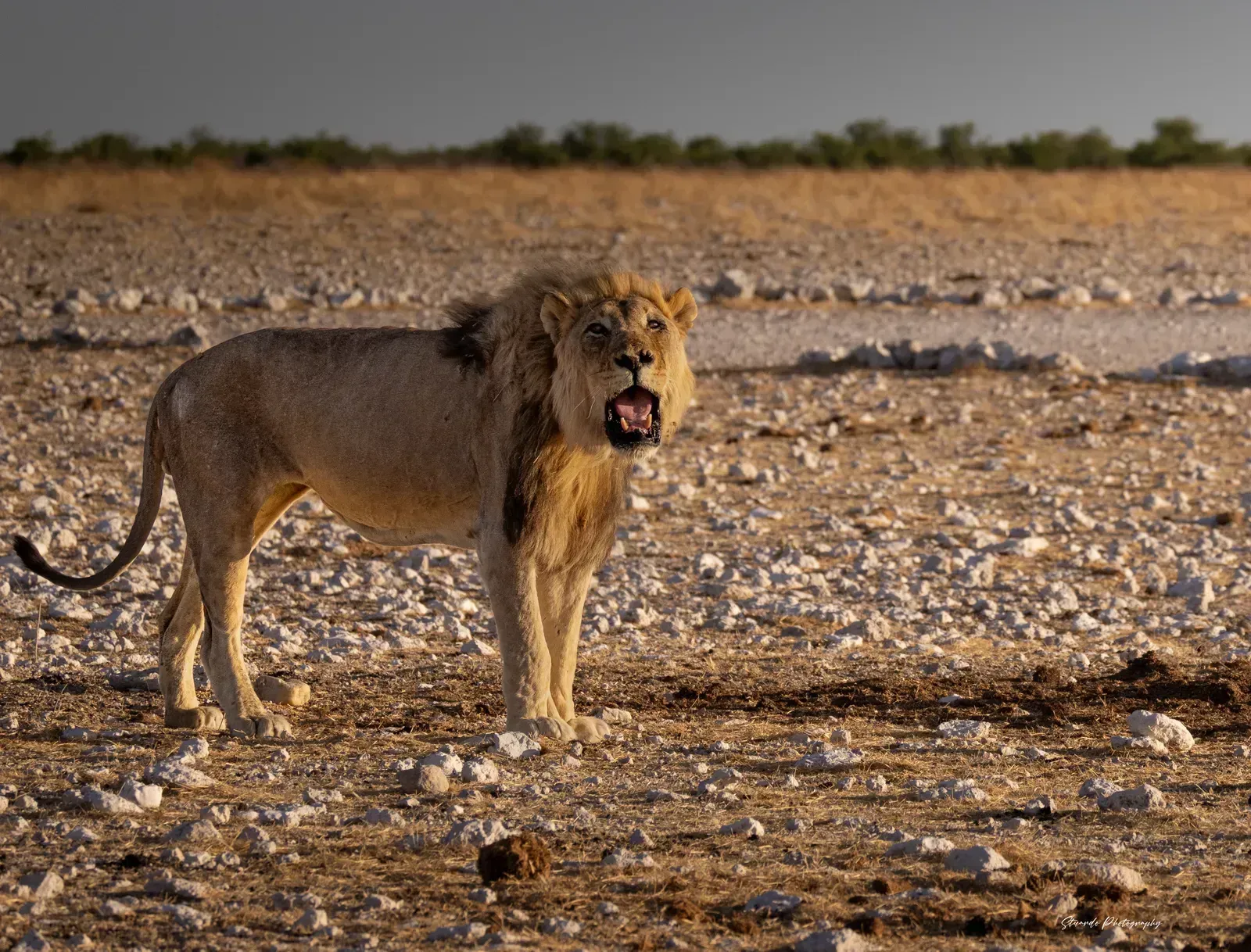
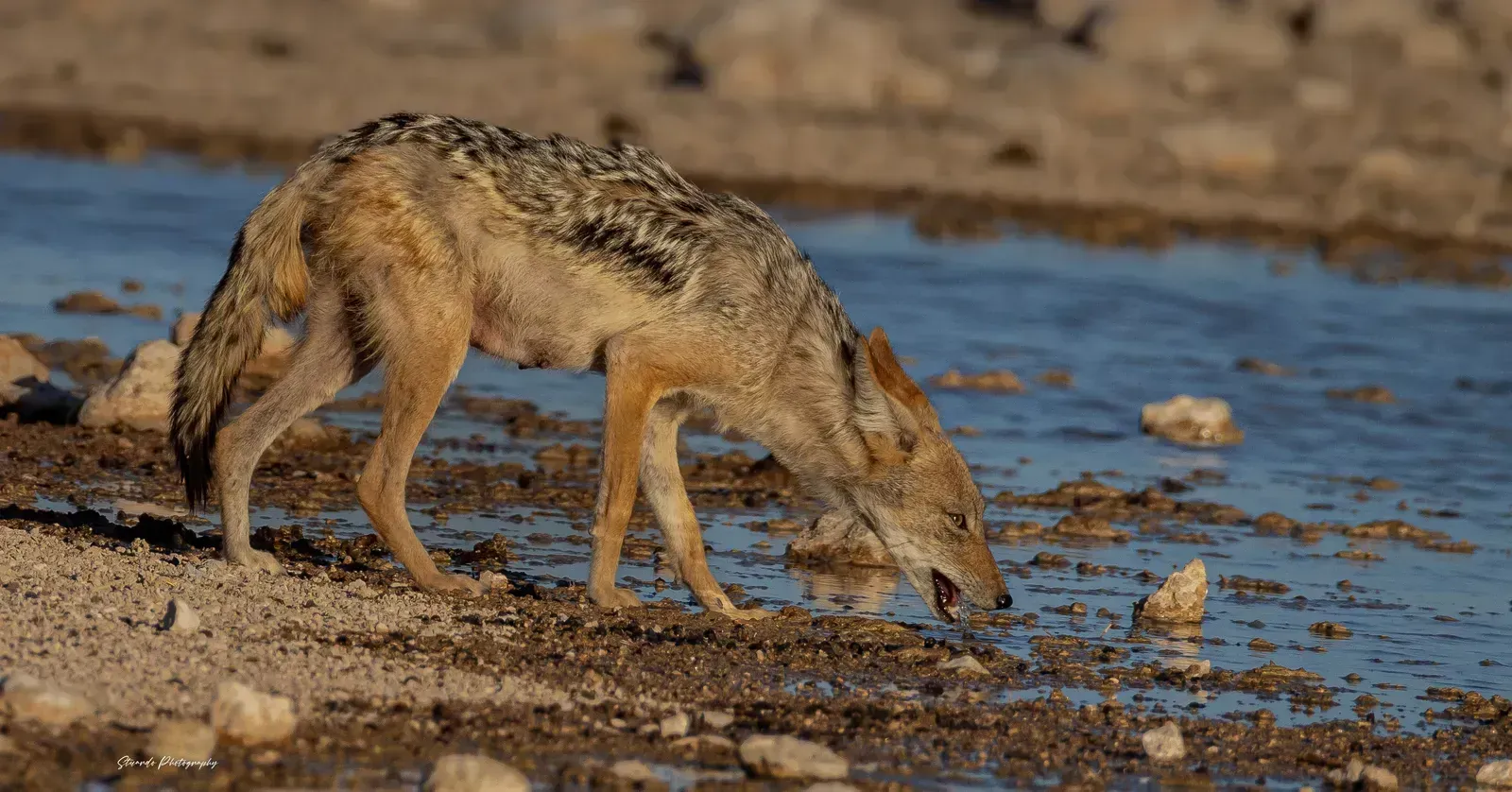
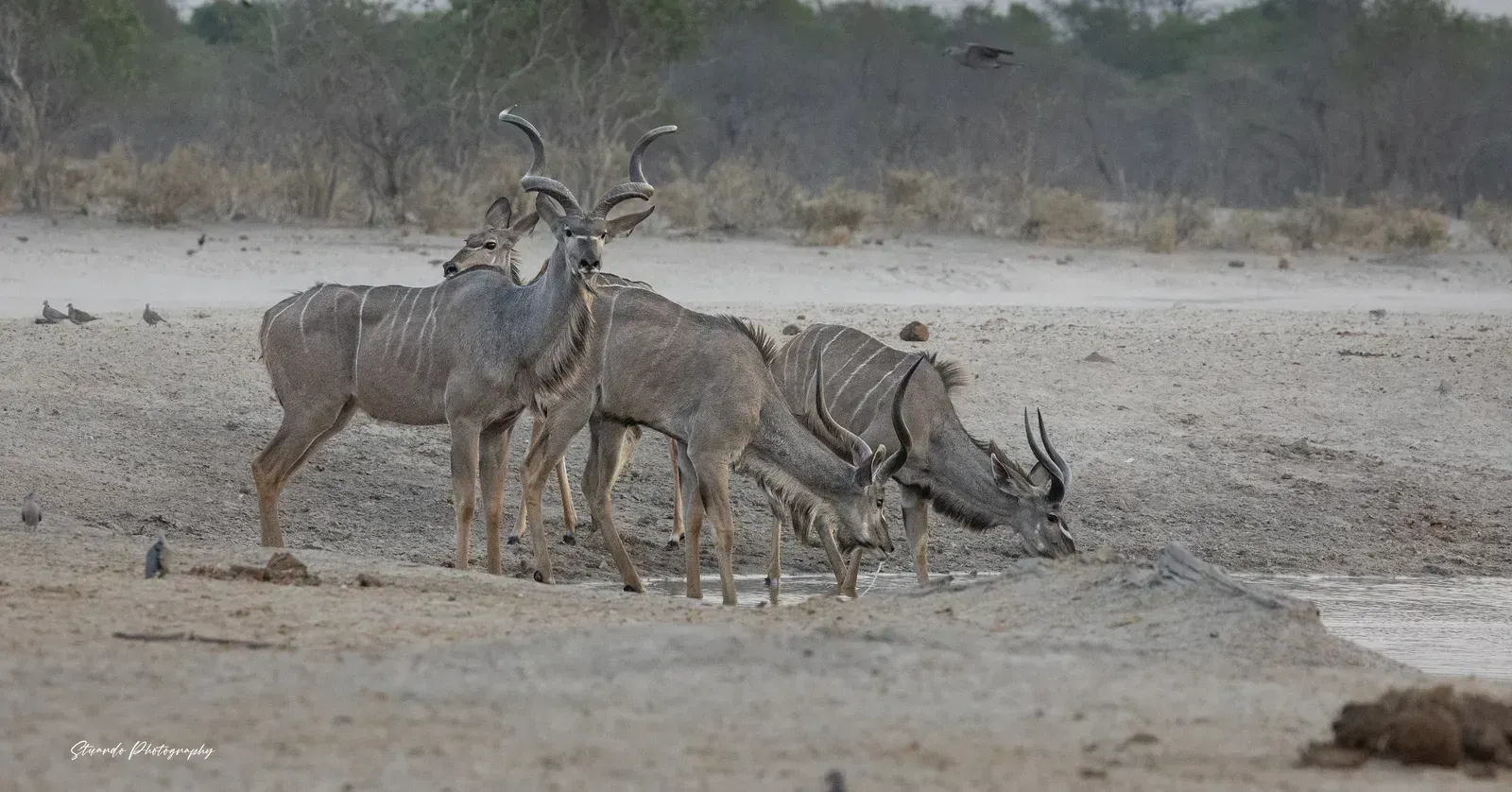
Photography: Stuart Du Toit
Where we recommend staying
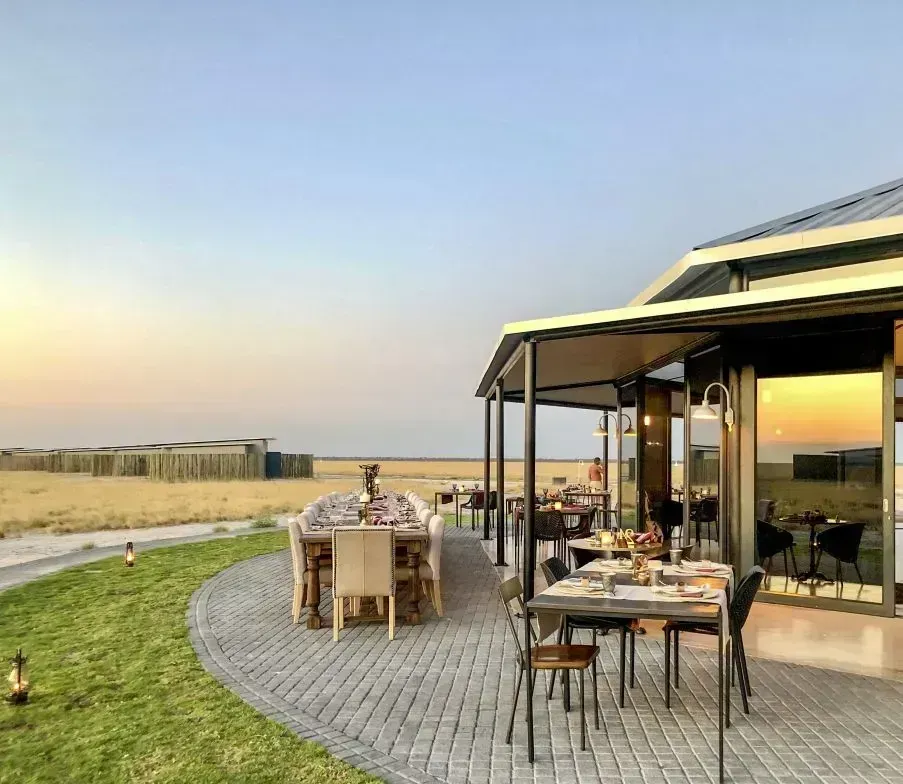
Etosha King Nehale
On the open Andoni Plains a kilometre from Etosha's quiet northern gate, this Gondwana Collection lodge pairs the park's wildlife with the culture of Owamboland. Forty Oshiwambo-inspired chalets fan out like a bull's horns, each with its own plunge pool and sweeping plains views — and guests get exclusive use of a private waterhole hide inside the park, alongside game drives and cultural village visits.
Build Etosha into your own route
Open our interactive map to drop Etosha into a trip, drag your stops into order, pick your travel style and see a live per-person cost estimate — then send the whole plan to us on WhatsApp in one tap.
Open the trip plannerItineraries featuring Etosha
Common questions
Where is Etosha National Park?
Etosha is in northern Namibia, roughly a four-to-five-hour drive (about 400–450 km) north of the capital, Windhoek. Its southern Andersson Gate is the most common entry point.
What animals can you see in Etosha National Park?
Etosha has four of the Big Five — elephant, lion, leopard and both black and white rhino (no buffalo) — plus cheetah, giraffe, zebra, oryx, springbok, kudu and over 340 bird species. It's one of the best places in Africa to see black rhino.
What is the best time to visit Etosha National Park?
The dry season, May to October, is best for wildlife, as animals gather at the waterholes; September and October are the peak. The green season, November to April, is better for birds, newborn animals and lower rates.
How many days do you need in Etosha?
Two to three nights is ideal. That gives you time to drive different waterholes at different times of day, spend a night at a floodlit-waterhole camp, and get more than one chance at the big sightings.
Can you self-drive in Etosha National Park?
Yes. Etosha is very self-drive friendly, with good gravel roads, signposted waterholes and no off-road driving required. You simply need to stay in your vehicle except at designated points and be inside a camp or gate by sunset.
Where should you stay in Etosha?
You can stay inside the park at a national rest camp such as Okaukuejo, Halali or Namutoni — several with their own floodlit waterholes — or just outside a gate at a private lodge for more comfort and guiding. Inside camps give you the best early-morning access to the game.
How far is Etosha from Windhoek?
It's about 400–450 km from Windhoek to Etosha's southern Andersson Gate, roughly four to five hours by road on good tar for most of the way.
Is Etosha malaria-free?
Etosha carries a low, seasonal malaria risk, mainly in the wetter months (roughly November to June). It's worth asking a travel clinic about precautions for your travel dates; the drier winter months are lower risk.