Last updated · Sandura Tours, Windhoek
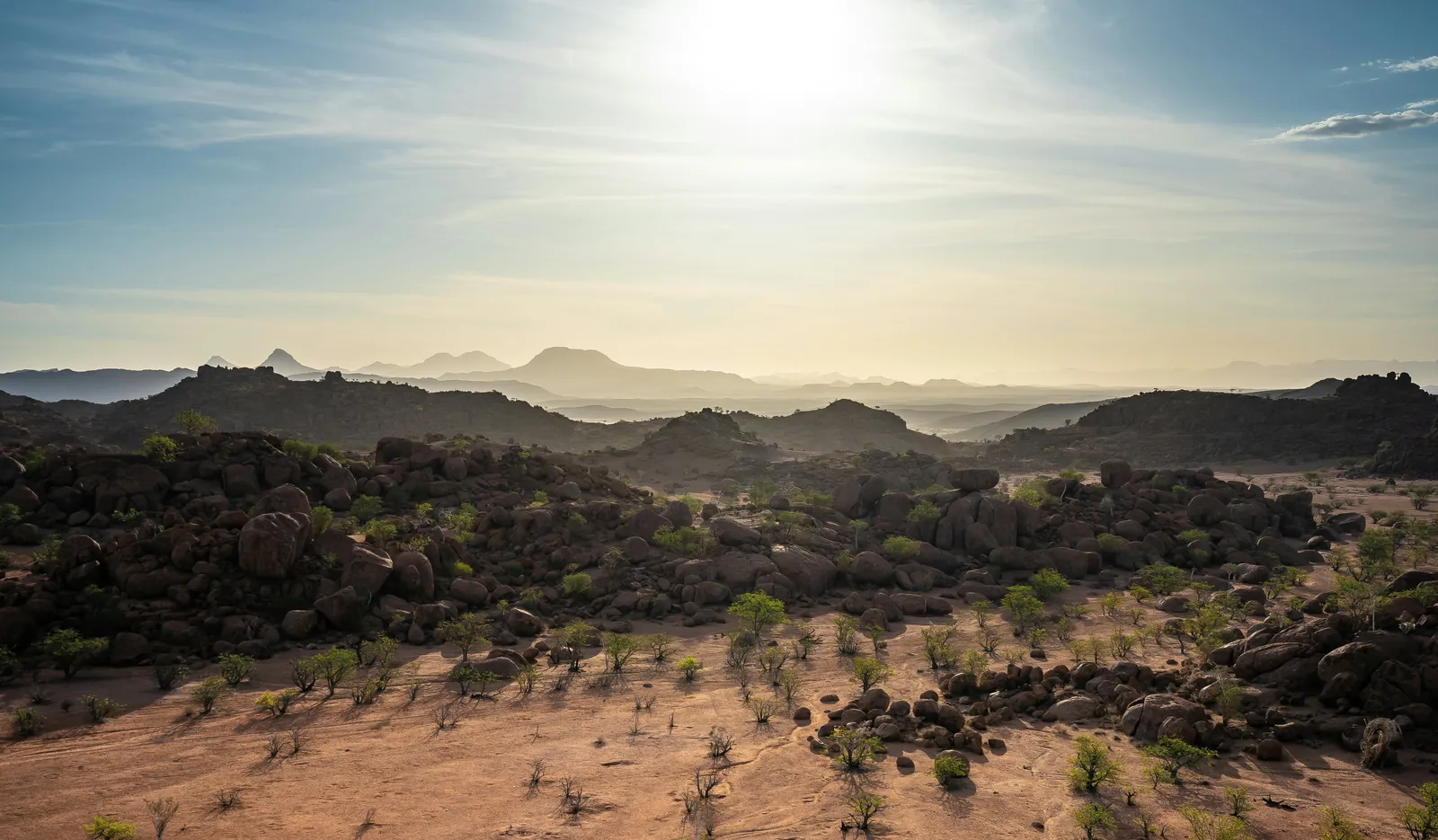
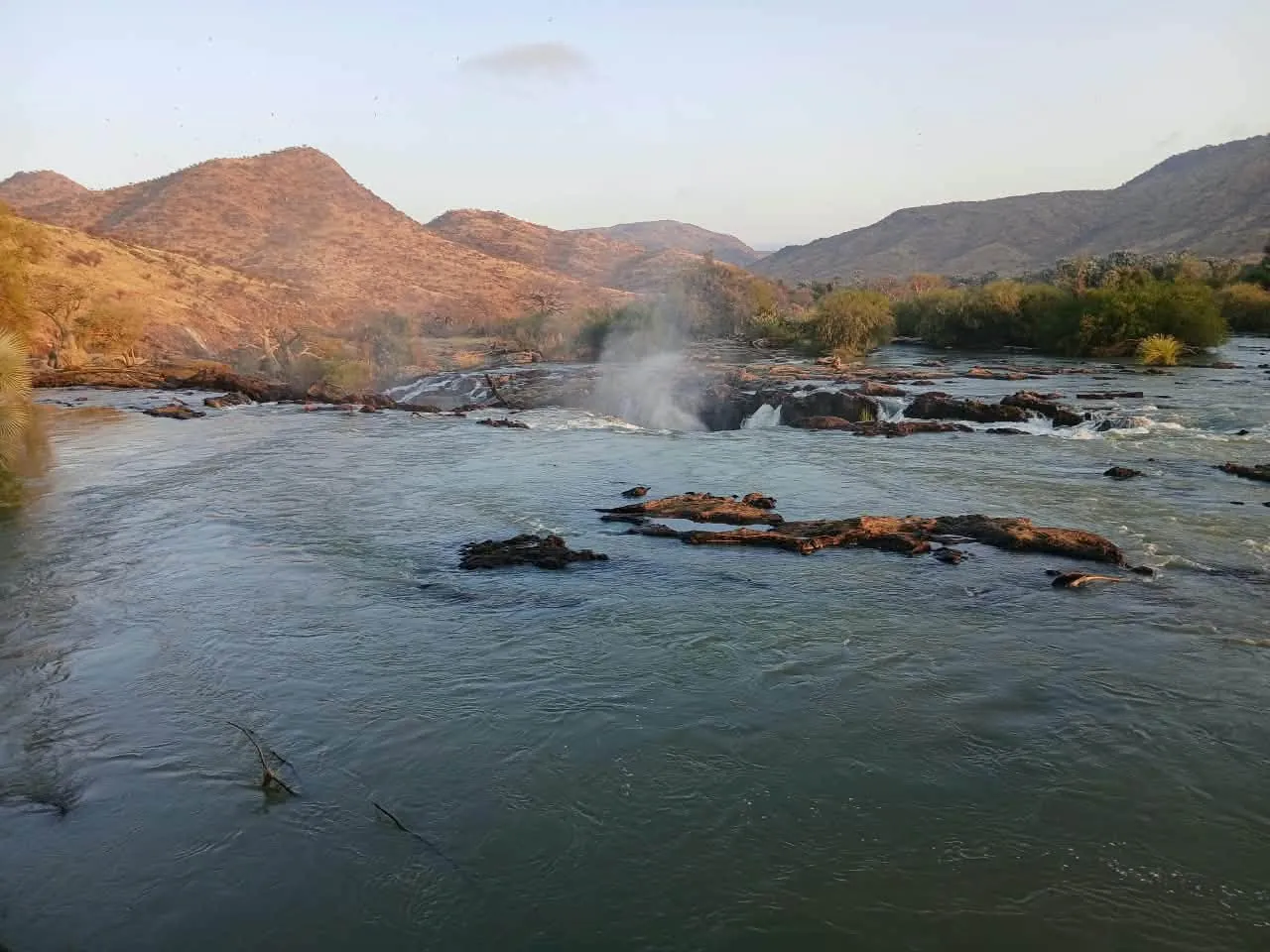
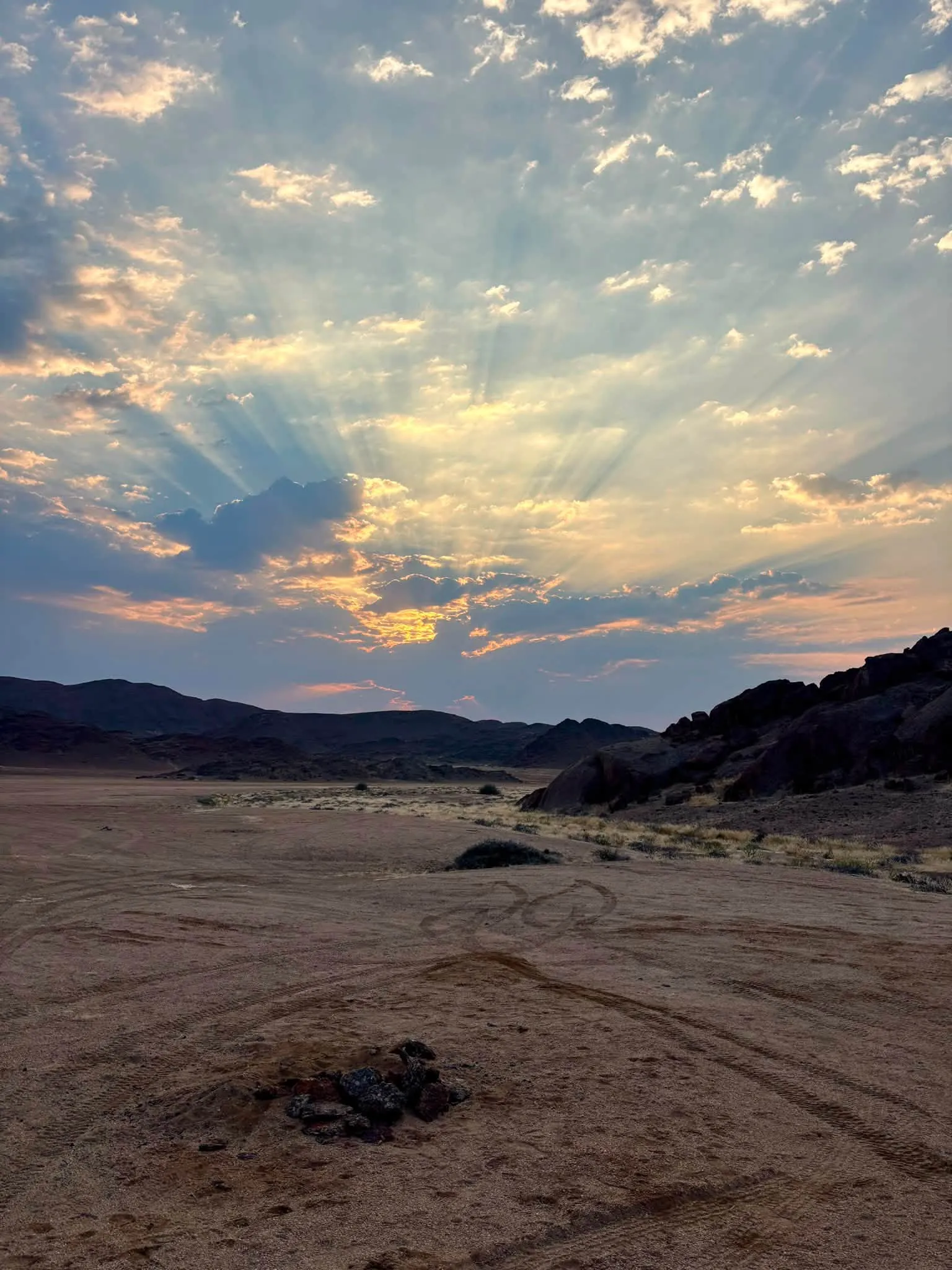
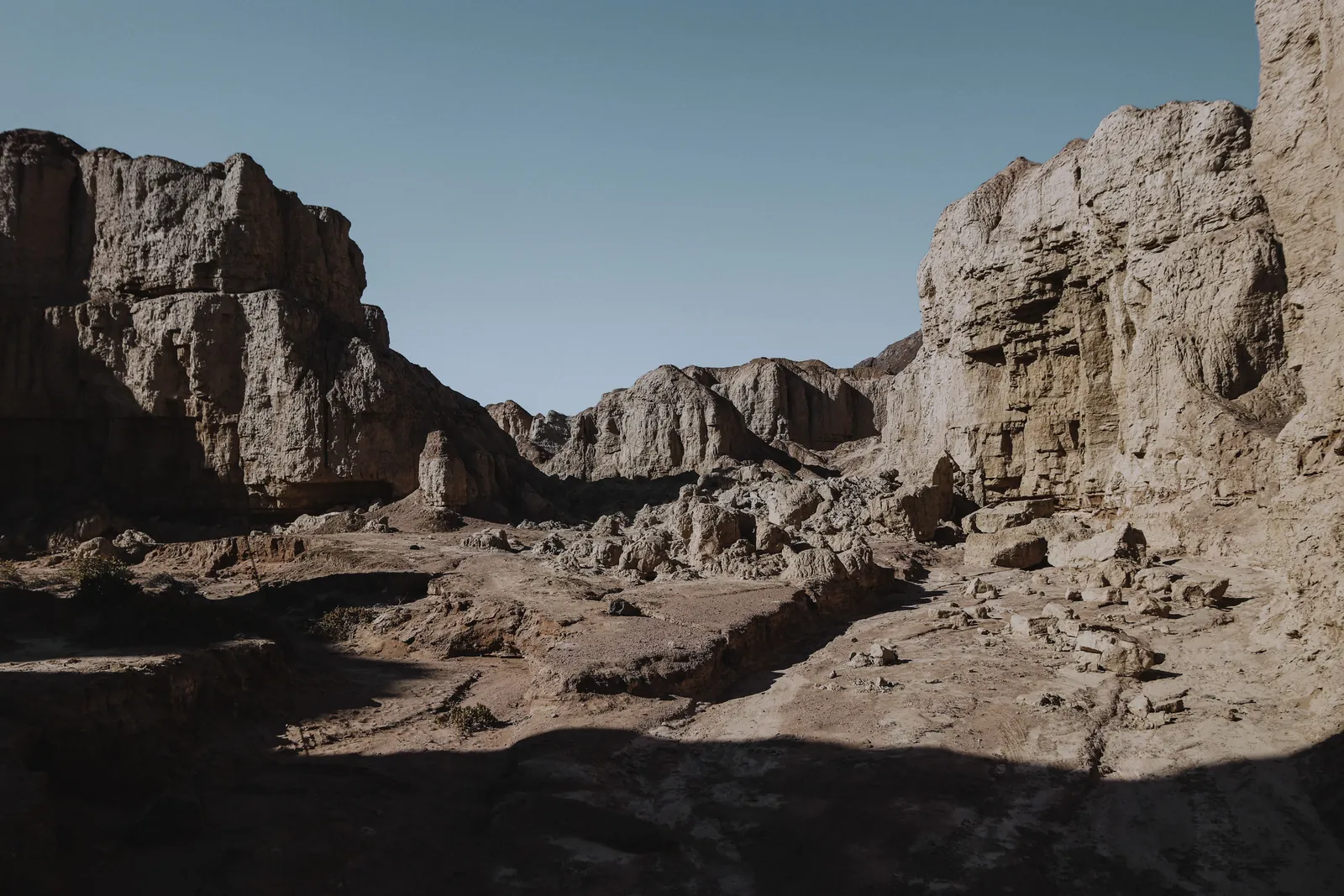
Damaraland is Namibia's great open middle distance: a vast, thinly populated sweep of the Kunene Region between the Skeleton Coast and Etosha, where flat-topped mountains rise out of gravel plains and rivers run dry on the surface while flowing on underneath. It has no single postcard view. Instead it has Twyfelfontein's ancient rock engravings, elephant and black rhino that have learned to live on almost nothing, and communal conservancies that have turned conservation into the region's own livelihood.
"Damaraland" is the old name for this country — today it sits inside the Kunene Region — and travellers still use it for the stretch of desert and mountain running roughly from the Ugab River north to the Hoanib and the edge of Kaokoland. The scenery does the talking: the flat-topped bulk of the Brandberg, Namibia's highest mountain; the free-standing rock pillar of the Vingerklip near Khorixas; and, at Twyfelfontein, one of the densest concentrations of rock art anywhere in Africa.
What makes Damaraland more than scenery is what survives in it. The Palmwag Concession alone covers roughly 550,000 hectares and holds more than 70% of Namibia's free-roaming black rhino, alongside elephant that have adapted to walk vast distances between the region's dry riverbeds. None of it is a fenced reserve — it's communal and conservancy land, run in large part by the people who live there, which is the reason the wildlife is still here to see. A self-drive route through this country needs a proper 4x4 and a slower pace than the tar roads further south; it rewards both.
Damaraland: Namibia's desert wilderness
Damaraland is the historical name for this part of the Kunene Region — a vast, sparsely populated country of gravel plains, dry riverbeds and flat-topped mountains between the Skeleton Coast and Etosha. There's no single town or view that defines it; it's a landscape to drive through slowly, on the way between the coast and the north, with real reasons to stop rather than pass through.
Top things to do in Damaraland
Twyfelfontein's ancient rock art
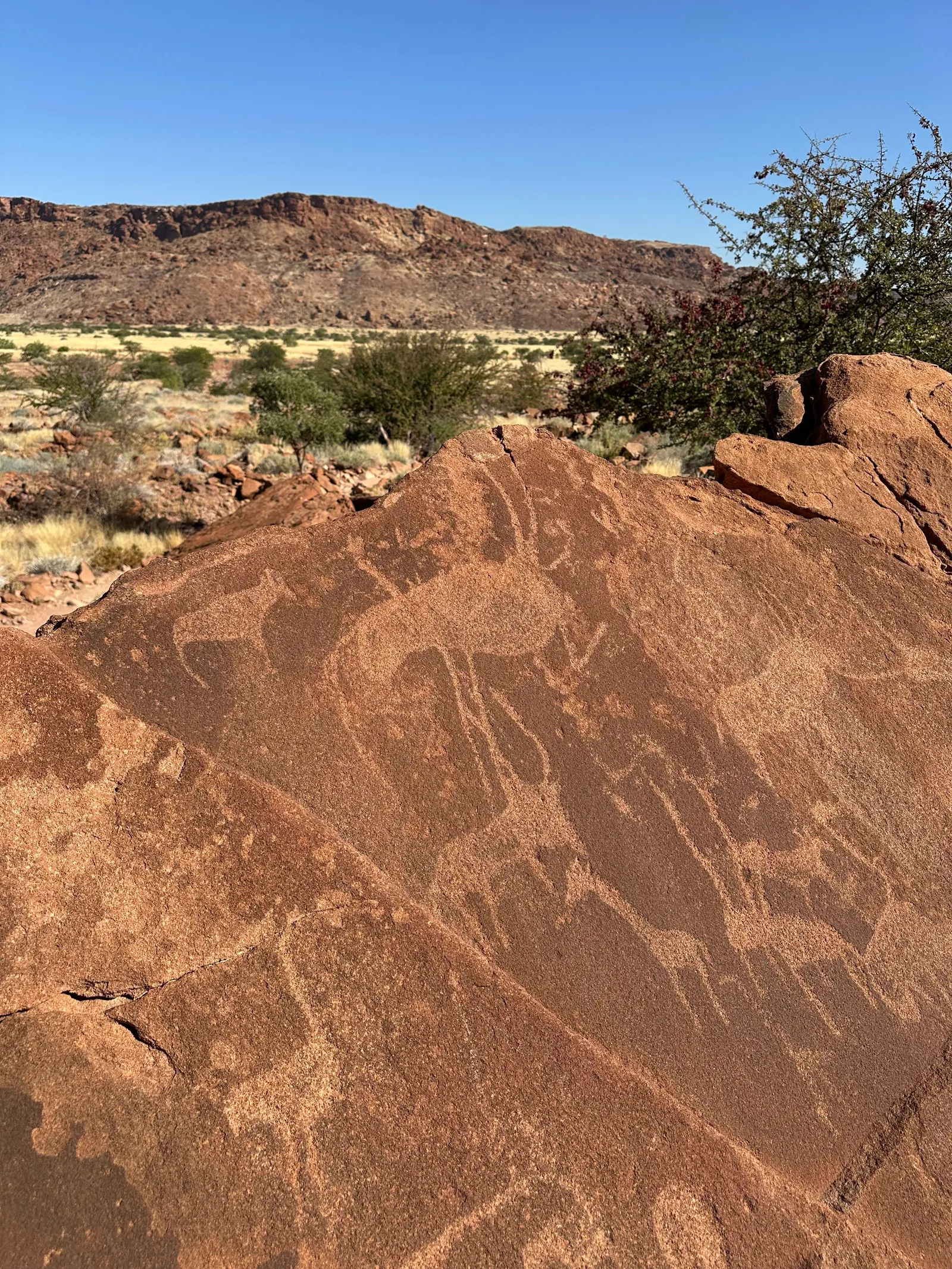
Twyfelfontein, a UNESCO World Heritage Site since 2007, holds more than 5,000 rock engravings pecked into the sandstone by hunter-gatherer ancestors of today's Damara and San people — antelope, rhino, giraffe and human figures, along with geometric designs, created across a span archaeologists put at roughly 1,000 to 6,000 years old. It's one of the largest and most important concentrations of rock art in Africa, and a guided walk with a local guide (compulsory on site) is the only way to see it.
Desert-adapted elephant, black rhino and conservancies
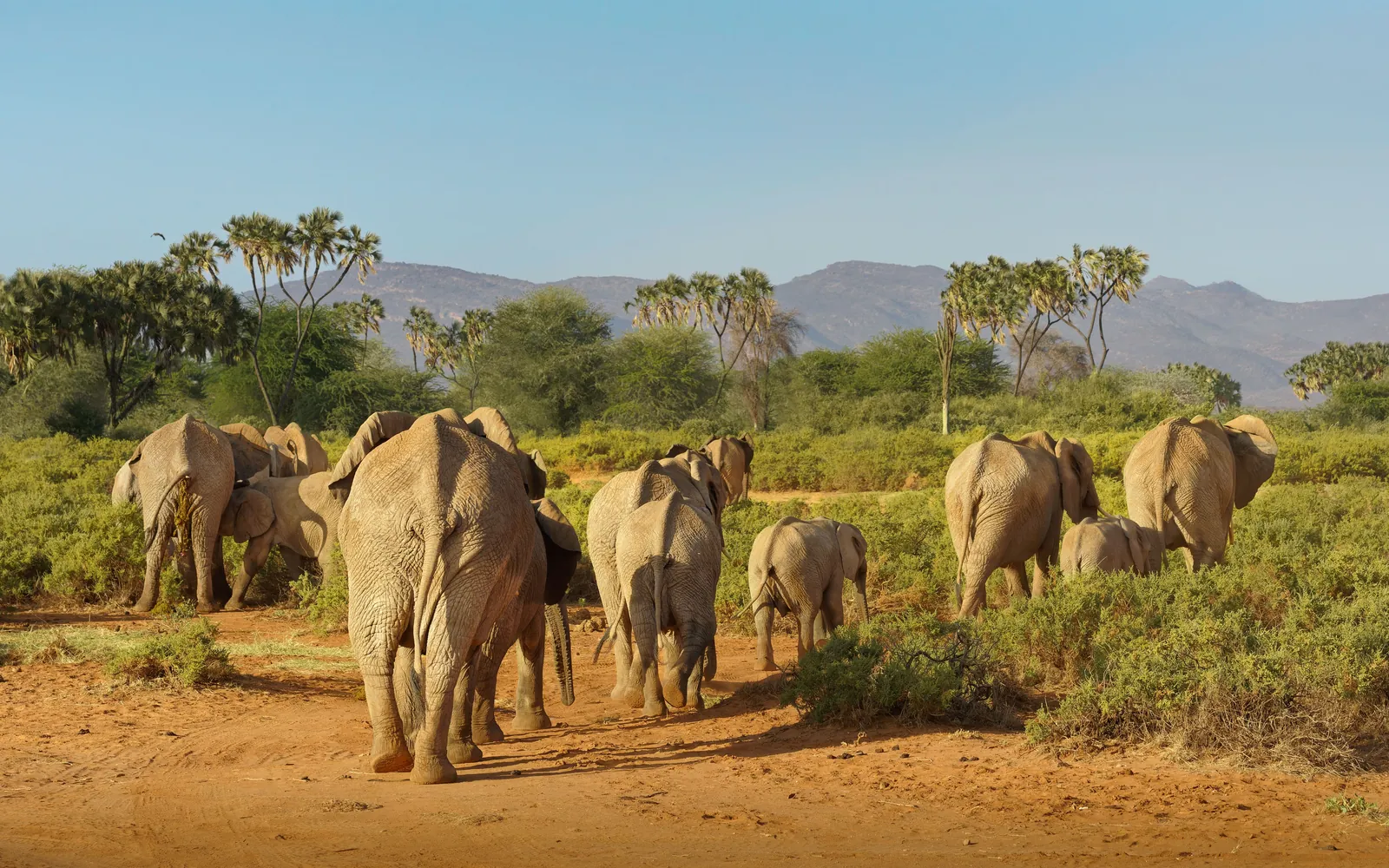
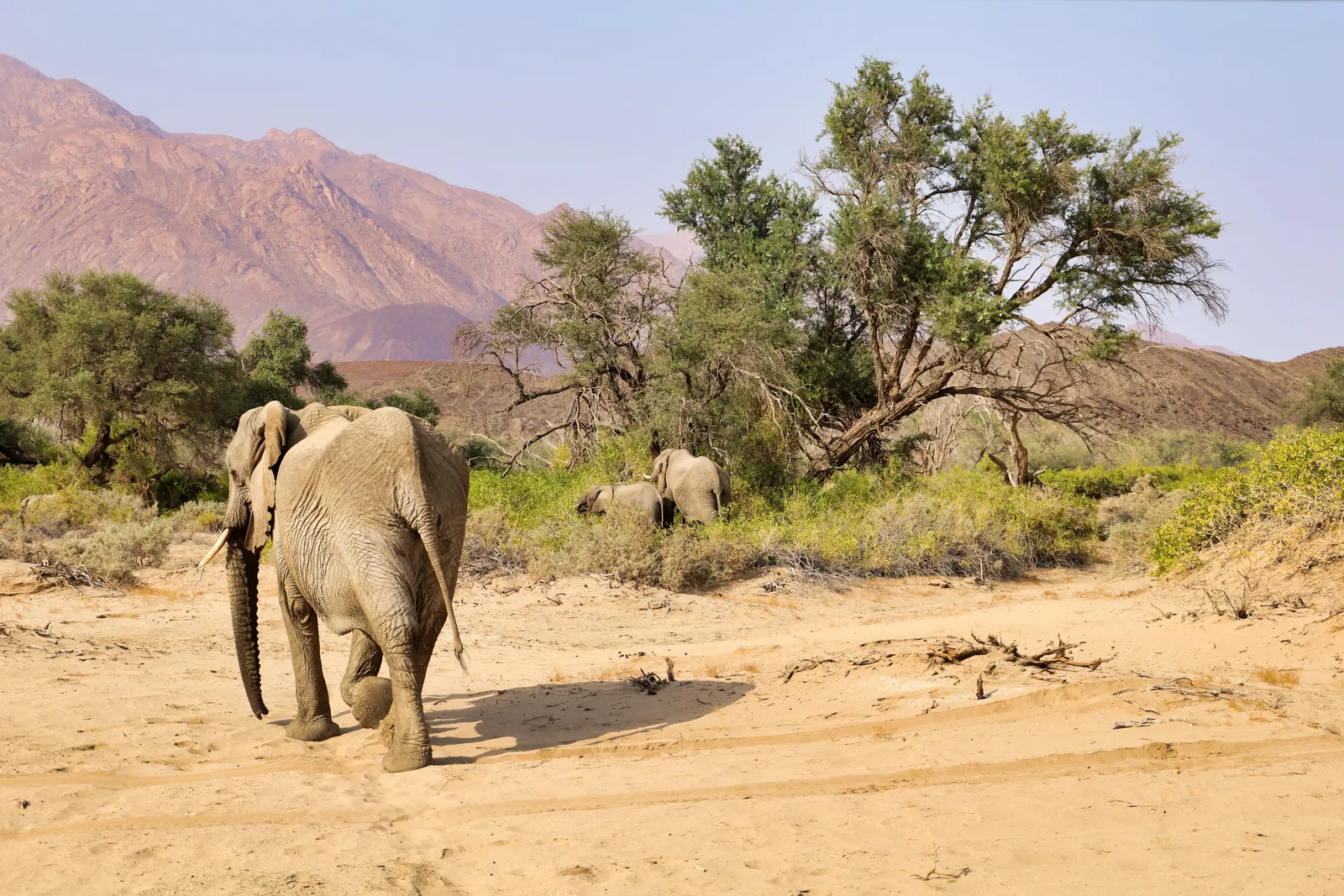
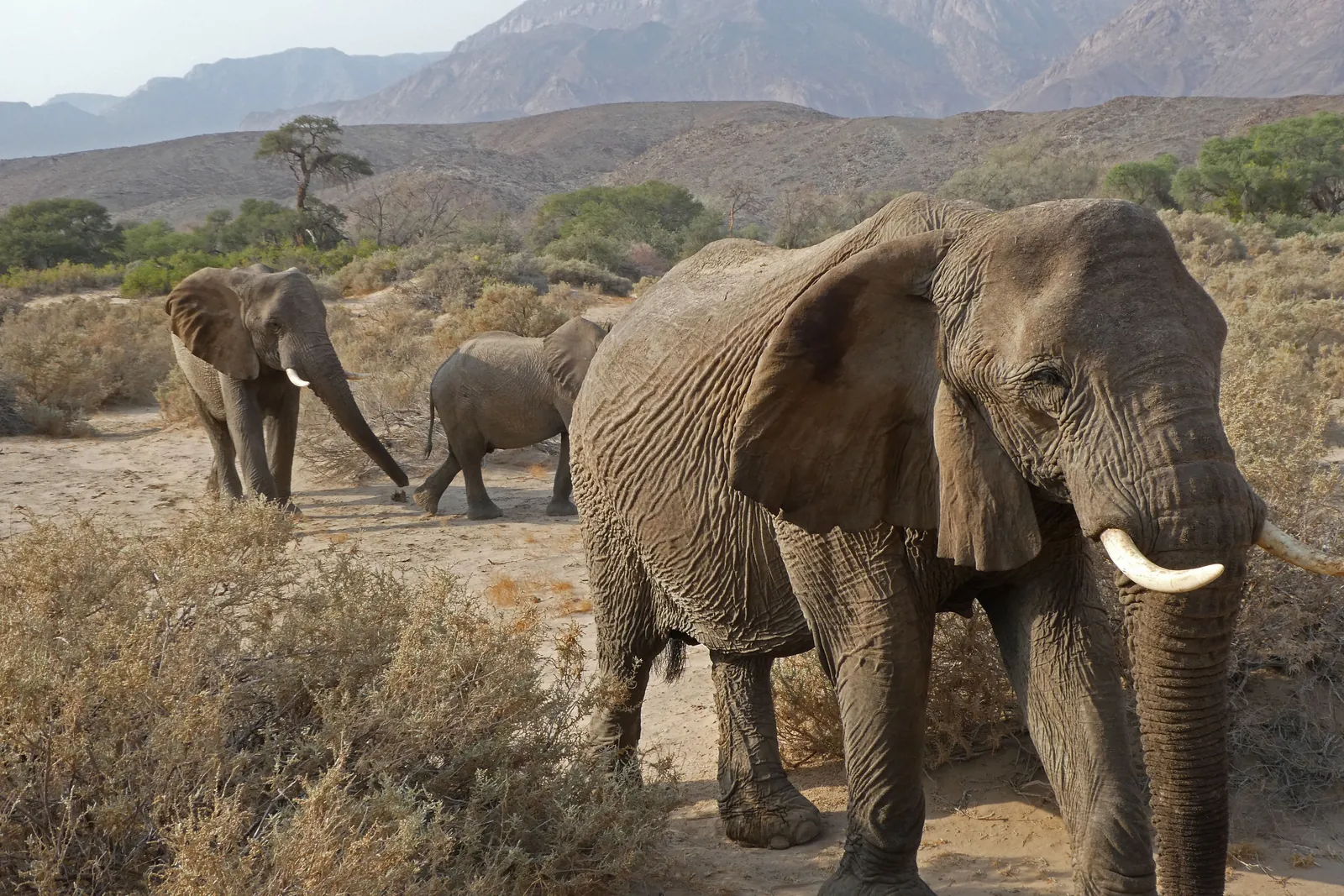
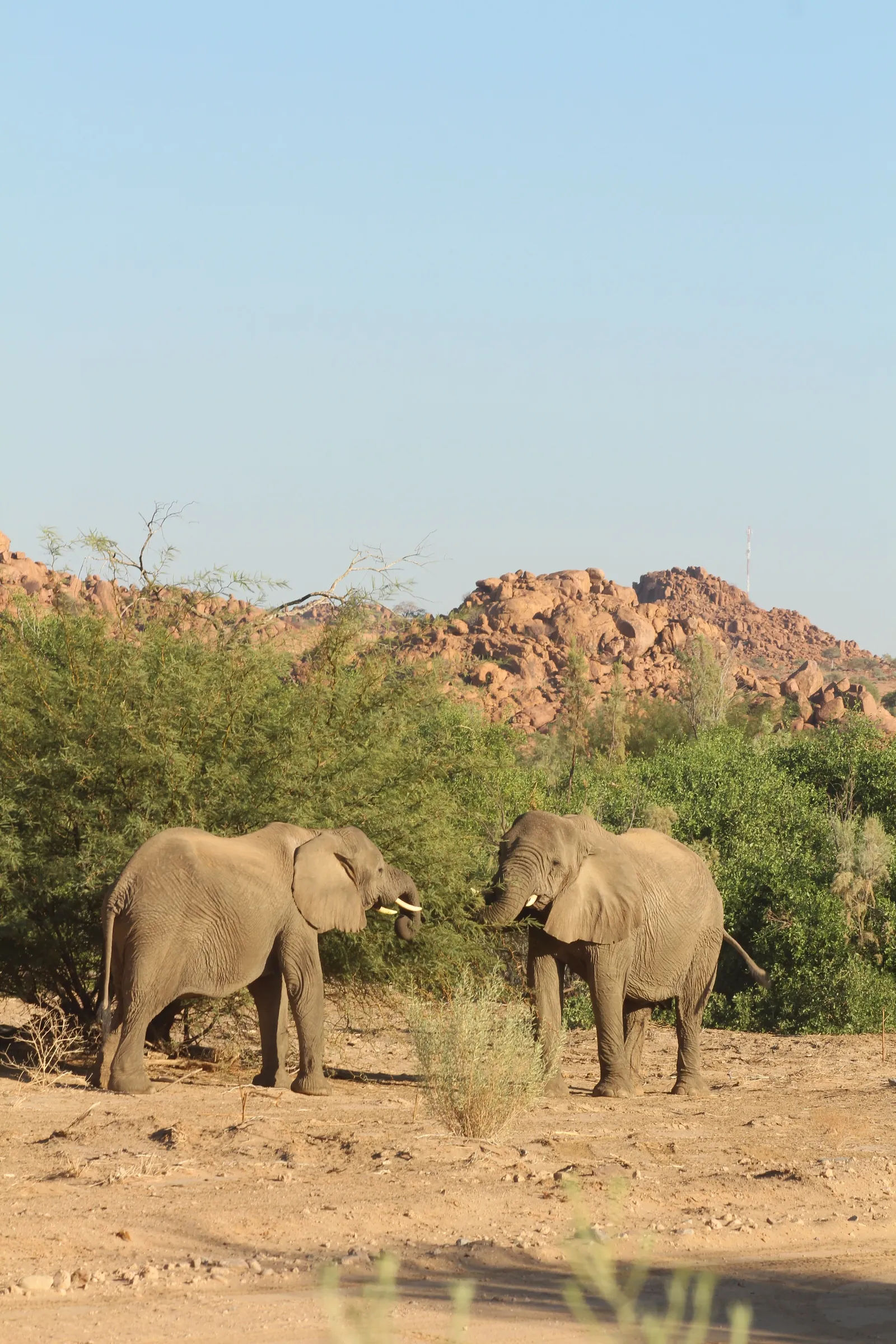
The wildlife here has adapted to genuine scarcity. Desert-adapted elephant move in small family groups along dry riverbeds such as the Uniab, digging for water where none is visible on the surface, and the Palmwag Concession — roughly 550,000 hectares of it — is home to more than 70% of Namibia's free-roaming black rhino. None of this survives by accident: it's the direct result of Namibia's communal conservancy system, under which local communities hold the rights to the wildlife on their own land and the income from tourism and hunting quotas funds its protection. Grootberg Lodge is a working example — it is wholly owned by the ǂKhoadi-//Hôas Conservancy, with a lodge management partner running day-to-day operations on the conservancy's behalf.
Brandberg and Vingerklip
The Brandberg ("Fire Mountain", named for the way its granite glows at sunset) is Namibia's highest mountain, its Königstein peak reaching 2,573 metres. Its slopes hold thousands of rock paintings, the best-known of which is the so-called "White Lady" — named in 1929 by the archaeologist Abbé Henri Breuil, who read it as a Mediterranean or Egyptian woman. That reading hasn't held up: most rock-art scholars today interpret the figure instead as a male shaman or ritual healer, part of a San trance-dance tradition rather than a visiting foreigner. Further east, near Khorixas, the Vingerklip is a roughly 35-metre limestone pillar left standing alone on the valley floor after millions of years of erosion stripped away the plateau that once surrounded it, carved by the ancient course of the Ugab River.
Where to stay and getting there
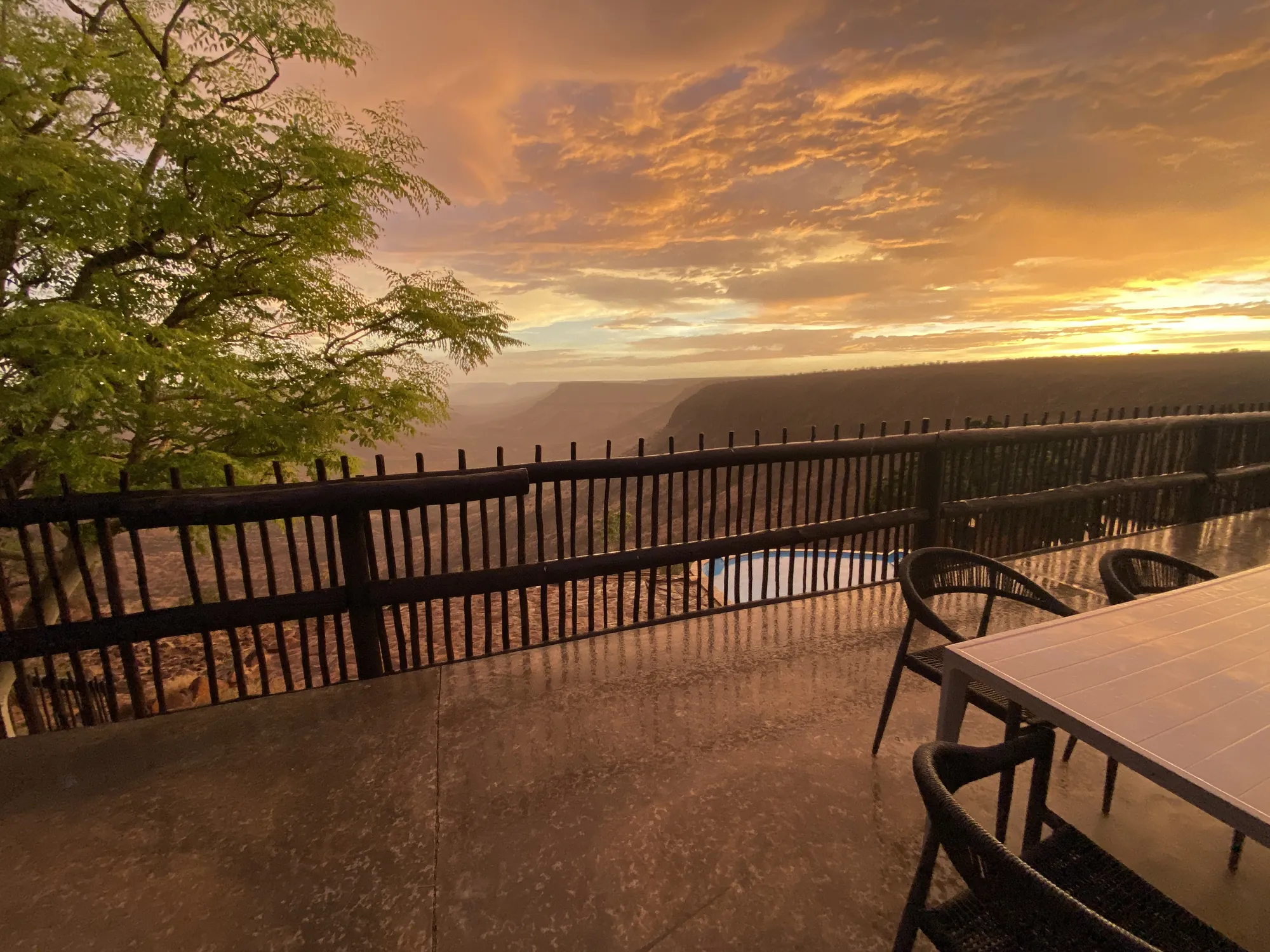
Damaraland is 4x4 country, not tar-road country — the C39 and C43 gravel roads that link its lodges are well maintained but slow, and the region rewards a proper vehicle and an unhurried pace rather than a rushed pass-through. We base guests at Grootberg Lodge, up on the rim of the Grootberg plateau overlooking the Klip River Valley and owned by the conservancy whose land it stands on — see where to stay below.
In pictures
Where we recommend staying
Grootberg Lodge
A Journeys Namibia lodge on the rim of the Grootberg plateau, wholly owned by the ǂKhoadi-//Hôas Conservancy — fourteen double/twin rooms and two family rooms, all looking out over the Klip River Valley. Dinner, bed and breakfast, with half-day desert elephant tracking into the conservancy, a half-day Damara cultural tour, and three-quarter-day black rhino tracking on foot (the lodge asks for a two-night stay for that one).
About Grootberg Lodge
A conservancy-owned lodge on the rim of the Grootberg plateau, and the base for tracking desert elephant and black rhino on foot.
Grootberg Lodge sits on the rim of the Grootberg plateau in Damaraland, looking down over the Klip River Valley. It is run by Journeys Namibia and wholly owned by the ǂKhoadi-//Hôas Conservancy, the community whose land it stands on. There are fourteen double or twin rooms and two family rooms, all facing the valley, and the rate is dinner, bed and breakfast.
Most people come here to go looking for what lives out in this country. Desert elephant tracking is the lodge's most popular outing: a guide and a tracker take you into the conservancy in search of the desert-adapted herds, with a picnic lunch in the shade of a tree, and you are back at the lodge by mid-afternoon. Black rhino tracking is the bigger day, about three-quarters of one: bumpy roads in an open 4x4 and then between one and three hours on foot over rocky ground, with refreshments near the springs at lunchtime. It asks for a good level of fitness, and the lodge asks for a two-night stay if you want to do it. Neither animal can be promised; the country is worth the day either way.
Closer to the lodge, the Damara cultural tour visits homesteads on the surrounding conservancy farms, where your hosts talk about their origins, their culture and how they farm in hard desert conditions alongside elephant and predators, with lunch under the trees. A guided walk on the plateau looks at the plants and the sedimentary and volcanic rock of the Etendeka Mountains, and the sundowner drive heads out across the Etendeka plateau at the end of the day: zebra, springbok, kudu and oryx are common, klipspringer sometimes leap along the cliffs, and leopard and lion turn up occasionally.
Owned by the conservancy
Grootberg Lodge is wholly owned by the ǂKhoadi-//Hôas Conservancy. The Damara cultural tour stops at the conservancy's own office, which the lodge holds up as an example of the positive impact and the benefits the conservancy draws from owning Grootberg.
The cultural tour itself is about the reality of living with wildlife in this country, human-wildlife conflict included, told by the families who farm here.
- Setting
- On the rim of the Grootberg plateau above the Klip River Valley, Damaraland
- Rooms
- 14 double or twin rooms and 2 family rooms, all overlooking the valley
- Rates
- From N$3,795 per person sharing per night, dinner, bed & breakfast; higher in high season (1 Jul–15 Nov and 15 Dec–6 Jan). We quote the exact rate for your dates and room.
- Activities
- Desert elephant tracking (half day, back around 14h30). Black rhino tracking (three-quarter day, back around 16h30, age 13 and up, fair fitness, two nights asked for). Damara cultural tour (half day, Monday to Friday mornings). Guided plateau walk (2–3 hours). Sundowner drive (2–3 hours).
- Included on activities
- Picnic lunch and cold drinks on the tracking and the cultural tour; water on the walk; cold drinks and selected alcohol on the sundowner drive
- Children
- Ages 6–12 pay half price on the elephant tracking, cultural tour, walk and sundowner drive; under-6s go free on the drives and tours with a parent, but not on the walk. Rhino tracking is 13 and up.
- Good to know
- Minimum two people per activity, maximum nine per vehicle. Afternoon activities stay provisional until the guides are back from the morning. For tracking wear dull or camouflage colours (nothing white or shiny), closed walking shoes and long trousers; bring a hat, sunscreen, a jacket, a camera and binoculars.
Our tip: Book two nights if you want to track rhino. The lodge asks for it, and the day runs from before sunrise to late afternoon, so it doesn't fit around a travel day.
Build Damaraland into your own route
Open our interactive map to drop Damaraland into a trip, drag your stops into order, pick your travel style and see a live per-person cost estimate — then send the whole plan to us on WhatsApp in one tap.
Open the trip plannerItineraries featuring Damaraland
Common questions
Where is Damaraland?
Damaraland is the historical name for a vast, sparsely populated part of Namibia's Kunene Region, running roughly from the Ugab River north to the Hoanib and the edge of Kaokoland, between the Skeleton Coast and Etosha.
What is Twyfelfontein and why is it famous?
Twyfelfontein is a UNESCO World Heritage Site (since 2007) holding more than 5,000 rock engravings made by hunter-gatherer ancestors of the Damara and San peoples, estimated at roughly 1,000 to 6,000 years old — one of the largest and most significant rock-art sites in Africa.
Can you see elephant in Damaraland?
Yes — Damaraland is known for desert-adapted elephant, which move in small family groups along dry riverbeds such as the Uniab in search of water and vegetation. The neighbouring Palmwag Concession also holds more than 70% of Namibia's free-roaming black rhino.
Where should you stay in Damaraland?
We use Grootberg Lodge, on the rim of the Grootberg plateau overlooking the Klip River Valley and wholly owned by the ǂKhoadi-//Hôas Conservancy — see the stay below.
Do you need a 4x4 for Damaraland?
Yes, or at least a high-clearance vehicle and a slower pace. The roads linking Damaraland's lodges and attractions are well-maintained gravel rather than tar, and a proper 4x4 makes the region's rougher tracks and activities like rhino tracking possible.
What is the White Lady of Brandberg?
It's a rock painting on the Brandberg named in 1929 by the archaeologist Abbé Henri Breuil, who believed it showed a Mediterranean or Egyptian woman. That interpretation is now largely rejected — most scholars today read the figure as a male shaman or ritual healer connected to San trance-dance traditions.