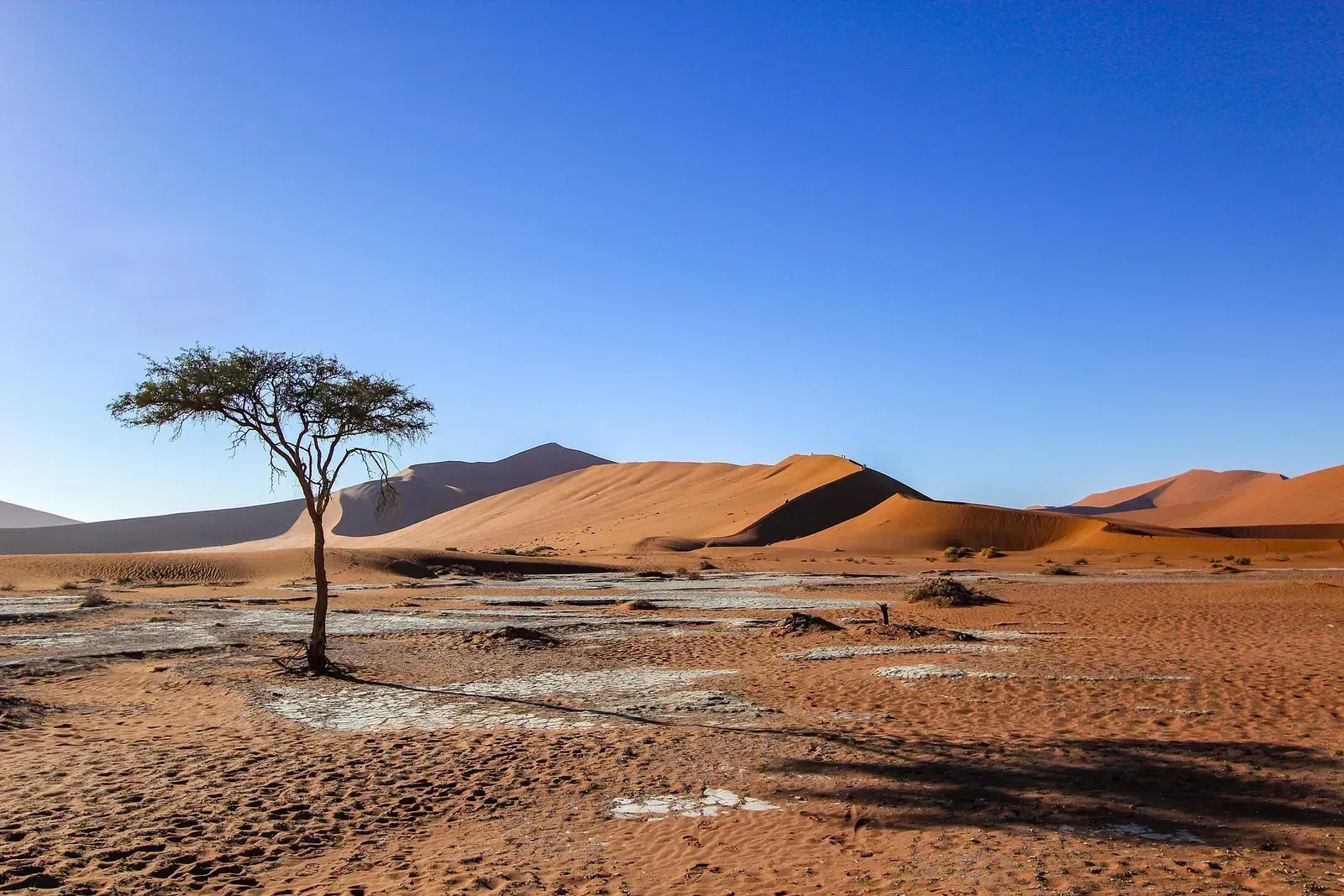
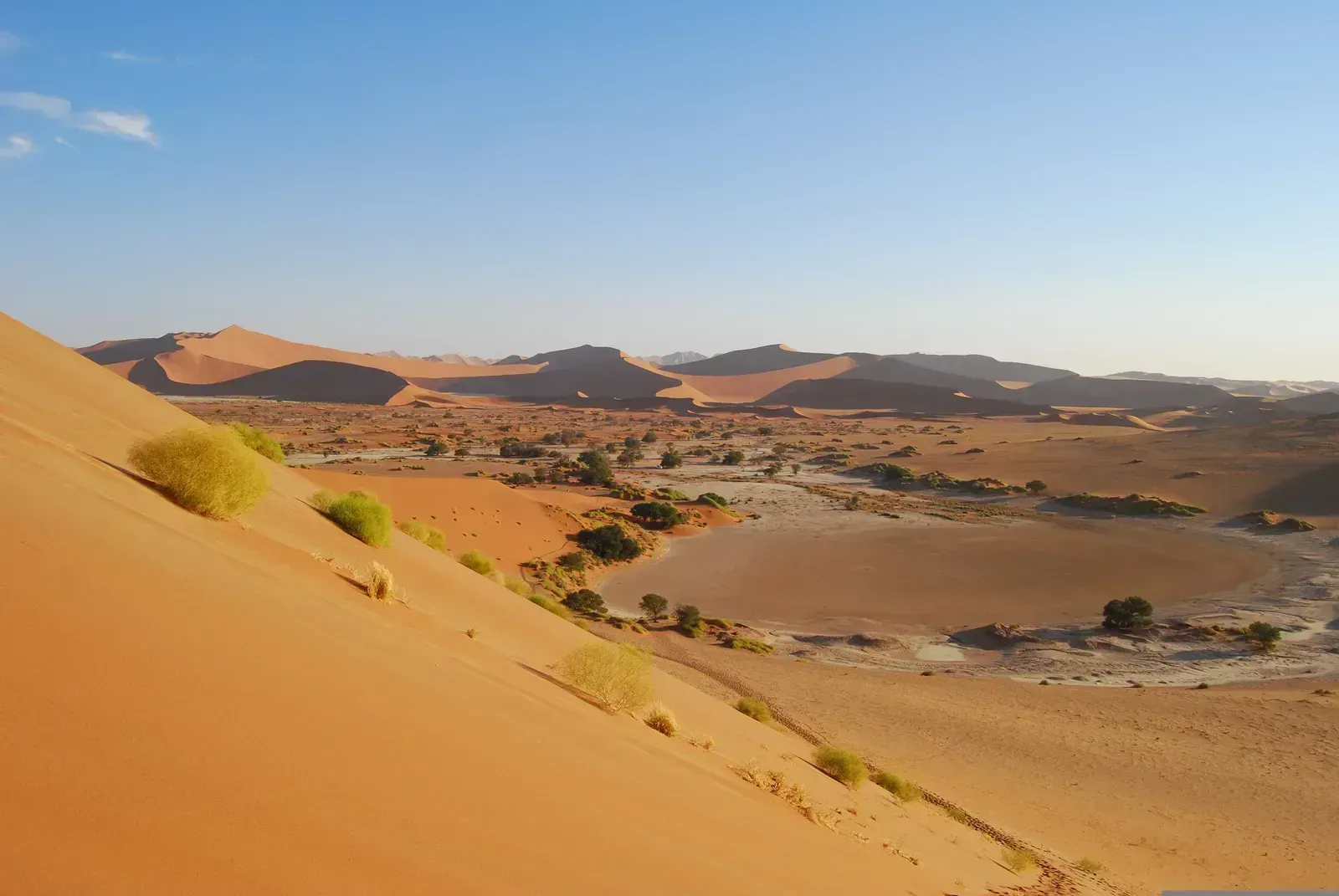
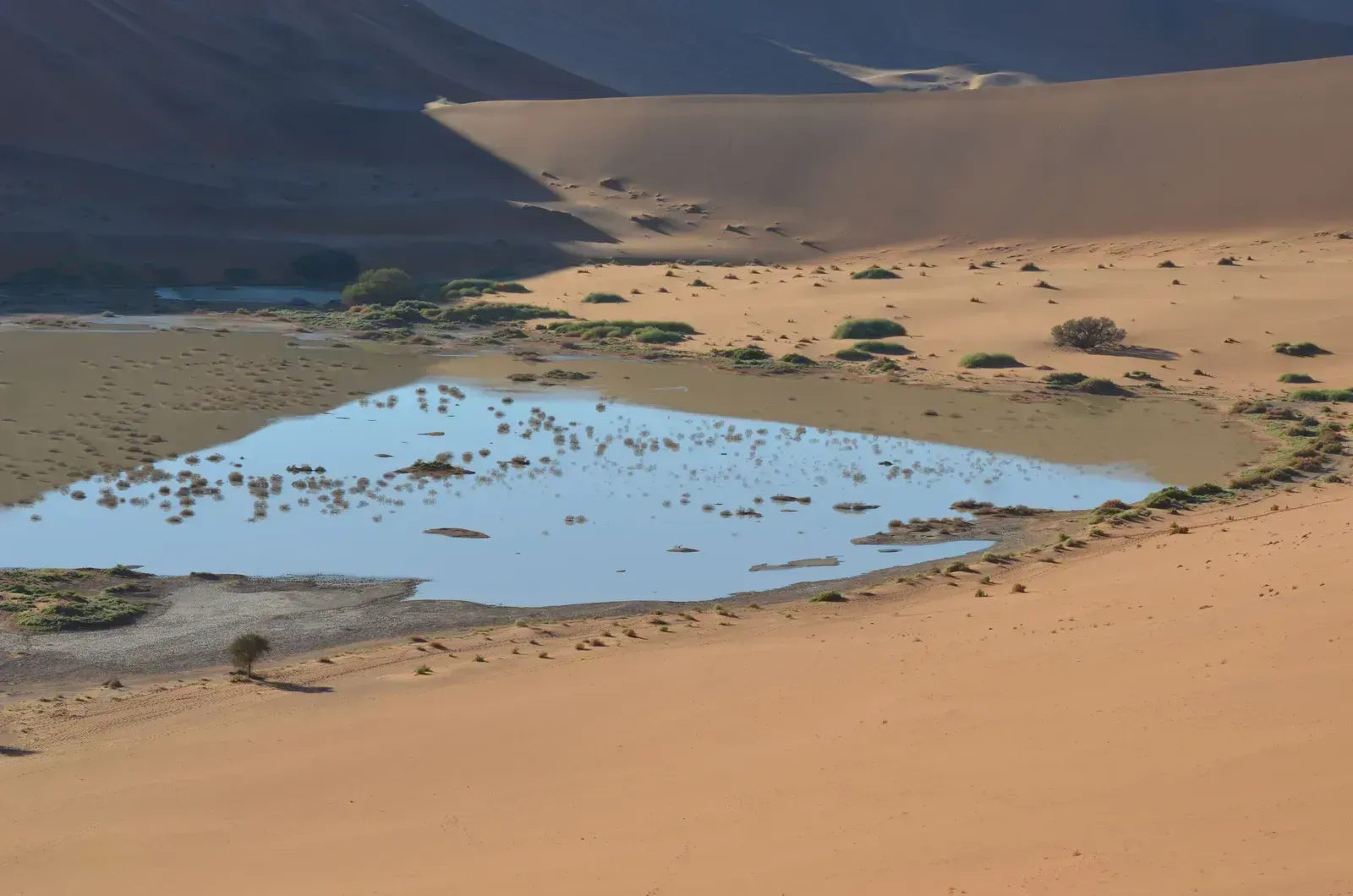
Meaning ‘dead-end marsh,’ this endorheic basin forms where the ephemeral Tsauchab River is blocked by the ancient Namib Desert. The dunes here are truly monumental; giants like 'Big Daddy' crest at over 300 meters, their intense rust-orange hue deepening with age as the sand slowly oxidizes.
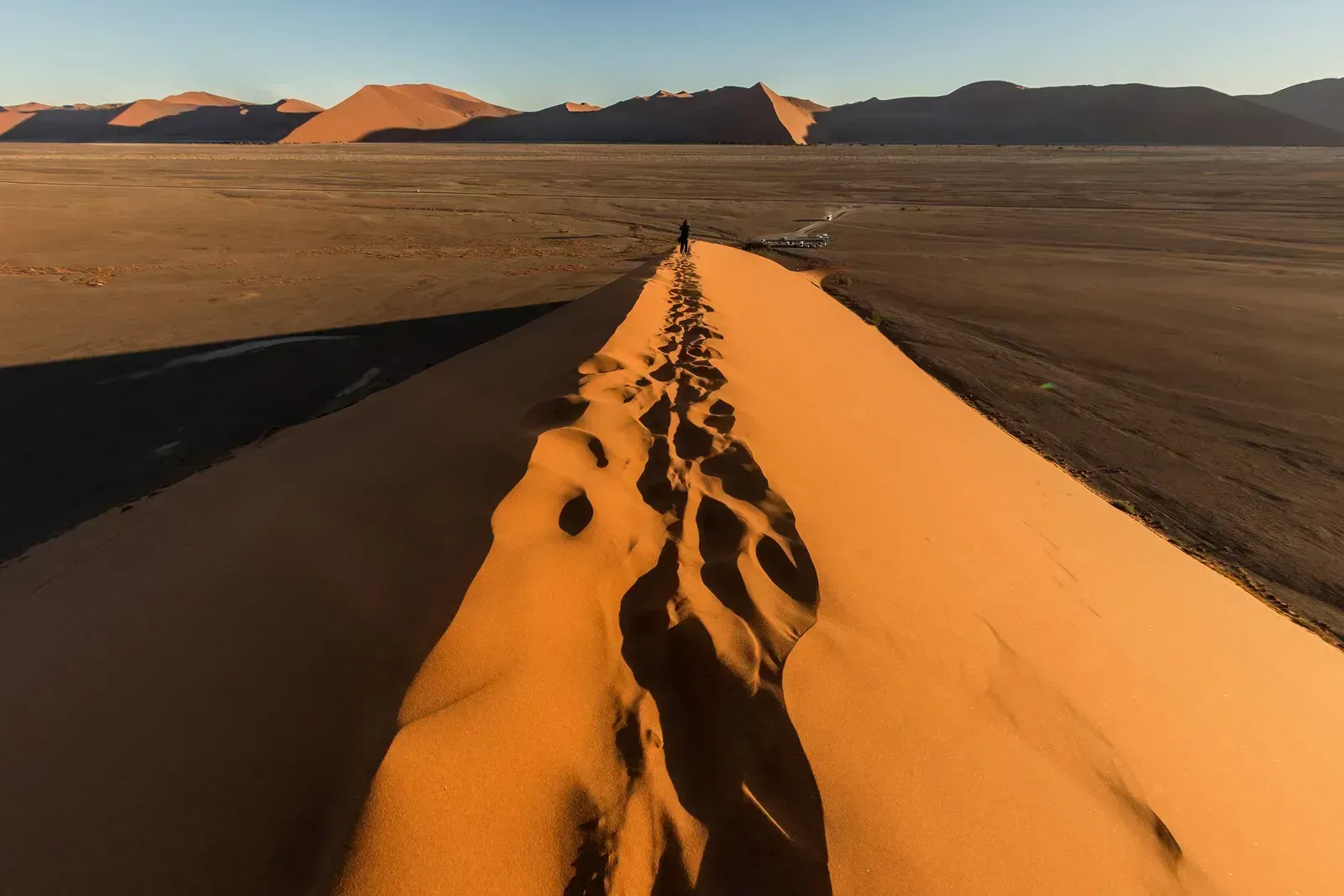
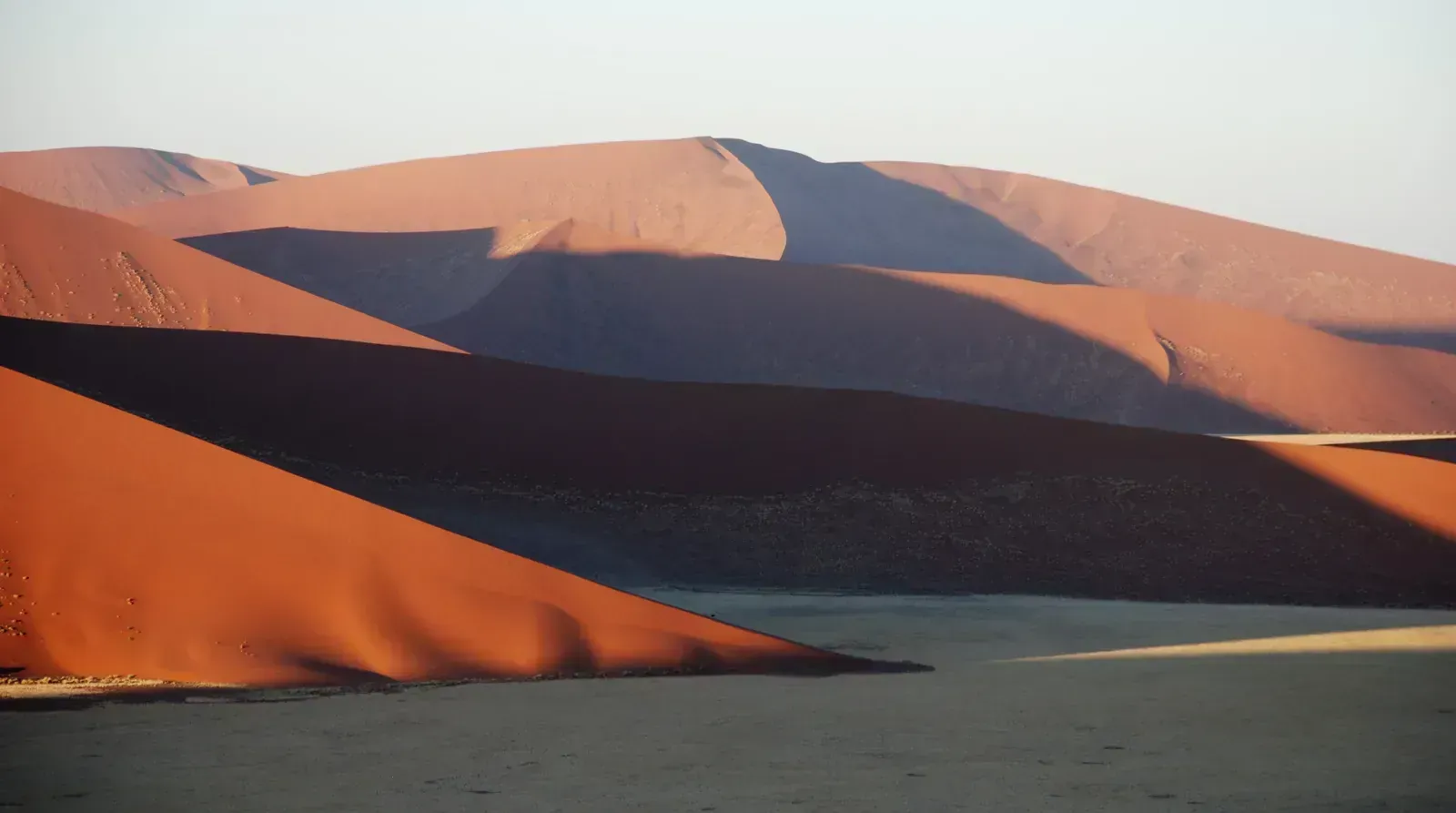
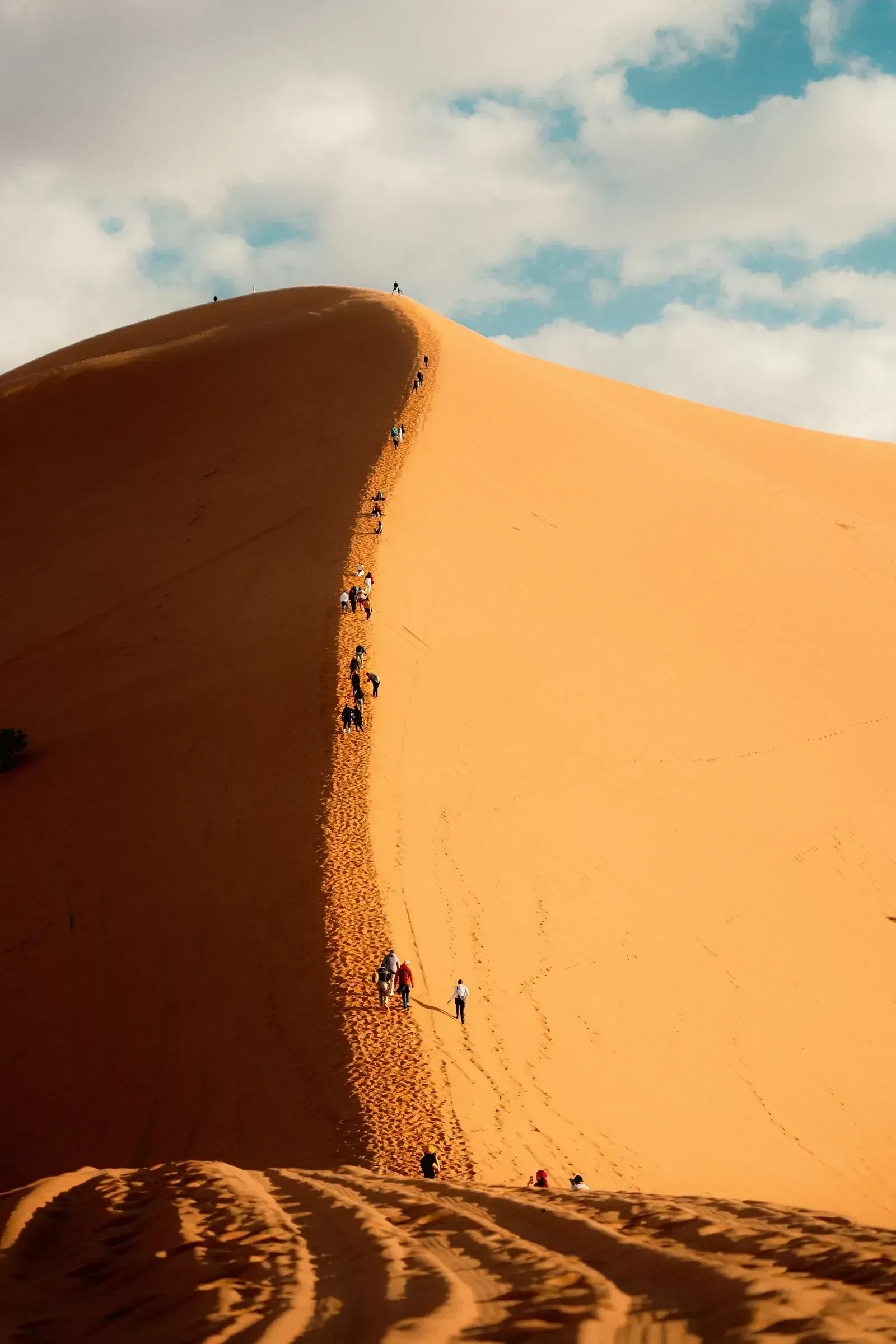
At the heart of the ancient Namib, monumental star dunes rise over 300 meters in long, deep red waves. Climbing giant Big Daddy at sunrise reveals the landscape split into clean halves of light and shadow, with an unbroken dune sea rolling out to the horizon.
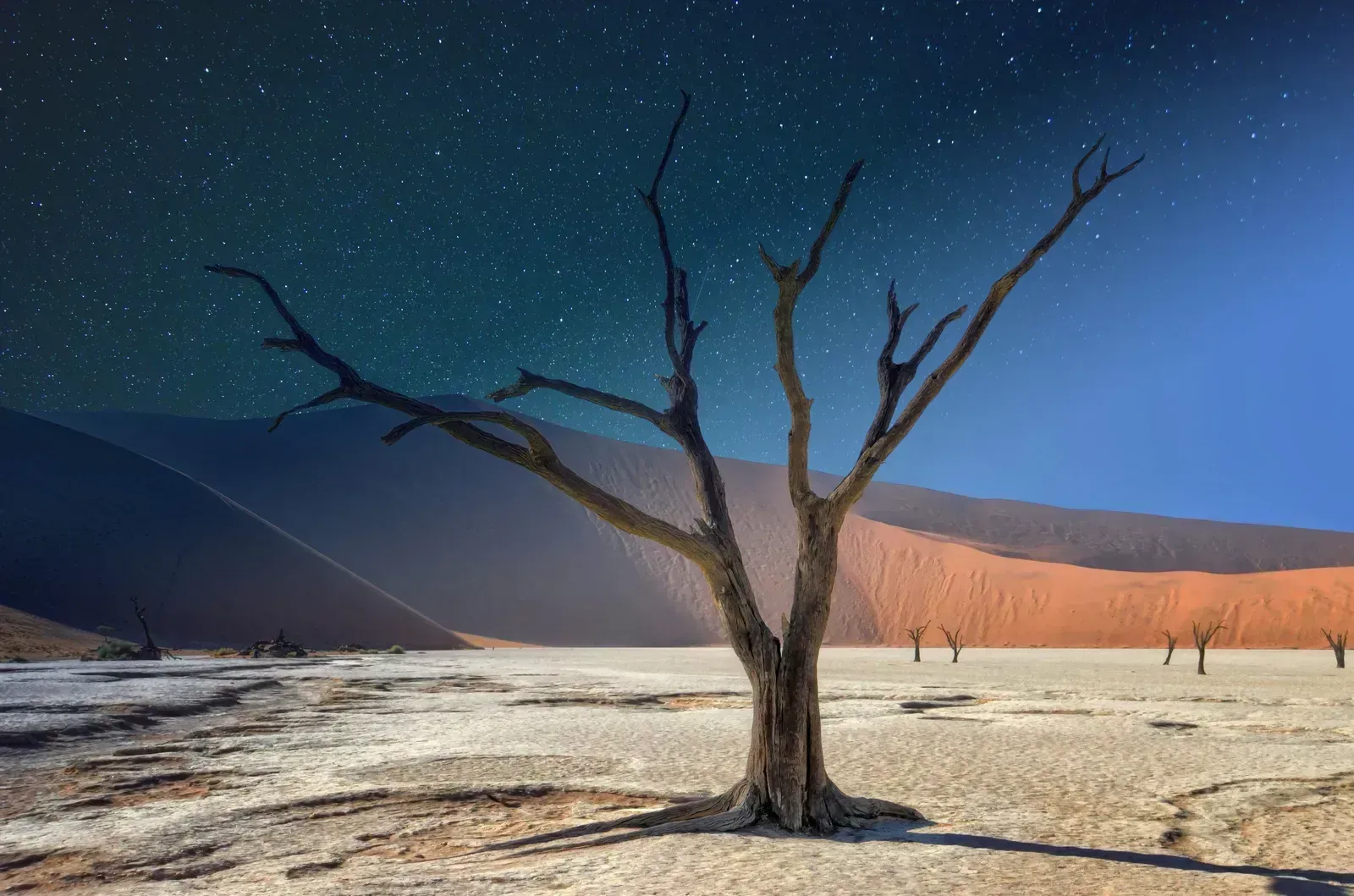
Drop down the far side into Deadvlei and the mood shifts entirely. Against a flat floor of cracked white clay and towering rust-red walls, carbon-black camel thorn trees stand frozen. Starved of water for 700 years when the Tsauchab River shifted course, the hyper-arid desert has perfectly kept them from rotting away.
Sossusvlei and the great dune sea
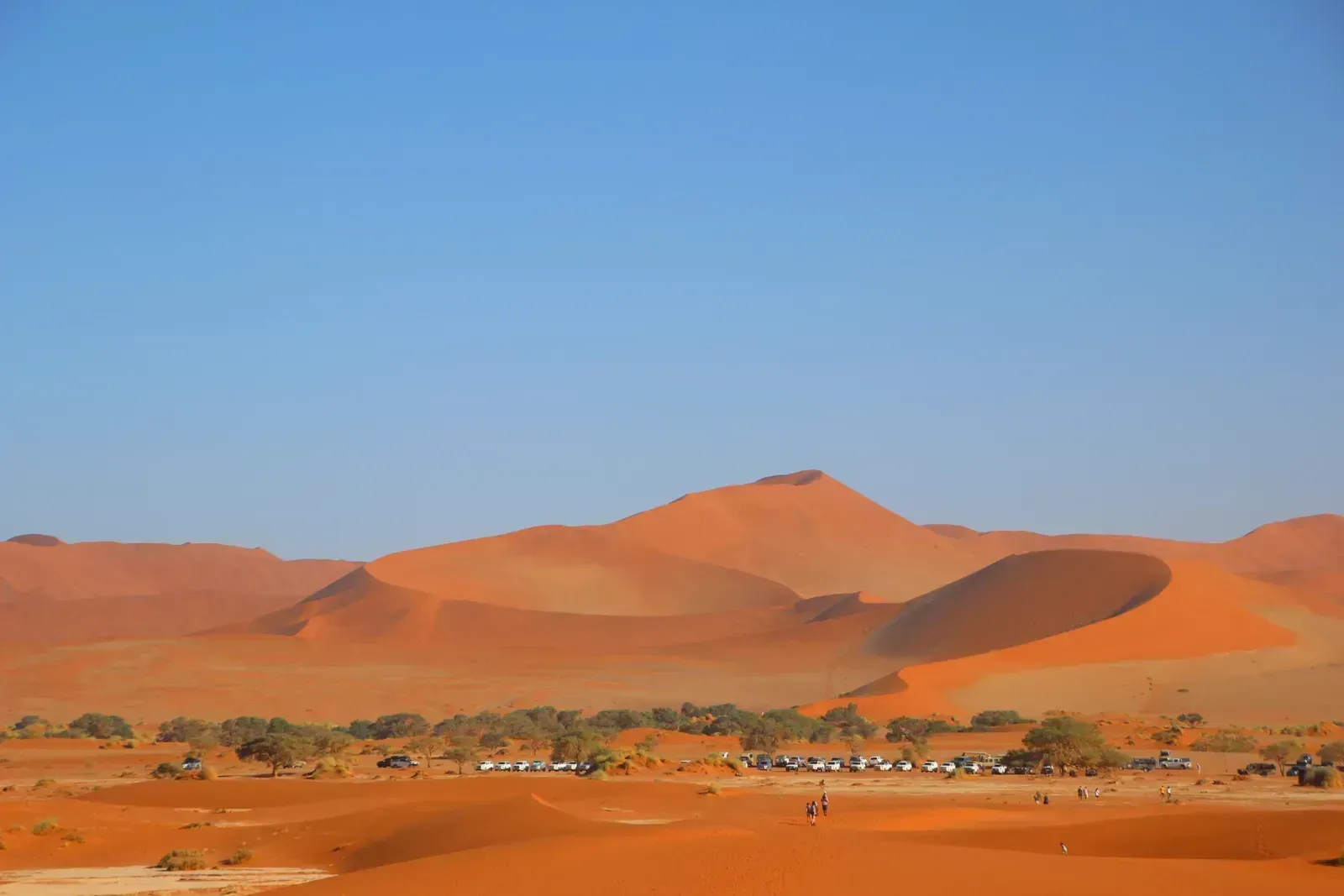
Sossusvlei sits at the heart of the Namib, the oldest desert on earth, where towering star dunes rise in long red waves over 300 metres high — among the tallest dunes anywhere in the world. The name means "dead-end marsh": this is an endorheic basin, where the ephemeral Tsauchab River runs out of momentum against the sand and simply stops. The dunes' rust-orange colour deepens with age as the iron in the sand slowly oxidises, and at sunrise the whole sea splits into clean halves of light and shadow.
It is one of the most photographed landscapes in Africa, and for good reason — but the Sossusvlei area is more than a single view. Between the dunes, the ghostly white pan of Deadvlei, the climbable giants and the slot of Sesriem Canyon, it rewards a full, early day rather than a quick photo stop.
The highlights of Sossusvlei
Deadvlei
The signature image of Namibia. Drop down the far side of the dunes into Deadvlei and the mood shifts entirely: a flat floor of cracked white clay, ringed by towering rust-red walls, studded with the carbon-black skeletons of camel-thorn trees. Starved of water for some 700 years when the Tsauchab shifted course, the hyper-arid air has kept them from rotting — frozen mid-stand, impossibly stark against the sky.
Big Daddy and Dune 45
Big Daddy is the monster — over 300 metres, and the classic sunrise climb, with a knee-jarring run straight down its face into Deadvlei as the reward. Dune 45, named for its distance in kilometres from the Sesriem gate, is the accessible favourite: an easier climb right beside the road, and a superb sunrise spot in its own right.
Sesriem Canyon
A complete change of scale a short drive from the dunes — a narrow, shaded gorge the Tsauchab has cut some 30 metres into the rock over millions of years. It's a cool, easy walk, and a good option for the harsher middle of the day when the dunes bake.
Visiting Sossusvlei: how to time your day
The move at Sossusvlei is an early one. Enter at the Sesriem gate at sunrise, when the light is soft and the sand still cool, and you'll have the dunes at their most dramatic — and coolest to climb — before the midday heat. Sunset is the other magic hour, and with almost no light pollution the desert stargazing afterwards is world-class.
- Staying inside the park gate (at Sesriem) lets you reach the dunes for first light, ahead of visitors coming from outside.
- The last five kilometres to Sossusvlei itself are soft, deep sand that needs a 4x4 or the park's shuttle; the rest of the route is good gravel.
- It's rewarding year-round — the cooler April-to-October months simply make the climbs more comfortable.
- Bring more water than you think you need, plus sun cover; there's no shade on the dunes.
Where to stay near Sossusvlei
Where you sleep decides how early you reach the dunes. Lodges and camps just outside the Sesriem gate — or the campsite inside it — put you first in the queue at sunrise; places further out along the C19 and C27 trade that head start for more comfort and character. We often base guests at a lodge like Agama, an easy drive from the gate, where every chalet has its own rooftop sky-bed for sleeping out under the Namib stars. Two nights lets you get your sunrise at the dunes without rushing the long roads in and out.
In pictures
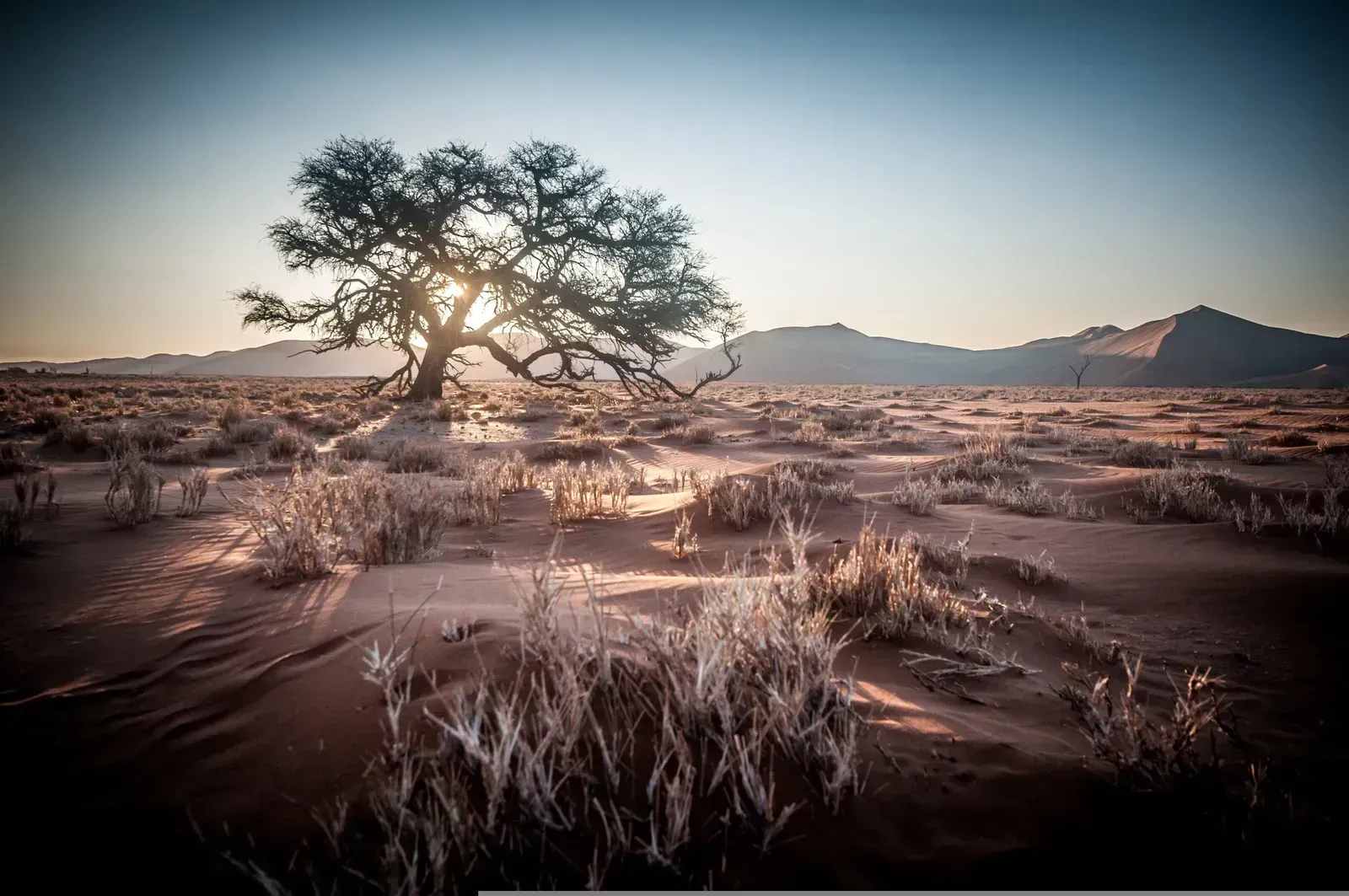
Where we recommend staying
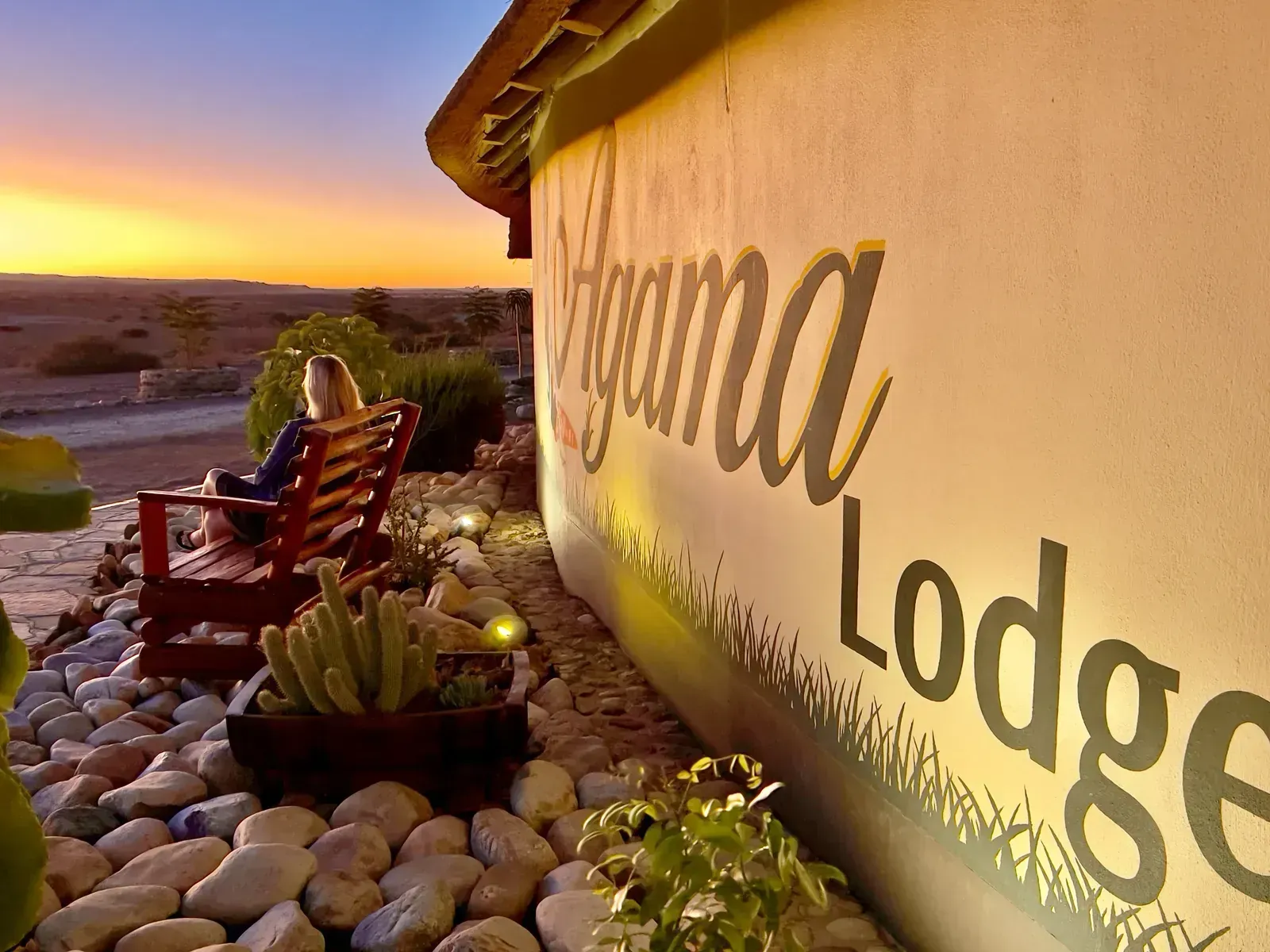
Agama Lodge
Out on the C19 between Solitaire and Sesriem — 50.8 km from the Sossusvlei gate at Sesriem — Agama Lodge is a relaxed, comfortable base for the dunes: 40 free-standing chalets strung along a dry riverbed with the Naukluft Mountains rising to the east. Every room has its own sky-bed for sleeping out under the Namib stars, the infinity pool facing the mountains has become the lodge's internet-famous photo spot, and the thatched Desert Restaurant welcomes day visitors breaking the Solitaire run. It's an easy drive to the great dunes, Deadvlei and Sesriem Canyon each morning.
Build Sossusvlei into your own route
Open our interactive map to drop Sossusvlei into a trip, drag your stops into order, pick your travel style and see a live per-person cost estimate — then send the whole plan to us on WhatsApp in one tap.
Open the trip plannerItineraries featuring Sossusvlei
Common questions
Where is Sossusvlei?
Sossusvlei is in the Namib-Naukluft Park in west-central Namibia, within the Namib Desert. It's reached through the Sesriem gate, roughly a five-to-six-hour drive south-west of Windhoek.
What is there to see at Sossusvlei?
The towering red star dunes (including Big Daddy and Dune 45), the white clay pan of Deadvlei with its ancient blackened trees, and the nearby Sesriem Canyon. Together they make up one of the most iconic desert landscapes on earth.
When is the best time to visit Sossusvlei?
Sossusvlei is striking year-round, but the cooler, dry months (April to October) make climbing the dunes more comfortable. Whatever the season, arrive at sunrise for the best light and coolest sand.
Do you need a 4x4 for Sossusvlei?
The main road is good gravel that an ordinary car can manage, but the final five kilometres to Sossusvlei and Deadvlei are deep soft sand requiring a 4x4 or the park shuttle that runs from the 2WD car park.
What is the difference between Sossusvlei and Deadvlei?
Sossusvlei is the wider dune-and-pan area at the end of the Tsauchab valley; Deadvlei is a specific white clay pan nearby, famous for its ancient dead camel-thorn trees framed by red dunes. Most visitors see both in one morning.
How long do you need at Sossusvlei?
Plan at least one full night nearby so you can be at the gate for sunrise. Two nights is ideal — one for the dunes and Deadvlei, with time for Sesriem Canyon and a second sunrise or sunset without rushing.